
Foods That Work Well Together — and the Science of Food Pairing
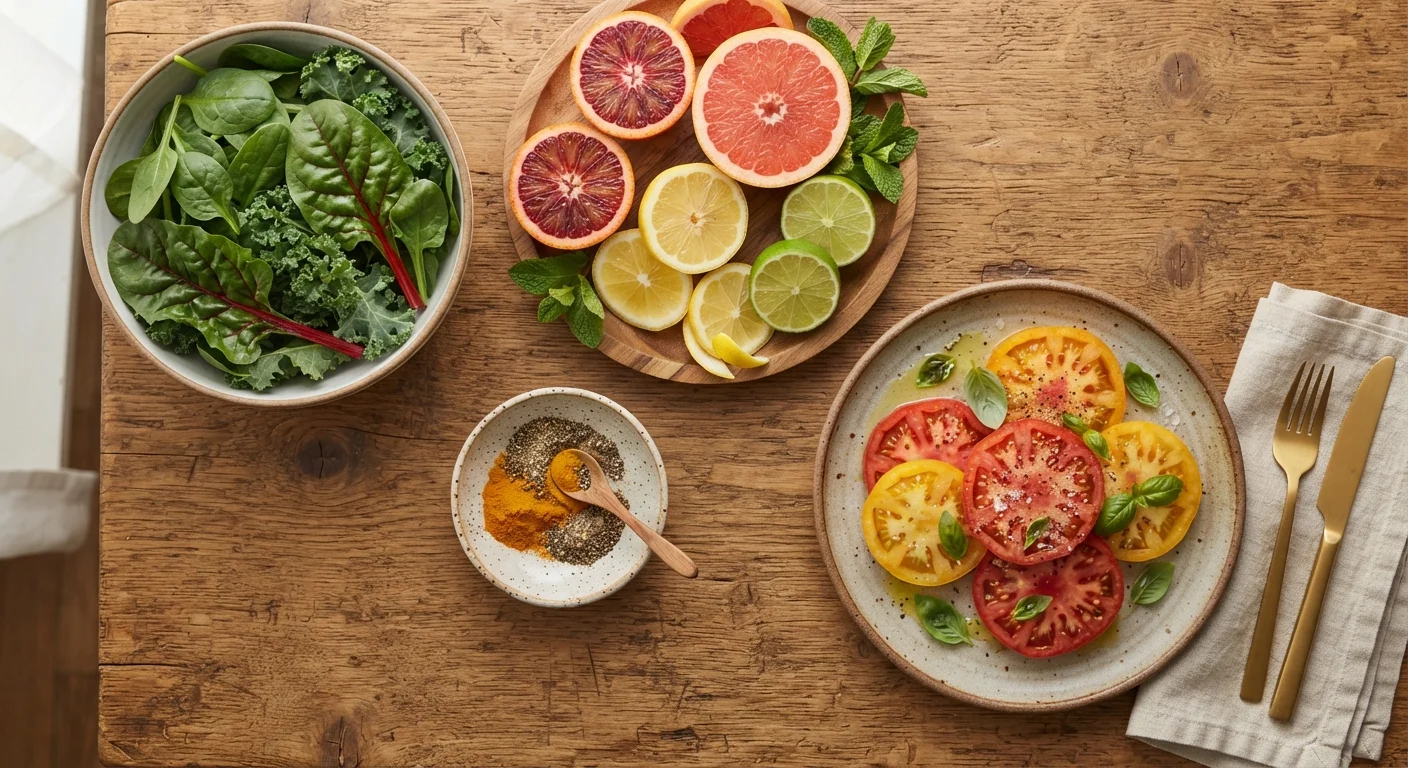
Photo credit: faqsnest.com
In this article
Some food combinations genuinely improve nutrient absorption. Others are just tradition. Here's what the evidence distinguishes between the two.
Key Takeaways
- Certain food pairings genuinely enhance nutrient absorption, supported by clear biochemical evidence.
- Other classic combinations are traditional or flavor-based, not scientifically proven to boost health.
- Simple everyday pairings — like vitamin C with plant-based iron — can meaningfully improve nutrition.
- You don't need complex diet rules; understanding a few pairings is enough to make a real difference.
Why food pairing actually matters
The idea that certain foods work better together sounds like nutrition folklore — and sometimes it is. But a handful of food pairings are grounded in clear biochemistry: one ingredient genuinely changes how your body processes another. Understanding the difference between evidence-based combinations and marketing-driven myths is more useful than memorizing long lists of rules.
The pairings below are chosen because they're practical, commonly available, and backed by a plausible mechanism — not because they're trendy or tied to a specific diet philosophy. None of them require overhauling how you eat. Most are adjustments you can make to meals you're already cooking.
Food pairing myths also exist
Not every claimed food pairing holds up to scrutiny. 'Food combining' diets — which assert that proteins and carbohydrates should never be eaten together — have no credible scientific basis. Your digestive system produces multiple enzymes simultaneously and handles mixed meals efficiently. Separating macronutrients at mealtimes is unnecessary and not supported by evidence. For a broader look at nutrition claims that don't hold up, see this evidence check on popular nutrition ideas.
Six food pairings worth knowing
Iron-rich plants + vitamin C
Plant-based iron (called non-heme iron, found in lentils, spinach, tofu, and fortified cereals) is absorbed far less efficiently than the iron in meat. The fix is straightforward: pair these foods with a source of vitamin C. Research consistently shows that ascorbic acid converts non-heme iron into a more absorbable form in the gut.
Practical examples: squeeze lemon over a lentil salad, add sliced bell peppers to a spinach stir-fry, or serve black beans with fresh tomato salsa. The effect is most reliable when vitamin C and iron are eaten in the same meal rather than hours apart.
Lemon juice on lentils isn't just flavor — it meaningfully improves how much iron your body absorbs.
Fat-soluble vitamins + dietary fat
Vitamins A, D, E, and K are fat-soluble, meaning your body needs fat present in the digestive tract to absorb them properly. Eating a salad loaded with vitamin-K-rich kale or beta-carotene-rich carrots with a fat-free dressing sidesteps this process almost entirely.
A small amount of healthy fat — olive oil in a dressing, avocado slices, a handful of nuts — is enough to trigger efficient absorption. This is one pairing where the evidence is robust and practically effortless to apply. It's also a reason why very low-fat diets can sometimes lead to subtle micronutrient shortfalls even when vegetable intake is high. For a deeper breakdown of what each fat-soluble vitamin does, see this micronutrient reference guide.
A drizzle of olive oil on your salad isn't indulgent — it's how fat-soluble vitamins get absorbed.
Turmeric + black pepper
Curcumin, the active compound in turmeric, has attracted significant research interest. The problem is bioavailability: curcumin is poorly absorbed on its own. Piperine, the compound that gives black pepper its heat, has been shown in studies to enhance curcumin absorption substantially — some research suggests by as much as 2,000%, though results vary by individual and study design.
This pairing is common in traditional South Asian cooking, where turmeric and black pepper frequently appear together. Whether you're adding turmeric to a curry, a soup, or a grain dish, a pinch of black pepper alongside it is a small step with a plausible biochemical basis. Note that much of the research on curcumin has been conducted in labs or small trials — it's promising, not definitive.
Pairing turmeric with black pepper isn't folk wisdom — there's a documented biochemical reason it works.
Calcium + vitamin D
This is one of the best-established nutrient pairings in mainstream nutrition science. Vitamin D regulates the production of proteins needed to transport calcium from the gut into the bloodstream. Without adequate vitamin D, the body absorbs only a fraction of dietary calcium, regardless of how much is consumed.
Dairy products naturally contain both in varying amounts; fortified plant milks are often designed with this pairing in mind. But vitamin D from food alone is difficult to obtain in sufficient quantities — sunlight exposure and supplementation (where indicated by a doctor) are the main sources for most people. This is a pairing where both sides of the equation matter equally.
Calcium without vitamin D is largely wasted — your gut needs vitamin D to actually absorb it.
Tomatoes + olive oil
Lycopene is the red pigment in tomatoes and a well-studied antioxidant. Like the fat-soluble vitamins mentioned above, lycopene is better absorbed in the presence of fat. Cooked tomatoes release even more lycopene than raw ones because heat breaks down cell walls, and pairing them with olive oil — as Mediterranean cooking does almost instinctively — further improves uptake.
This doesn't mean raw tomatoes are without value. It means that a slow-cooked tomato sauce with olive oil is nutritionally efficient in a way that's rarely credited. Traditional food cultures often arrived at smart pairings before the biochemistry was understood — something worth noting when evaluating both food traditions and food science hype.
A slow-cooked tomato sauce with olive oil is one of the most nutritionally efficient things you can cook.
Probiotic foods + prebiotic fiber
Probiotics are live beneficial bacteria found in fermented foods like yogurt, kefir, kimchi, and sauerkraut. Prebiotics are types of dietary fiber — found in garlic, onions, leeks, oats, and bananas — that feed and sustain those bacteria in the gut. The pairing logic is practical: introducing beneficial bacteria without providing the substrate they need to survive limits their impact.
The gut microbiome research field is active but still developing, and individual responses to probiotic foods vary considerably. That said, eating a diet that includes both fermented foods and fiber-rich vegetables is consistent with established guidance on supporting digestive health — and represents a straightforward dietary pattern rather than a complex intervention. For practical ways to build this kind of consistent eating approach, these long-term eating habits offer grounded starting points.
Probiotic foods work better when you also eat the fiber that gives beneficial gut bacteria something to thrive on.
What this means for everyday eating
The takeaway isn't a new set of rigid rules — it's a handful of easy adjustments. Add citrus or bell peppers to plant-based iron sources. Don't skip fat with your salad dressing. Grind black pepper into anything with turmeric. Cook tomatoes in olive oil. Eat fermented foods alongside fiber-rich vegetables.
These aren't dramatic interventions. They're small, durable habits that align with how food has been eaten across many cultures for centuries. The science mostly confirms what traditional cuisines figured out through practice. If you're thinking about how these pairings fit into a broader eating approach, structured and intuitive eating frameworks both leave room for this kind of practical adjustment.
This article is for general informational and educational purposes only and is not a substitute for professional medical or dietary advice. Consult a qualified healthcare provider for guidance specific to your health needs.

Author
Everyday Lifestyle Editorial Team
Everyday Lifestyle Editorial Team is the collective byline for our editorial team and contributor network. Articles published under this byline or an editorial pen name are researched, written, and reviewed according to our editorial standards for clarity, consistency, and independence before publication.
View all articles →