
DIY Home Improvement: An Honest Look at the Trade-Offs
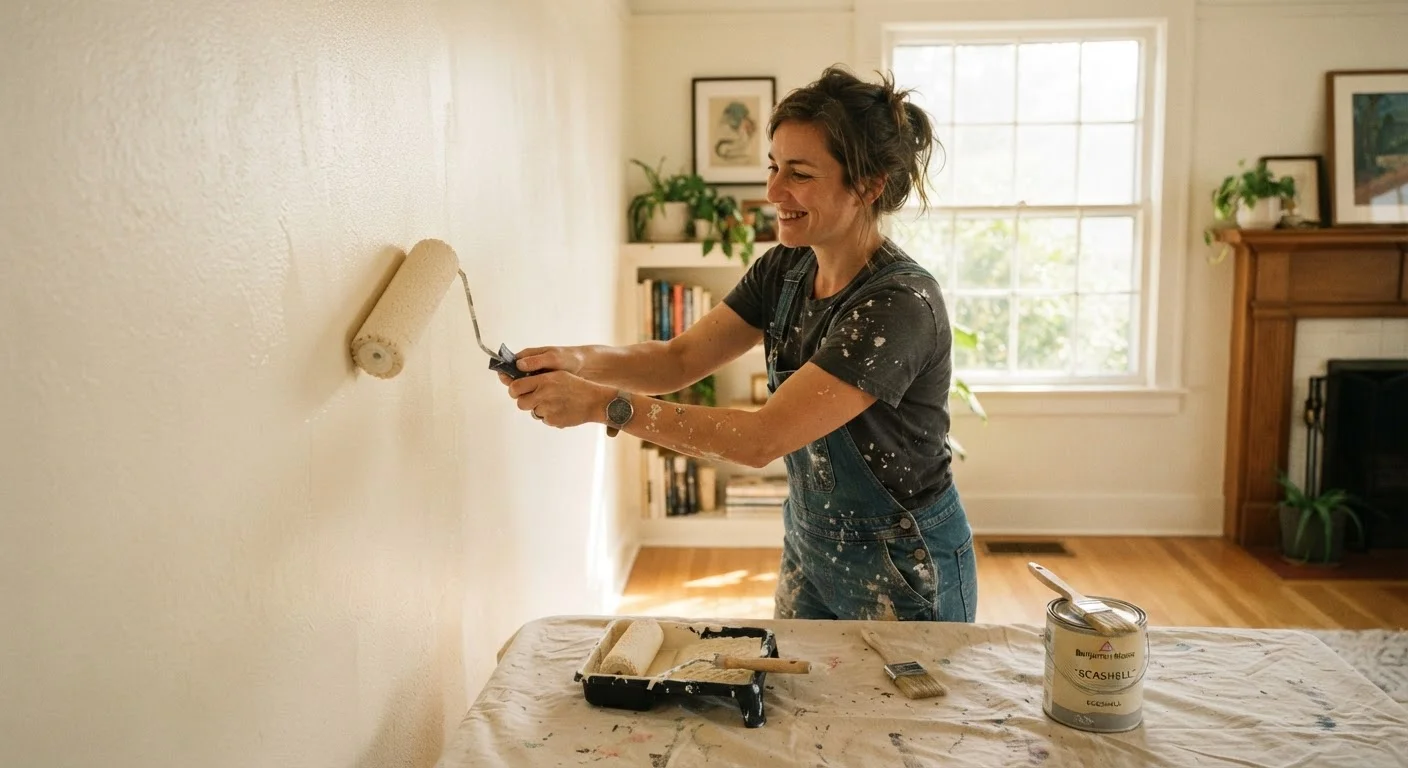
Photo credit: faqsnest.com
In this article
Doing it yourself saves money but carries risks. A balanced look at where DIY shines and where it quietly costs more.
Key Takeaways
- DIY can deliver meaningful cost savings on labor, but only when the skill level matches the task.
- Certain projects — electrical, structural, gas, and major plumbing — carry safety and legal risks that typically require licensed professionals.
- Underestimating time, tools, and materials is one of the most common ways DIY ends up costing more.
- Cosmetic and finishing work is usually where DIY delivers the best combination of savings and achievable results.
- Permits and inspections are legally required for many home improvement tasks, regardless of who does the work.
Significant labor cost savings on suitable projects
Labor often accounts for 50–70% of a professional quote on straightforward jobs. Doing the work yourself on low-complexity tasks can translate those costs directly into savings or material upgrades.
Full control over materials and timeline
Homeowners who DIY choose exactly which materials go into their home and can pause, adjust, or revisit decisions without coordinating around a contractor's schedule.
Builds transferable home maintenance knowledge
Successfully completing one project — even a modest one — builds familiarity with materials, techniques, and tools that makes future projects faster and less daunting.
Cosmetic projects yield high-impact results affordably
Fresh paint, updated fixtures, new hardware, and refreshed landscaping dramatically change how a space looks and feels, often for a few hundred dollars in materials when labor is self-supplied.
Flexibility to work at your own pace
Unlike contractors who need to complete and move on, a DIYer can take time to do prep work thoroughly, revisit details, and adjust the outcome as the project develops.
Underestimating time is extremely common
First-time execution of any task takes significantly longer than experienced professionals — a gap that can turn a weekend project into a weeks-long disruption to household routines.
Tool acquisition adds unexpected upfront costs
Specialty tools required for even mid-level projects — tile saws, miter saws, pipe cutters — can erode projected savings quickly unless rented or borrowed strategically.
Mistakes may cost more to correct than hiring out
Errors in tile layout, drywall finishing, or paint preparation often require professionals to remediate, resulting in higher total cost than an initial professional hire would have produced.
Regulated work carries legal and insurance risk
Unpermitted electrical, structural, or plumbing work can void insurance coverage, create mandatory disclosure obligations at resale, and result in ordered corrections by local building authorities.
Physical and safety risks are real on some projects
Work at height, in confined spaces, with power tools, or near live electrical is genuinely hazardous for untrained individuals — no cost saving justifies an avoidable injury.
Quality gap is visible on technical finish work
Tiling, plastering, trim carpentry, and cabinetry installation require practiced technique; results from first attempts are often perceptibly inferior to professional work in high-visibility areas.
Why DIY Appeals — and Where That Logic Holds Up
The appeal of doing it yourself is straightforward: skip the labor markup, work at your own pace, and walk away with something you built. For many projects, that logic is completely sound. Painting a room, installing floating floor panels, refreshing cabinet hardware, patching drywall, or laying new mulch in a garden bed — these are tasks where a careful, motivated person can genuinely match or exceed the results of a hired hand, often at a fraction of the cost.
The key variable is labor. Professional tradespeople charge not just for skill, but for their time, overhead, insurance, and often a project minimum. On straightforward jobs, that cost structure can make a $200 material project balloon to $600 or more. When the task itself is low-complexity and low-risk, absorbing that labor cost yourself makes real financial sense.
Skill acquisition is another underappreciated benefit. Each completed project compounds — a homeowner who has tiled a backsplash understands adhesive, grout lines, and substrate prep in a way no YouTube tutorial fully conveys. That hands-on knowledge transfers. See our home improvement planning guide for a practical framework on scoping projects before you commit.
Significant labor cost savings on suitable projects
Labor often accounts for 50–70% of a professional quote on straightforward jobs. Doing the work yourself on low-complexity tasks can translate those costs directly into savings or material upgrades.
Full control over materials and timeline
Homeowners who DIY choose exactly which materials go into their home and can pause, adjust, or revisit decisions without coordinating around a contractor's schedule.
Builds transferable home maintenance knowledge
Successfully completing one project — even a modest one — builds familiarity with materials, techniques, and tools that makes future projects faster and less daunting.
Cosmetic projects yield high-impact results affordably
Fresh paint, updated fixtures, new hardware, and refreshed landscaping dramatically change how a space looks and feels, often for a few hundred dollars in materials when labor is self-supplied.
Flexibility to work at your own pace
Unlike contractors who need to complete and move on, a DIYer can take time to do prep work thoroughly, revisit details, and adjust the outcome as the project develops.
Where DIY Quietly Costs More
The hidden expense of DIY isn't always visible upfront. It tends to accumulate in three places: tools, time, and corrections.
Tools: A single project can require equipment you don't own — a tile saw, an oscillating multi-tool, a stud finder, a pneumatic nailer. Renting is often smarter than buying for one-off use, but even rental costs add up, and the learning curve with unfamiliar equipment slows progress and increases error rates.
Time: Professionals move fast because they've done the same task hundreds of times. A job a contractor quotes as a half-day can realistically run an entire weekend for a first-timer — longer if something unexpected surfaces, which it often does inside walls and under floors.
Corrections: A mis-cut piece of hardwood, a tile pattern started from the wrong anchor point, or a poorly prepared surface under fresh paint are all costly mistakes. Some are fixable with patience; others require starting over or calling in a professional anyway — at higher cost than if the pro had been hired from the start.
This pattern of underestimation is well-documented in renovation projects generally and worth taking seriously before committing to a complex job. Common home improvement myths often fuel this overconfidence — it's worth knowing which beliefs don't hold up.
Underestimating time is extremely common
First-time execution of any task takes significantly longer than experienced professionals — a gap that can turn a weekend project into a weeks-long disruption to household routines.
Tool acquisition adds unexpected upfront costs
Specialty tools required for even mid-level projects — tile saws, miter saws, pipe cutters — can erode projected savings quickly unless rented or borrowed strategically.
Mistakes may cost more to correct than hiring out
Errors in tile layout, drywall finishing, or paint preparation often require professionals to remediate, resulting in higher total cost than an initial professional hire would have produced.
Regulated work carries legal and insurance risk
Unpermitted electrical, structural, or plumbing work can void insurance coverage, create mandatory disclosure obligations at resale, and result in ordered corrections by local building authorities.
Physical and safety risks are real on some projects
Work at height, in confined spaces, with power tools, or near live electrical is genuinely hazardous for untrained individuals — no cost saving justifies an avoidable injury.
Quality gap is visible on technical finish work
Tiling, plastering, trim carpentry, and cabinetry installation require practiced technique; results from first attempts are often perceptibly inferior to professional work in high-visibility areas.
The Non-Negotiables: When to Step Back
Some work is legally and practically off-limits for unlicensed homeowners — not because of gatekeeping, but because the consequences of errors are severe. Electrical panel work, gas line modifications, load-bearing structural changes, and connections to municipal plumbing or sewer lines typically require licensed contractors and permitted inspections in most US jurisdictions.
This matters beyond safety. Unpermitted work can void homeowner's insurance coverage for related claims, create disclosure obligations when you sell the property, and result in costly mandatory corrections ordered by local building authorities. Even if a neighbor did the same work without permits, that doesn't mean it was legal — or that you'd be protected if something went wrong.
Permits: Check Before You Start
Most US municipalities require permits for electrical, plumbing, HVAC, structural, and roofing work — and sometimes for large deck builds or window replacements too. Requirements vary significantly by jurisdiction, so check with your local building department before starting any project that might fall into a regulated category. Pulling the permit yourself as the homeowner is often allowed, but the inspection still happens — and the work must meet code. Skipping this step creates real risk at resale and with insurance claims.
The same logic that applies to complex home repairs applies in other domains. If you're familiar with the question of DIY car maintenance versus professional service, you'll recognize the pattern: the decision should follow risk and technical threshold, not just cost.
Building a Realistic DIY Skill Map
The most effective DIY practitioners aren't those who do everything themselves — they're the ones who know exactly which tier a given project falls into. A useful mental model sorts home tasks into three bands:
- High DIY suitability: Painting, wallpaper, basic landscaping, fixture swaps (like faucets and light switches on existing circuits), caulking, weatherstripping, minor drywall patching, shelf installation.
- Moderate — research and confidence required: Tile work, laminate or engineered flooring, installing pre-hung interior doors, simple deck repairs, gutter cleaning and minor repairs, installing ceiling fans on existing wiring.
- Low — typically defer to professionals: Panel upgrades, new circuit installation, gas appliance connections, structural wall removal, roofing replacement, foundation work, whole-system plumbing changes.
Positioning yourself honestly on this map before starting prevents most of the expensive errors that give DIY a bad reputation. For those interested in the broader principle of self-directed skill-building, the trade-offs of learning outside formal education explores where self-teaching thrives and where structured guidance outperforms it — a parallel worth considering.
50–70%
Share of professional quotes typically attributed to labor
Industry estimates consistently place labor as the majority cost component on most residential renovation work, making it the primary driver of DIY financial appeal.
~1 in 3
DIY projects requiring professional correction
Home improvement surveys have found a significant proportion of DIY projects result in at least partial professional intervention to fix errors or complete regulated work.

Author
Home & Garden Editorial Team
Home & Garden Editorial Team is the collective byline for our editorial team and contributor network. Articles published under this byline or an editorial pen name are researched, written, and reviewed according to our editorial standards for clarity, consistency, and independence before publication.
View all articles →