
Home Improvement Myths That Cost Homeowners Time and Money
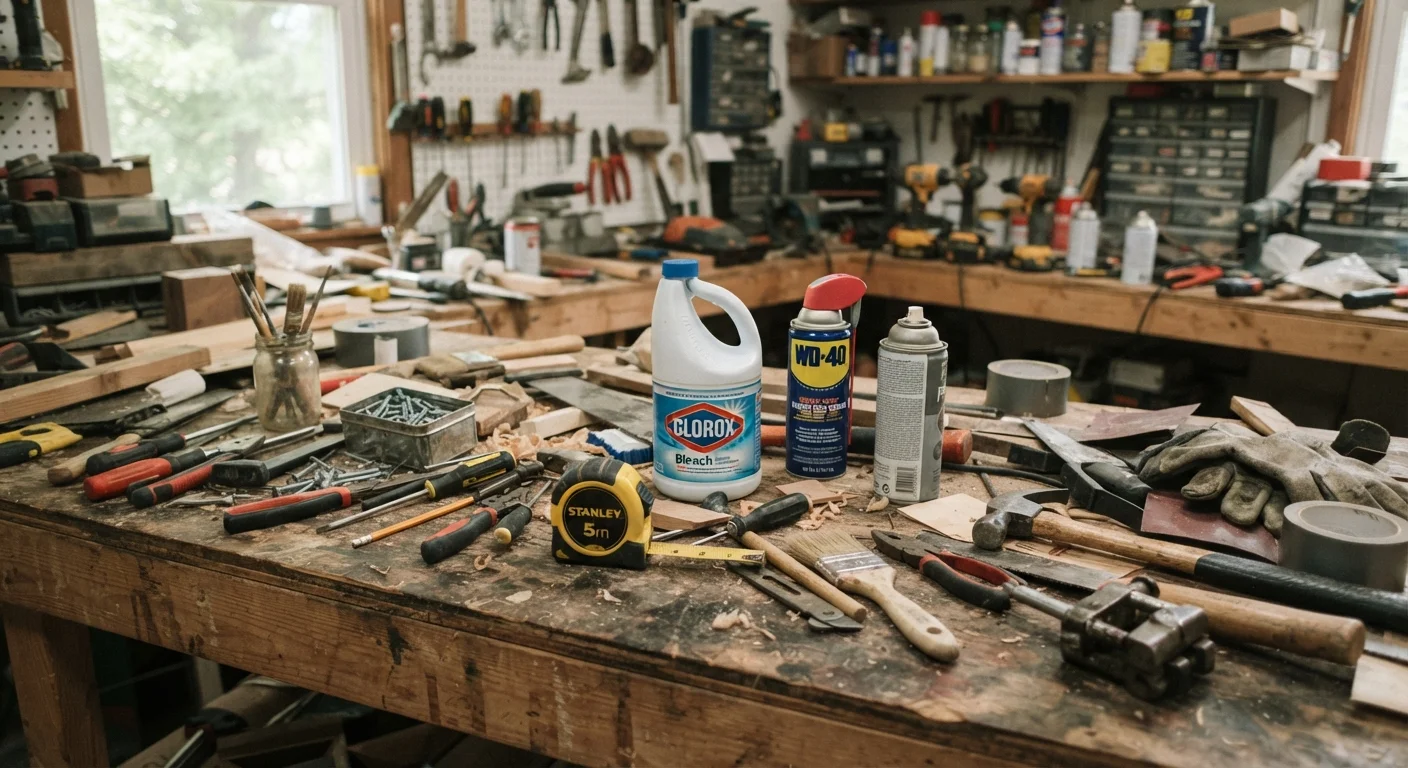
Photo credit: faqsnest.com
In this article
From bleach killing mould permanently to WD-40 fixing everything — separating DIY folklore from what actually works.
Key Takeaways
- Bleach kills surface mould visually but does not eliminate the root growth embedded in porous materials.
- WD-40 is a water displacer and light lubricant, not a fix-all solution for squeaks, rust, or stuck parts.
- Painting over wallpaper almost always causes long-term adhesion and moisture problems.
- Higher paint price does not automatically mean better coverage — formulation and surface prep matter more.
- DIY electrical and structural work often requires permits and licensed tradespeople regardless of skill level.
- Caulking and weatherstripping are maintenance items that need periodic replacement, not permanent fixes.
Why Home Improvement Myths Persist
Home improvement advice travels fast — through neighbors, YouTube comments, and decades-old handyman guides. Some of it is genuinely useful. A lot of it is folklore that sounds plausible enough to act on, and that's where the real cost begins. A misinformed repair can mask a deeper problem, damage a surface you were trying to protect, or create a safety risk you didn't see coming.
The myths below aren't obscure edge cases. They show up constantly in real homes and real conversations. Knowing what's actually true helps you spend your time, money, and effort on approaches that hold up — and helps you recognize when it's worth calling a professional rather than doubling down on a DIY fix that isn't working. For a grounded overview of where DIY delivers and where it quietly costs more, see our balanced look at DIY trade-offs.
Myth
Bleach kills mould permanently. If you spray it on and the mould disappears, the problem is solved.
Fact
Bleach removes mould's visible surface colour on non-porous materials but does not penetrate porous surfaces like drywall or grout to kill the root structure (mycelium).
On tiles or glass, bleach can be effective at sanitising the surface. On drywall, wood, or grout — the materials where mould most commonly takes hold — the water in bleach is actually absorbed into the material and can encourage deeper fungal growth, even as the surface appears clean. Mould on porous materials typically requires either physical removal of the affected material or an antifungal product designed to penetrate the surface. More importantly, visible mould is a symptom of a moisture problem: without fixing the source (a leak, inadequate ventilation, or condensation), mould will return regardless of what you apply.
Myth
WD-40 fixes squeaky hinges, rusted bolts, and sticky locks — it's the one product every home needs.
Fact
WD-40 is primarily a water displacer and light solvent, not a long-term lubricant. It can temporarily free stuck parts but often leaves surfaces worse over time.
The name WD-40 stands for "Water Displacement, 40th formula" — it was designed to protect metal from moisture, not to lubricate moving parts. Applied to a squeaky hinge or a sticky door lock, it may offer short-term relief, but it evaporates quickly and can attract dust and grime, making the problem worse within weeks. For hinges, a dedicated silicone spray or white lithium grease lasts significantly longer. For door locks, a dry graphite lubricant is the standard recommendation, as oil-based products can gum up the pin mechanism. The right lubricant depends entirely on the application.
Myth
You can paint over wallpaper and get a perfectly good result — it saves time on removal.
Fact
Painting over wallpaper almost always causes adhesion failures, visible seams, bubbling, and moisture trapping — problems that worsen over time and are more expensive to correct later.
Wallpaper has texture and seams that telegraph through paint, particularly once the paint dries and light catches the surface at an angle. More critically, water-based paint introduces moisture that can loosen wallpaper adhesive, causing bubbling or peeling within months. In rooms with humidity variation — kitchens and bathrooms especially — this happens faster. Removing wallpaper correctly, skim-coating the wall if needed, and starting on a properly prepared surface takes more time upfront but avoids the compounding repair costs that follow. For advice on accurate prep and marking before you start any finish work, preparation really does determine the result.
Myth
Expensive paint always covers better and lasts longer — you get what you pay for.
Fact
Coverage and durability are functions of formulation, pigment load, and sheen level — not simply price. Surface preparation has more impact on longevity than the paint tier.
Premium paints often do contain higher-quality binders and pigments that perform better in high-traffic or high-humidity areas, but within any product line the differences between mid-range and high-end paints are often minimal for typical interior walls. What reliably predicts how long a paint job lasts is surface preparation: cleaning the surface, filling holes, sanding glossy areas, and applying a suitable primer. A well-prepared surface with a mid-range paint will consistently outlast an expensive paint applied over a dirty, unprimed, or damaged surface. This doesn't mean cheapest is always equivalent — very low-cost paints often use less pigment and need more coats — but price alone is a poor guide.
Myth
As long as the repair looks right, you don't need a permit for electrical or structural work.
Fact
Many types of electrical, structural, and plumbing work legally require permits and inspections regardless of how the finished result looks — and skipping them can affect insurance coverage and resale.
Building permits exist so that licensed inspectors can verify that work meets local safety codes before it's closed behind walls or ceilings. Unpermitted work — even work that is technically sound — can create real problems: insurers may deny claims related to work that wasn't inspected, buyers' home inspectors flag unpermitted additions during sale, and you may be required to open walls to allow after-the-fact inspection. The permit requirements vary by jurisdiction, but electrical panel work, new circuits, load-bearing wall changes, and structural additions almost universally require permits in the US. When in doubt, contact your local building department before starting — it's a free call that can prevent a much more expensive correction.
Note: Always verify permit requirements with your local authority. This article provides general educational information, not legal or regulatory advice.
The Practical Takeaway: Better Decisions Start with Accurate Information
What connects these myths is that they all offer the appealing promise of a quick, cheap, permanent fix. Mould gone with one spray. Every squeak silenced with one product. A full paint job skipping a step. In practice, shortcuts built on inaccurate assumptions create compounding problems — a hidden mould colony, a surface that needs stripping before it can be properly finished, or an unpermitted repair that affects your home's insurability.
Surface Fixes Don't Replace Source Fixes
Whether it's mould, peeling caulk, or recurring damp patches, the visible symptom is rarely the problem itself. Treating the surface without identifying the underlying cause — a leak, failed waterproofing, or inadequate ventilation — typically means the problem returns faster and costs more to address the second time. Investigate before you treat.
The more grounded your starting information, the more confident your decision-making becomes — whether that's preparing a surface properly before painting, understanding when caulk genuinely needs replacing, or knowing to call a licensed electrician rather than patching wiring yourself. Planning is part of this too: our guide to planning home improvements from first idea to final finish walks through scoping, budgeting, and sequencing in a way that prevents most of the costly surprises these myths tend to create.
If you've encountered persistent myths in specific areas of the home — from bath silicone that keeps failing to tiling pitfalls that only appear after the job is done — the pattern is usually the same: the myth skips a step that turns out to be essential.

Author
Home & Garden Editorial Team
Home & Garden Editorial Team is the collective byline for our editorial team and contributor network. Articles published under this byline or an editorial pen name are researched, written, and reviewed according to our editorial standards for clarity, consistency, and independence before publication.
View all articles →