
Brakes: How the System Works and the Signs It Needs Attention
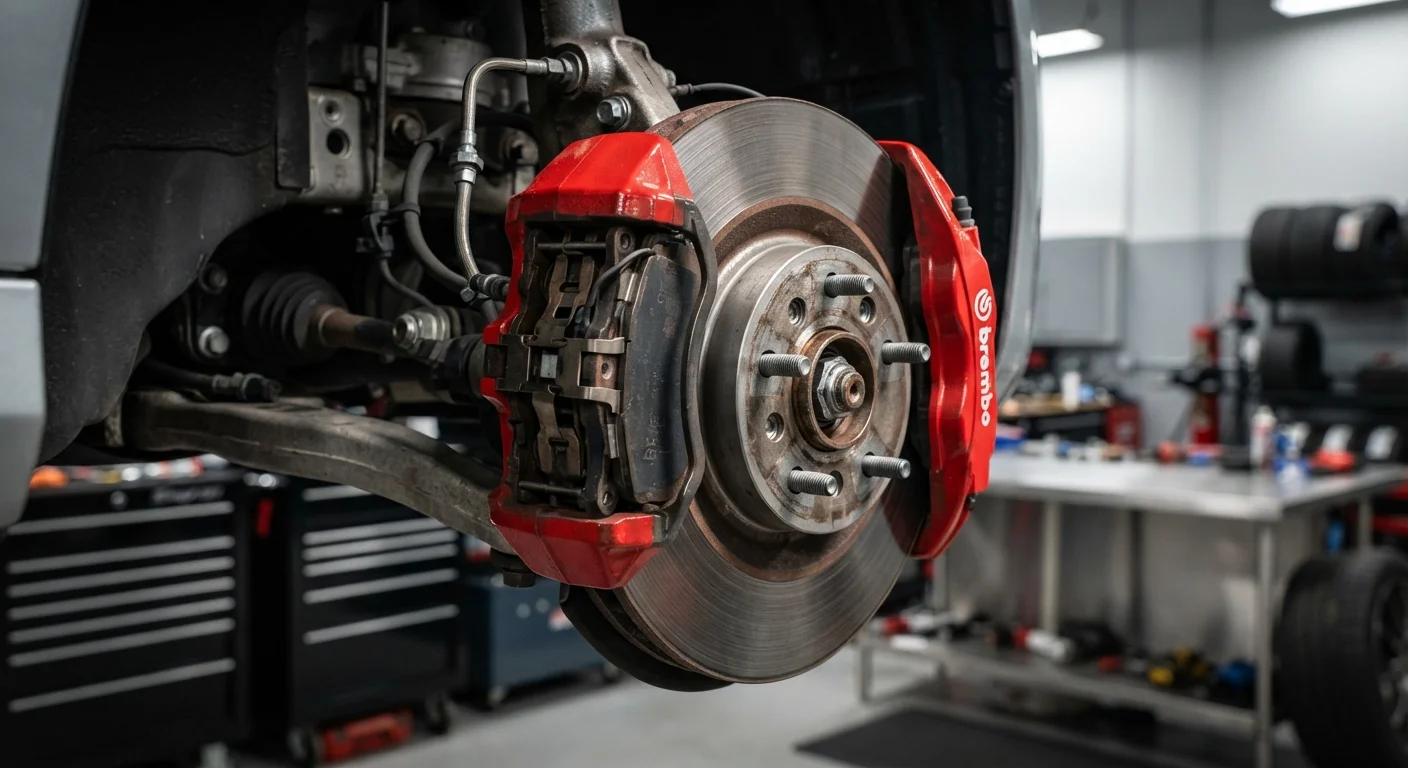
Photo credit: faqsnest.com
In this article
A plain-English overview of how disc and drum brakes work, what normal wear looks like, and when to see a mechanic.
Key Takeaways
- Disc brakes use calipers to clamp pads against a rotor; drum brakes press shoes against a drum's inner surface.
- Brake fluid transmits hydraulic pressure — low or contaminated fluid reduces braking effectiveness.
- Squealing, grinding, pulling, or a soft brake pedal are all signs the system needs professional attention.
- Brake pads typically last 25,000–65,000 miles, but driving habits and terrain affect wear significantly.
- Never delay a brake inspection if you notice a warning light or unusual pedal feel — brakes are safety-critical.
How Your Braking System Actually Works
Press the brake pedal and you trigger a chain reaction that physics instructors love: mechanical force is converted to hydraulic pressure, which in turn becomes friction, which becomes heat, which slows the car. Understanding each link in that chain helps you recognize when something in it starts to fail.
When you push the pedal, a component called the master cylinder pressurizes brake fluid and sends it through steel and rubber lines to each wheel. At every wheel, that pressure acts on either a caliper (in a disc brake system) or a wheel cylinder (in a drum brake system). The pressurized fluid forces the friction material — pads or shoes — against the rotating part of the wheel assembly, creating the resistance that slows you down.
Because the whole system depends on hydraulic pressure, brake fluid is not optional. Low fluid or fluid contaminated with moisture compromises the force that reaches the wheels. See our guide to checking and topping up your car's fluids for how to monitor fluid levels safely between service visits.
Disc Brakes vs. Drum Brakes: What's the Difference
Most modern passenger vehicles use disc brakes on the front wheels and, increasingly, on all four. A disc brake system has three main visible parts: the rotor (the flat spinning disc), the caliper (the clamp that straddles it), and the brake pads (the friction material inside the caliper). When you apply pressure, the caliper squeezes the pads against both faces of the rotor. The large exposed surface area of a disc sheds heat quickly, which is why disc brakes resist the fade — reduced effectiveness from heat buildup — that can occur during repeated hard stops.
Drum brakes work differently. Inside a sealed metal drum that rotates with the wheel, curved brake shoes are pushed outward by wheel cylinders, pressing against the drum's inner surface. Drums are effective, simpler in some respects, and less expensive to manufacture, which is why they're still common on rear wheels of economy vehicles. Their downside is that the enclosed drum retains heat more than an open disc.
Many vehicles pair disc brakes up front — where most braking force goes — with drums at the rear. This is a deliberate engineering balance, not a cost cut. For a broader look at how braking fits into your vehicle's overall systems, see our overview of eight key systems worth understanding.
25,000–65,000 mi
Typical brake pad lifespan range
Industry estimates vary widely based on driving style, vehicle weight, and pad compound — city driving accelerates wear significantly.
~2 years
Recommended brake fluid change interval
Brake fluid absorbs moisture over time, lowering its boiling point; most manufacturer service schedules specify replacement every 1–2 years.
70%
Braking force handled by front brakes
Weight transfers forward under braking, which is why front brake components typically wear faster than rear ones on most passenger vehicles.
Warning Signs You Should Not Ignore
Your brakes communicate clearly when something is wrong — you just need to know what to listen and feel for.
- Squealing or squeaking: A consistent high-pitched noise when braking is usually the wear indicator telling you pads are getting thin. Occasional light squealing after a wet night is normal; persistent squealing is not.
- Grinding: A harsh metal-on-metal grind means pad material has worn away entirely. The caliper or shoe backing is now contacting the rotor or drum directly — this is urgent and damages expensive components quickly.
- Pulling to one side: If the car drifts left or right during braking, one side may have a stuck caliper, uneven pad wear, or a brake fluid issue.
- Vibration or pulsing in the pedal: A pedal that pulses underfoot during normal braking often indicates warped rotors — usually caused by excessive heat over time.
- Soft or spongy pedal: If the pedal travels further than normal before resistance builds, suspect air in the lines or low fluid. Both reduce hydraulic efficiency.
- Brake warning light: Don't dismiss it. Check the dashboard warning light guide to understand what the symbol means and when to act immediately.
If a mechanic's report uses unfamiliar language after an inspection, reading a mechanic's report without feeling lost can help you decode the terminology.
Normal Wear and Realistic Service Intervals
Brake pads wear gradually, and the rate depends heavily on how and where you drive. City driving — lots of stop-and-go traffic — wears pads faster than highway cruising. Frequent mountain descents stress both pads and rotors more than flat commuting. As a general reference, most pads wear out somewhere between 25,000 and 65,000 miles, but treat that range as a starting point, not a guarantee.
Rotors last longer than pads but are not immune to wear. Every resurfacing or replacement of pads should include a rotor thickness check; rotors machined too thin must be replaced. Brake fluid, as noted, degrades over time by absorbing moisture — most manufacturers specify a change interval of around two years, but always defer to your owner's manual.
Modern vehicles may also be equipped with Anti-lock Braking System (ABS) components, including wheel speed sensors, that can develop faults independently of the friction parts. The ABS explainer covers what that system does during a hard stop. If an ABS or electronic fault triggers a code, understanding OBD-II fault codes can help you make sense of what the diagnostic system is flagging.
If you drive an electric or hybrid vehicle, your friction brakes share stopping duty with a regenerative system. Learn how that works in the regenerative braking explainer.
This article is for general informational purposes. Brake inspection and repair involves safety-critical components — always consult a qualified mechanic for diagnosis, service, and repair decisions.
Frequently Asked Questions

Author
Cars & Driving Editorial Team
Cars & Driving Editorial Team is the collective byline for our editorial team and contributor network. Articles published under this byline or an editorial pen name are researched, written, and reviewed according to our editorial standards for clarity, consistency, and independence before publication.
View all articles →