
Reading a Mechanic's Report Without Feeling Lost
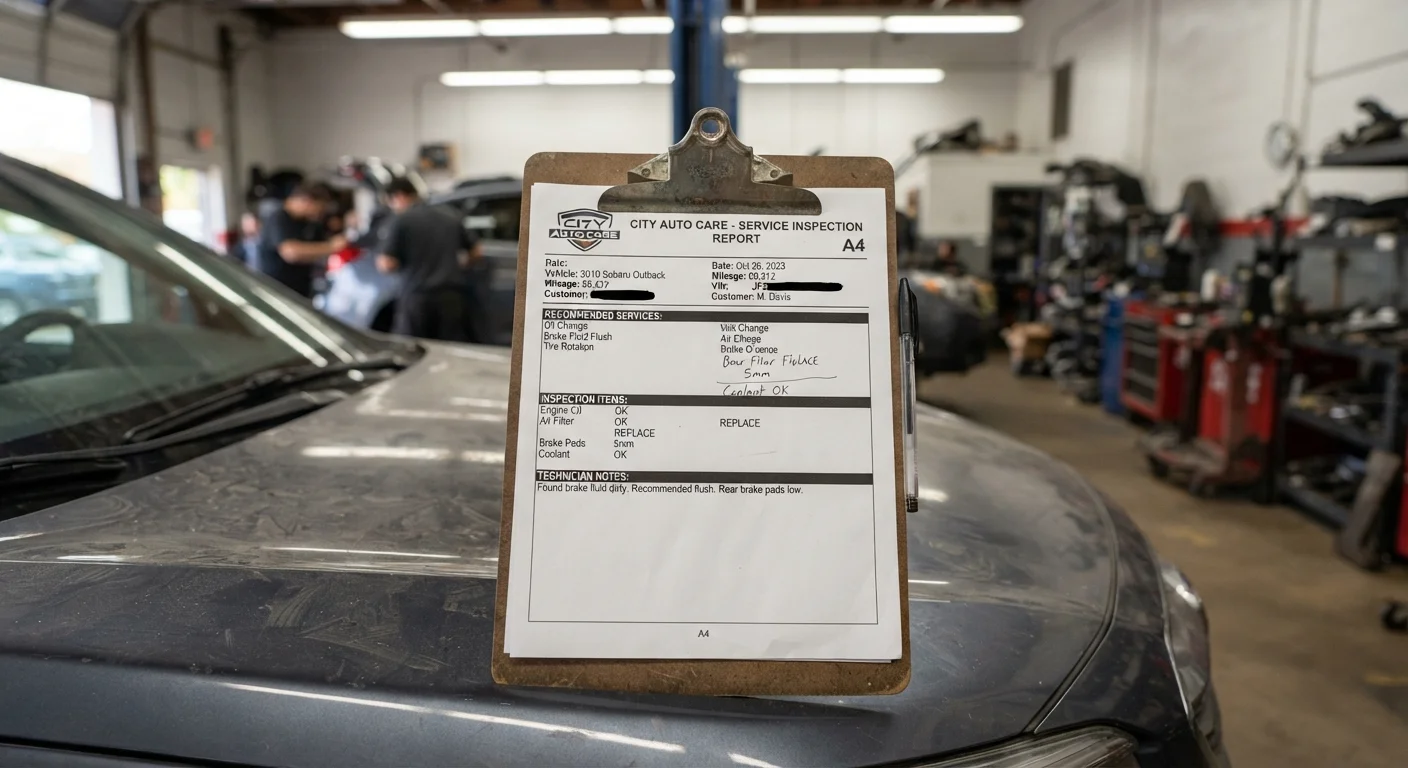
Photo credit: faqsnest.com
In this article
Service reports are full of unfamiliar terms. This guide helps you understand what the items mean so you can ask the right questions.
What a Service Report Actually Is
When you pick up your car from the shop, the paperwork stapled to your receipt is more than a bill — it's a record of what the mechanic inspected, what they found, and what they did (or recommend doing). Understanding it helps you make smarter decisions and keep an honest service history for your vehicle.
Most service reports follow a consistent structure: a list of inspected items, a condition rating for each, any work performed, and a notes or recommendations column. The challenge is that shops use shorthand, industry codes, and condition labels that aren't explained anywhere on the page.
This reference breaks down the most common elements so you can read the report confidently and ask the right follow-up questions.
Deferred maintenance
Recommended work that was not performed during the current service visit. It remains on record and still needs attention at a future date.
OEM
Original Equipment Manufacturer. An OEM part is made to the same specification as the original part fitted to your vehicle when it left the factory.
TSB (Technical Service Bulletin)
A manufacturer advisory describing a known issue and the recommended repair procedure. Unlike a recall, a TSB is not mandatory and may not be covered under warranty.
Serpentine belt
A single, continuous belt that drives multiple engine accessories — such as the alternator, power steering pump, and air conditioning compressor. Failure can affect several systems at once.
Tread depth
The measurement of remaining rubber on a tire, expressed in 32nds of an inch in the U.S. It indicates how much grip and water-channeling capacity the tire still has.
Fluid condition
A mechanic's assessment of whether a fluid is still effective, based on color, clarity, and contamination — separate from whether the fluid level is adequate.
Common Terms and What They Mean
Reports vary by shop, but these labels and abbreviations turn up repeatedly across independent garages and dealerships alike.
| Brake pad replacement threshold | Typically below 3–4 mm (General industry guideline; consult your vehicle manual) |
| Minimum legal tire tread (most U.S. states) | 2/32 of an inch (Check your state's specific motor vehicle code) |
| New tire tread depth (typical) | 10/32" or deeper (Varies by tire type and manufacturer) |
| OBD-II fault code format | One letter + four digits (e.g., P0420) (Standardized by SAE J1979) |
| Traffic-light condition ratings | Green = OK, Yellow = monitor, Red = urgent (Common shop convention; not universally standardized) |
Condition color codes: Many shops use a traffic-light system — green means acceptable, yellow means monitor or service soon, red means urgent attention needed. If your report uses this system, any red items warrant a direct conversation before you drive the car home.
OEM vs. aftermarket parts: OEM stands for Original Equipment Manufacturer — meaning a part made to the same specification as the one that came with your vehicle. Aftermarket parts are made by third parties and vary widely in quality. Your report may note which type was used or quoted. For a deeper look at how individual systems connect, see key vehicle systems explained.
Deferred maintenance: Work the mechanic recommends but that wasn't performed during this visit — usually because you declined it or it wasn't urgent. These items still need attention and shouldn't be forgotten.
TSB (Technical Service Bulletin): An advisory issued by the manufacturer about a known issue. A mechanic may reference a TSB number when performing a repair related to a manufacturer-acknowledged problem. It is not a recall, but it often explains why a specific repair approach was taken.
Reading the Fluids and Wear Section
Most inspection reports include a fluid check and a brake/tire wear section. Here's how to interpret them:
- Fluid condition vs. fluid level: These are two separate things. Level tells you how much fluid is in the system; condition tells you whether it's still doing its job. Old brake fluid can absorb moisture; dirty coolant can become corrosive. Both matter. For more on one of the most checked fluids, see engine oil grades and change intervals.
- Brake pad thickness: Often measured in millimeters. New pads are typically around 10–12 mm; most mechanics recommend replacement below 3–4 mm, though your vehicle's manual may specify differently.
- Tire tread depth: Measured in 32nds of an inch in the U.S. New tires usually start at 10/32" or deeper. The legal minimum in most states is 2/32", but handling degrades meaningfully before that point.
- Belt condition: Reports often note cracking, glazing, or fraying. These are signs of age and wear on drive belts and serpentine belts — components that run several engine accessories. A cracked belt isn't necessarily failing today, but it's a reasonable item to plan around.
If a report uses percentage terms like "30% remaining," ask what that translates to in practical terms — how many miles, or how many months at your typical driving pace.
What to Do With Recommendations
Not every recommendation on a service report is equally urgent. Mechanics are trained to flag anything they observe, but the severity varies widely. A report that lists eight items isn't necessarily alarming — it may include a years-old advisory alongside a genuinely pressing repair.
A useful approach: ask the mechanic to rank recommendations by safety impact. Items tied to braking, steering, or tire integrity typically warrant faster attention than cosmetic or convenience items. If a warning light is already on in your car, cross-reference the report with dashboard warning light meanings to understand the connection.
If a diagnostic code was pulled, your report may include an alphanumeric fault code (like P0420). Our guide to reading OBD-II fault codes explains what those codes mean and how seriously to treat them.
Finally, it's always acceptable to ask for clarification before authorizing additional work. A straightforward question — "Can you show me what you're describing?" — is reasonable, and a trustworthy shop will welcome it. For help knowing which jobs to hand off entirely and which you might handle yourself, see DIY vs. professional car maintenance.
If you're new to all of this, a first-time driver's maintenance guide is a useful place to start building that foundation.

Author
Cars & Driving Editorial Team
Cars & Driving Editorial Team is the collective byline for our editorial team and contributor network. Articles published under this byline or an editorial pen name are researched, written, and reviewed according to our editorial standards for clarity, consistency, and independence before publication.
View all articles →