
The Language of Dashboard Warning Lights
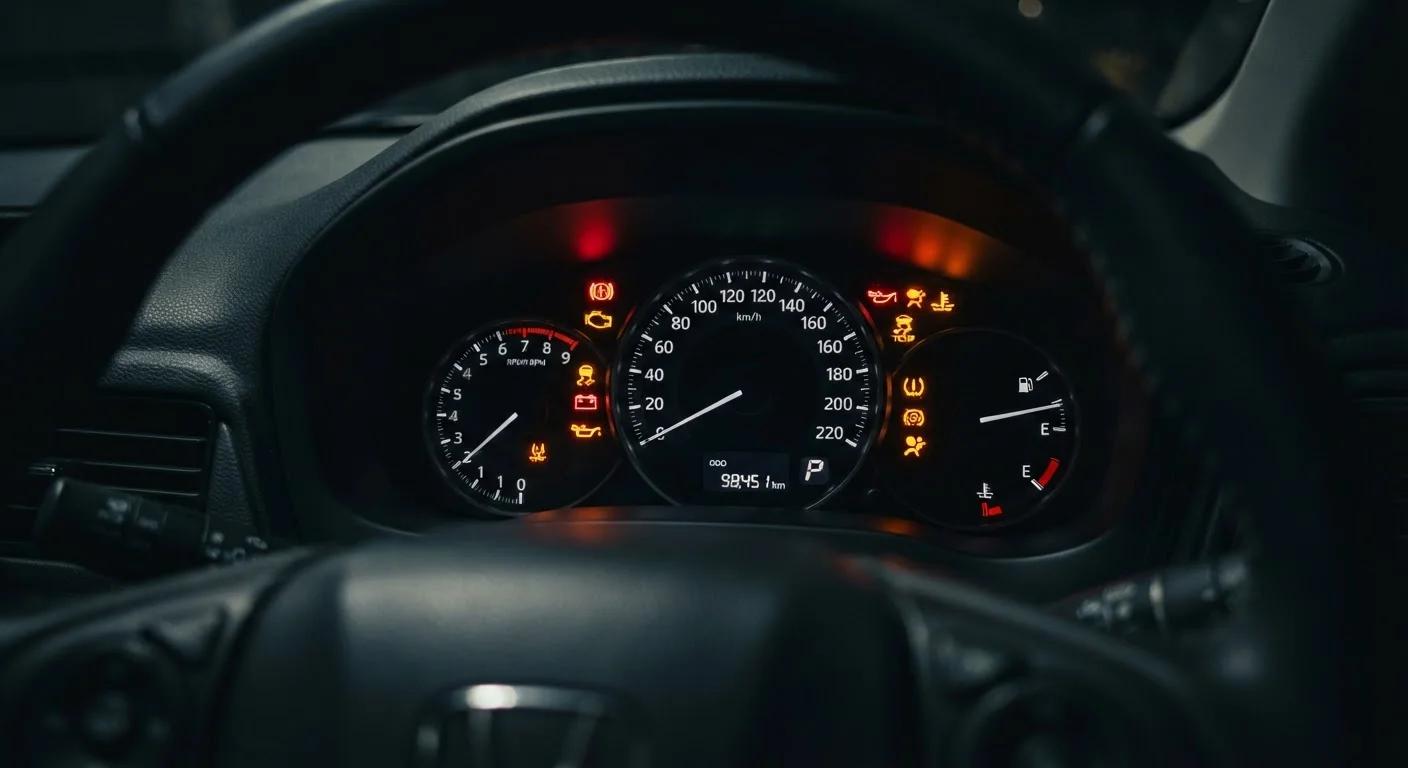
Photo credit: faqsnest.com
In this article
A reference guide to the most common dashboard symbols, what each one signals, and when to act immediately versus schedule a check-up.
Why Dashboard Lights Exist — and How to Read Them
Your vehicle's instrument cluster is a direct line of communication from dozens of sensors monitoring everything from oil pressure to wheel speed. When something falls outside normal parameters, the relevant light switches on. The key is knowing how urgent each message is — and the color of the light is your first clue.
Red means stop or act immediately. Amber or yellow means pay attention and schedule a check-up within a reasonable timeframe. Green and blue lights are purely informational — your high beams are on, your turn signal is active, a driver-assistance system has engaged.
| Color: Red | Immediate attention required — stop safely when possible |
| Color: Amber/Yellow | Caution — schedule inspection soon |
| Color: Green or Blue | Informational — system is active, no fault |
| TPMS requirement | Mandatory on all new US passenger vehicles since 2008 (NHTSA FMVSS 138) |
| OBD-II standardization | Required on virtually all US vehicles sold after 1996 (US EPA mandate) |
| Flashing vs. steady CEL | Flashing = act now; steady = schedule a check |
Shape matters too. Many symbols are internationally standardized through the ISO 2575 standard, so a battery icon looks like a battery, and a thermometer floating in waves signals coolant temperature. Your owner's manual remains the definitive reference for your specific vehicle — no two manufacturers implement every light identically.
Red Lights: Stop and Investigate
Red warning lights signal that something needs your attention now — continuing to drive could cause serious mechanical damage or create a safety risk.
- Oil Pressure (oil can icon): Low oil pressure means your engine's moving parts may not be adequately lubricated. Pull over safely and turn off the engine. Check the oil level; if it's fine and the light stays on, do not restart — call a mechanic. This is one of the fastest ways an engine can sustain severe damage.
- Coolant Temperature (thermometer in liquid): The engine is overheating. Pull over, turn off the engine, and let it cool before opening the hood. Low coolant, a failed thermostat, or a coolant leak are common causes. See our overview of key engine systems for context on how the cooling system works.
- Battery: The charging system isn't maintaining voltage. Your car is likely running on battery reserve alone. Reduce electrical load and head to a shop — you may have limited driving time before the engine stalls.
- Brake Warning: Could mean the parking brake is engaged (check first), or it can signal low brake fluid or a hydraulic fault. If the parking brake is off and the light remains, treat it as urgent. Learn more about how the brake system works and warning signs.
Amber Lights: Schedule a Check-Up
Amber lights indicate a fault that won't necessarily strand you today, but shouldn't be ignored for long. Left unaddressed, many amber-light issues worsen and become more expensive to fix.
Check Engine Light (CEL)
A general-purpose warning triggered by the vehicle's onboard diagnostic system when it detects an emissions or engine-related fault code. It can indicate anything from a loose gas cap to a failing catalytic converter.
OBD-II
On-Board Diagnostics, second generation. A standardized system built into most vehicles sold in the US after 1996 that monitors engine and emissions systems and stores fault codes when something goes wrong.
Malfunction Indicator Lamp (MIL)
The technical name for the check engine light. When illuminated steadily, it signals a logged fault; when flashing, it typically indicates a more urgent, active problem such as engine misfiring.
TPMS
Tire Pressure Monitoring System. A federally mandated sensor system — required on US vehicles from 2008 onward — that alerts the driver when one or more tires fall significantly below recommended pressure.
ABS
Anti-lock Braking System. An electronic safety system that prevents wheel lock-up during hard braking, allowing the driver to maintain steering control. An ABS warning light means this system may not function as intended.
Limp Mode
A protective state some vehicles enter when the ECU detects a serious fault. The engine or transmission limits power output to prevent further damage, typically allowing the driver to reach a shop safely.
- Check Engine (engine outline): A steady check engine light means the OBD-II system has logged a fault code. It could be as minor as a loose gas cap or as significant as a failing oxygen sensor. A flashing check engine light is more urgent — it often indicates active engine misfiring, which can damage the catalytic converter. Reading an OBD-II fault code explains how to interpret what the system is actually flagging.
- TPMS (tire with exclamation point): One or more tires are significantly underinflated. Check all four tires with a gauge — don't rely on visual inspection alone. Properly inflated tires affect handling, fuel economy, and tire longevity. Pair this with understanding tire sidewall markings for a fuller picture.
- ABS Warning: Your anti-lock braking system has detected a fault and may be disabled. Standard braking typically still works, but ABS intervention during hard stops will not. Schedule an inspection promptly.
- Traction Control / Stability Control: A steady light (not blinking) means the system has been deactivated or has a fault. A momentarily flashing light simply means the system is actively working — that's normal on slippery roads.
- Transmission Temperature: Transmission fluid is hotter than normal, often triggered by towing heavy loads or stop-and-go traffic. Ease off and let it cool if possible.
When to Pull Over Now Versus Drive to the Shop
The practical question most drivers face: do I stop immediately, or can I make it to a mechanic? A general framework:
| Light | Action |
|---|---|
| Oil pressure (red) | Pull over immediately, engine off |
| Coolant temp (red) | Pull over, let cool before inspection |
| Flashing check engine | Reduce speed, head to shop promptly |
| Steady check engine | Schedule diagnostic within a few days |
| Battery (red) | Drive directly to a shop, limit electrical use |
| TPMS (amber) | Check pressure soon; pull over if handling feels off |
| ABS (amber) | Schedule inspection; drive cautiously |
If you're ever unsure whether a light is serious, your owner's manual and a quick call to a mechanic are your best resources. A technician can also pull any stored fault codes — a process covered in detail in our guide to OBD-II fault codes. For broader context on the systems behind these alerts, the Car Maintenance hub is a useful starting point.
This article is for general informational purposes only. Always consult a qualified mechanic for diagnosis and repair of any vehicle fault. Do not attempt repairs that exceed your skill level or that could result in injury or further vehicle damage.

Author
Cars & Driving Editorial Team
Cars & Driving Editorial Team is the collective byline for our editorial team and contributor network. Articles published under this byline or an editorial pen name are researched, written, and reviewed according to our editorial standards for clarity, consistency, and independence before publication.
View all articles →