
Tyre Markings Decoded: Reading the Sidewall Without Guesswork
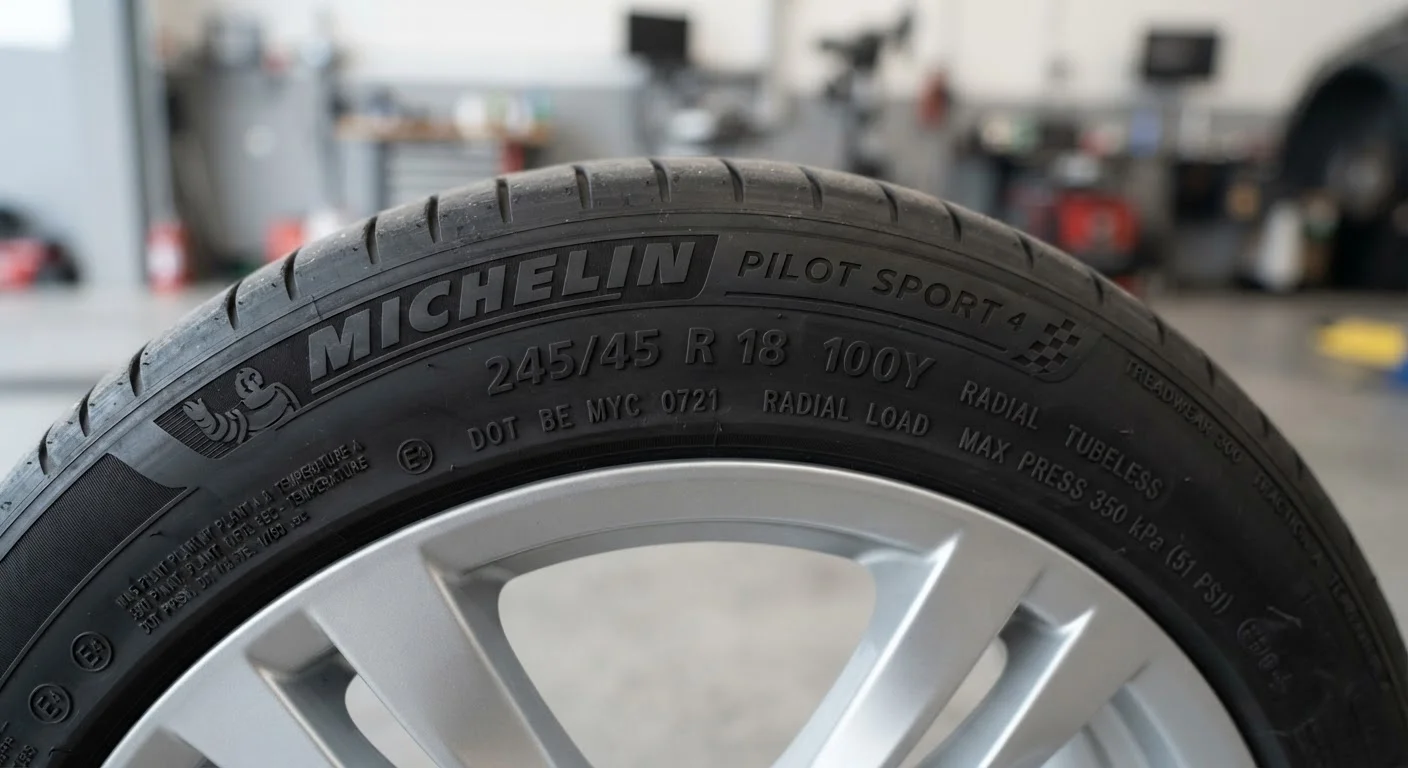
Photo credit: faqsnest.com
That string of numbers and letters on your tyre carries precise technical information. Here's what each part means and why it matters for safety.
Why the Sidewall Code Matters
That string of letters and numbers molded into your tyre's sidewall isn't decorative. It's a standardized technical specification that tells you exactly what that tyre was built to do — and what happens when you push it beyond those limits. Fitting the wrong size, running at the wrong pressure, or exceeding the load rating are all safety concerns that start with not understanding what the markings mean.
The good news: the format is consistent across almost every passenger tyre sold in the United States, and once you've read it once, you can read any tyre. Take a typical marking like P215/65R16 98H. Each segment answers a specific question about size, construction, and performance limits.
If your tyre pressure warning light has come on recently, see our guide to dashboard warning lights to understand how urgently you need to act.
| Primary size code format | P215/65R16 98H |
| Section width unit | Millimeters |
| Rim diameter unit | Inches |
| Load index 98 equals | 1,653 lbs per tyre (Standard load index table) |
| Speed rating H equals | 130 mph maximum sustained speed |
| DOT date code location | Last 4 digits of DOT sequence (week + year) |
Breaking Down Each Segment
Service Type Prefix
The optional letter at the very start identifies the tyre's intended vehicle class. P stands for passenger vehicle — the most common. LT means light truck, which typically carries higher load ratings and stiffer sidewalls. T indicates a temporary spare (the narrow "donut" spare found in many trunks). If there's no prefix at all, the tyre follows a metric standard often used on European vehicles.
Section Width
The three-digit number following the prefix — 215 in our example — is the tyre's width in millimeters, measured from sidewall to sidewall at the widest point. A wider tyre generally offers more contact patch and cornering grip, but it isn't always the right choice: wider tyres can reduce fuel economy and may not clear wheel wells on every vehicle.
Aspect Ratio
After the slash comes the aspect ratio — the sidewall height expressed as a percentage of the section width. A 65 means the sidewall height is 65% of 215 mm, roughly 140 mm. Lower aspect ratios (40, 45) mean shorter sidewalls, a stiffer ride, and handling favored by performance cars. Higher ratios mean more sidewall flex, a cushier ride, and better pothole resistance — common on trucks and SUVs.
Construction Type
The letter R stands for radial, meaning the internal cords run perpendicular to the direction of travel. Virtually every modern passenger tyre is radial. The older D (diagonal bias) construction still appears on some trailers and classic vehicles but is rarely seen on road cars today.
Rim Diameter
The two-digit number after the construction letter — 16 — is the wheel diameter in inches that the tyre is designed to mount. This must match your wheel exactly; a 16-inch tyre will not seat safely on a 17-inch rim.
Load Index
The number 98 in our example is a load index — a standardized code that maps to a maximum weight the tyre can safely carry when properly inflated. An index of 98 corresponds to 1,653 lbs per tyre. Add all four together and you get the vehicle's total load-carrying capacity from its tyres. Exceeding this figure — by overloading a vehicle or fitting a tyre with too low an index — is a real safety risk.
Speed Rating
The trailing letter — H — is the speed rating, indicating the maximum sustained speed the tyre is engineered to handle. H is rated to 130 mph. Common ratings run from Q (99 mph, often winter tyres) up through V (149 mph) and W (168 mph) for performance applications. Fitting a tyre with a lower speed rating than your vehicle's specification isn't recommended; fitting a higher one is generally acceptable and won't harm anything.
For a broader look at keeping tyres in good working order, see our tyre maintenance guide covering pressure, tread depth, and rotation.
Aspect Ratio
The ratio of a tyre's sidewall height to its section width, expressed as a percentage. A lower number means a shorter, stiffer sidewall.
Load Index
A standardized number that corresponds to the maximum weight a single tyre can support when inflated to its rated pressure. Each number maps to a specific weight value in a published table.
Speed Rating
A letter code indicating the maximum sustained speed a tyre is engineered to handle safely under rated load. Higher letters correspond to higher speed thresholds.
UTQG
Uniform Tire Quality Grading — a U.S. government system rating tyres on treadwear, traction, and temperature resistance to allow standardized comparison.
Three-Peak Mountain Snowflake (3PMSF)
An independently tested certification mark indicating a tyre meets specific performance criteria in severe snow conditions. More rigorous than the self-certified M+S designation.
DOT Code
A Department of Transportation identifier molded into the sidewall. The final four digits encode the tyre's week and year of manufacture.
Other Markings You'll Find
Beyond the primary size code, sidewalls carry several additional identifiers worth knowing.
- DOT code: The Department of Transportation compliance code. The last four digits are the most useful — they indicate the week and year of manufacture. A tyre made in the 30th week of 2021 would end in 3021. Many safety organizations suggest replacing tyres older than six to ten years regardless of tread depth, because rubber compounds degrade over time.
- UTQG ratings: Uniform Tire Quality Grading, a U.S. government–mandated system rating tyres on treadwear (a relative index number), traction (AA, A, B, or C), and temperature resistance (A, B, or C). These grades allow comparison between tyres of similar types, though the treadwear number is not a mileage guarantee.
- M+S or Three-Peak Mountain Snowflake: M+S (mud and snow) is a self-certified designation indicating the tread pattern meets a basic all-season standard. The three-peak mountain snowflake symbol (3PMSF) is a more rigorous, independently tested certification for severe snow conditions and is the mark to look for if you drive in genuine winter weather.
- MAX LOAD and MAX PRESSURE: These values stamped on the sidewall are the tyre's absolute limits, not recommendations for daily driving. Your vehicle's correct inflation pressure is found on the door jamb placard or in the owner's manual — not on the tyre itself.
Decoding markings on vehicles is a recurring skill for drivers. Our reference on dashboard warning light symbols follows a similar logic: standardized codes that carry clear meaning once you know the key.

Author
Cars & Driving Editorial Team
Cars & Driving Editorial Team is the collective byline for our editorial team and contributor network. Articles published under this byline or an editorial pen name are researched, written, and reviewed according to our editorial standards for clarity, consistency, and independence before publication.
View all articles →