
Regenerative Braking: The Physics Behind an EV's Energy Recovery
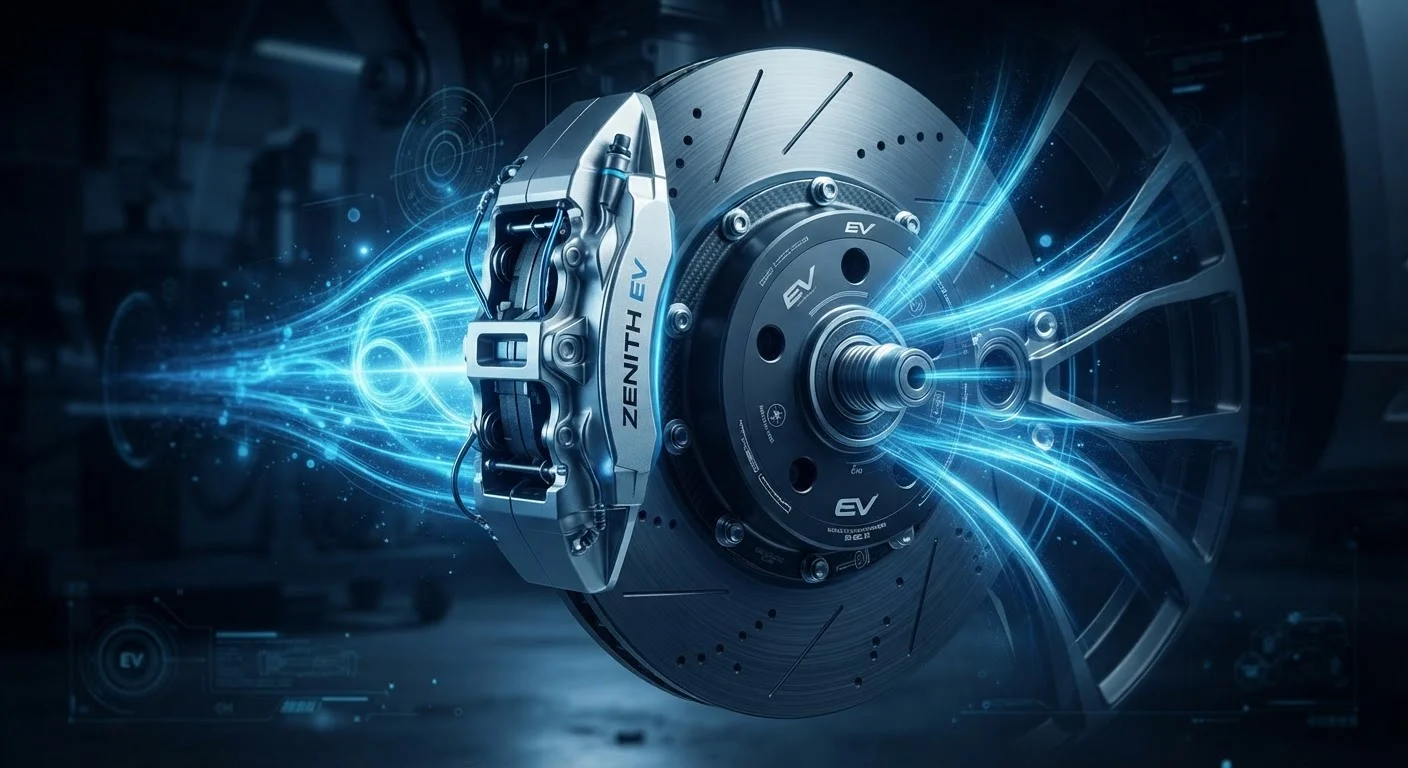
Photo credit: faqsnest.com
In this article
Regenerative braking does more than slow a car down — it recaptures kinetic energy. Here's how it works and why it matters for range.
Key Takeaways
- Regenerative braking converts kinetic energy into electricity rather than wasting it as heat.
- The electric motor reverses role and acts as a generator during deceleration.
- Regen braking extends driving range, especially in stop-and-go city traffic.
- Conventional friction brakes still engage during hard stops and emergencies.
- Drivers can often adjust the strength of regenerative braking through vehicle settings.
- Regen systems work alongside ABS and other safety electronics without conflict.
Where the Energy Goes When You Slow Down
Every time a conventional car brakes, it converts the vehicle's forward momentum into heat through friction between brake pads and rotors. That heat radiates into the air and is gone forever. For a gasoline-powered car, this is simply the cost of stopping — the engine can always burn more fuel to rebuild speed.
An electric vehicle faces a fundamentally different energy accounting problem. Its battery pack holds a finite amount of stored electricity, and every wasted joule of kinetic energy is range left on the table. Regenerative braking exists to close that gap. To understand why EVs can do this while combustion engines cannot, it helps to look at what an electric motor actually is: a machine that converts electrical energy to motion, but one that can also run the process in reverse.
The Motor-as-Generator: How Regen Actually Works
At the heart of regenerative braking is a principle of electromagnetism: the same relationship between magnets, coils of wire, and motion that makes a motor spin can also generate electricity when that motion is externally applied. When a driver lifts off the accelerator pedal in an EV, the control electronics disconnect the battery from powering the motor and instead connect it as a load. The still-spinning wheels now turn the motor's rotor against electromagnetic resistance.
That resistance is what the driver feels as a braking force — sometimes called engine braking in combustion vehicles, though the mechanism is entirely different. As the rotor turns against the magnetic field, electrical current is generated and directed back into the battery through the vehicle's power electronics and inverter. The car slows down; the battery gains charge.
10–30%
Energy recovered through regenerative braking
Estimates from automotive engineers suggest regen can recover roughly 10–30% of kinetic energy in typical stop-and-go driving, though real-world results vary by vehicle and conditions.
~70%
Efficiency of motor-to-generator energy conversion
Electric motors operating as generators can convert kinetic energy back to electricity at efficiencies often cited around 60–80%, far exceeding what any friction-based system can recover.
Longer
Brake pad lifespan on many EVs vs. conventional vehicles
Because regenerative braking handles the majority of routine deceleration, friction brake components on EVs typically experience significantly less wear over time.
The friction brake system — rotors, pads, and calipers — remains ready in the background. For gentle city slowdowns, regen alone can bring the car to a complete stop in many EVs. For hard stops or emergency situations, the friction brakes engage automatically. The transition between the two is typically invisible to the driver. To see how conventional friction brakes work alongside this system, our overview of how the braking system works covers the mechanics in plain terms.
One-Pedal Driving: Regen Taken Further
Many EV drivers choose to use the highest regenerative braking setting, which produces a phenomenon known as one-pedal driving. When set to maximum regen, simply releasing the accelerator pedal creates enough deceleration to bring the car to a complete stop without ever touching the brake pedal in most city traffic scenarios. The driver modulates speed entirely through throttle input.
This takes some adjustment for drivers accustomed to conventional coasting, but many adopt it quickly. It keeps the right foot on a single pedal, reduces the micro-corrections between pedals, and maximizes energy recovery on every approach to a light or intersection. Drivers who prefer a more traditional feel can lower regen intensity or select a mode that allows the car to coast more freely.
Where Regen Works Best — and Where It Has Limits
Stop-and-go urban driving is where regenerative braking delivers its biggest practical benefit. Every red light and slowing intersection becomes a small opportunity to feed energy back into the battery. Highway cruising at steady speed, by contrast, offers few deceleration events, so regen contributes relatively little to range on open-road trips.
Terrain matters too. Descending a long mountain grade is one of the more dramatic demonstrations of regen capability — the system can recover substantial energy over several miles of sustained downhill travel. Some EVs even display a real-time power-flow gauge so drivers can watch the kilowatts flowing back into the battery as they descend.
Cold weather introduces a real limitation. Lithium-ion battery packs accept charge more slowly when cold, so in very low temperatures the vehicle's battery management system may reduce regen strength until the pack warms to an acceptable operating temperature. This is a normal and protective behavior, not a malfunction.
Regen also integrates cleanly with safety systems. Modern EVs coordinate regenerative braking with anti-lock braking systems so that if a wheel begins to lock during hard braking, the ABS can modulate both regen torque and friction brake pressure simultaneously.
What This Means for Everyday Drivers
Regenerative braking is not a gimmick — it's a meaningful efficiency tool that changes how energy flows through a vehicle. For drivers new to EVs, understanding that every slowdown is a partial recharge reframes how you think about city driving. Anticipating stops earlier and coasting into intersections rather than accelerating to them is a habit that pays off in extra miles per charge.
It also has a quiet maintenance benefit: because friction brakes engage far less frequently, brake pads on many EVs last considerably longer than on comparable gasoline vehicles. Some EV owners go years without needing a pad replacement, though this varies by driving style and conditions.
Regenerative braking is one part of a broader engineering logic that makes electric vehicles operate differently at a fundamental level — recapturing energy that combustion vehicles simply cannot, and turning the physics of motion into a practical range advantage.
Frequently Asked Questions

Author
Cars & Driving Editorial Team
Cars & Driving Editorial Team is the collective byline for our editorial team and contributor network. Articles published under this byline or an editorial pen name are researched, written, and reviewed according to our editorial standards for clarity, consistency, and independence before publication.
View all articles →