
Lateral Moves, Promotions, and Pivots: Choosing the Right Career Progression Path
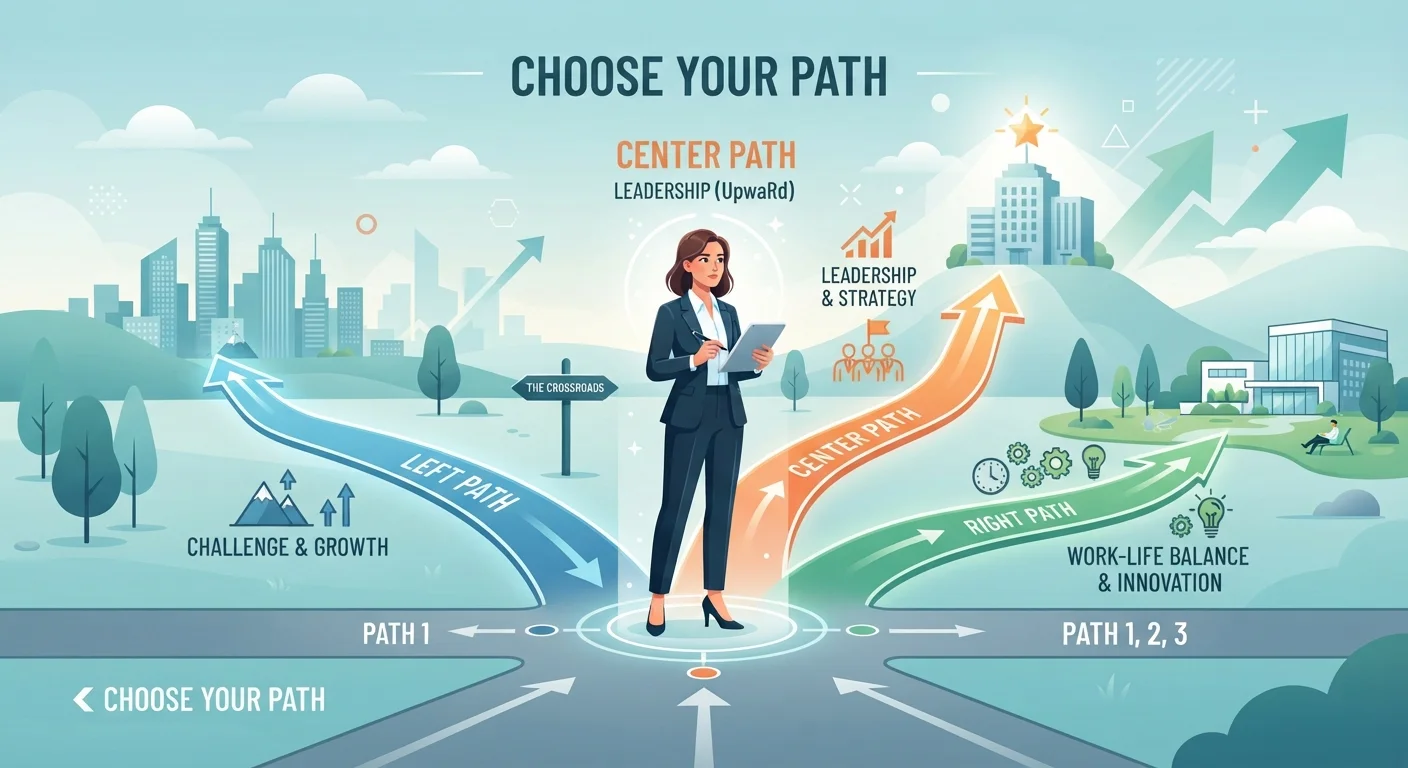
Photo credit: faqsnest.com
In this article
Not all career growth moves upward. Compare lateral moves, promotions, and full pivots to understand which approach suits your goals and circumstances.
Key Takeaways
- Promotions offer increased responsibility and compensation but require demonstrated readiness and organizational opportunity.
- Lateral moves build transferable skills and cross-functional credibility without requiring a title change.
- Career pivots involve the highest short-term cost but can unlock long-term fulfillment and relevance.
- The right move depends on your current skills, financial runway, and long-term professional goals.
- No single path suits every professional — context, timing, and self-knowledge all shape the best choice.
Why Career Progression Isn't One-Dimensional
Most people grow up with a single mental model of career success: start at the bottom, work hard, and climb steadily upward. But experienced professionals know that real career development rarely unfolds in a straight vertical line. It branches, loops, and sometimes reverses course before accelerating again.
Understanding the three primary types of career moves — promotions, lateral shifts, and full pivots — gives you a clearer vocabulary for evaluating your own options. As our guide on key professional development terms explains, naming these concepts precisely helps you navigate them with greater confidence.
Each path carries real trade-offs. The goal of this comparison isn't to rank them but to help you identify which move fits your situation right now — and why that distinction matters more than any universal rule about career success.
Promotions: Moving Up With Purpose
A promotion is the most culturally familiar form of career progression — a step up in title, responsibility, and typically compensation. Done well, it reflects a genuine expansion of scope: you're not just doing more, you're accountable for outcomes at a higher level.
Promotions tend to work best when three conditions align: you've consistently exceeded the expectations of your current role, there is genuine organizational need at the next level, and decision-makers can see you operating at that higher level already. Without all three, even strong performers can stall. Ambition alone rarely leads to advancement — structural readiness and visibility matter just as much as drive.
One risk with promotion-focused thinking is tunnel vision. If the only path you're willing to take is upward, you may pass on lateral opportunities that would ultimately accelerate your trajectory. Promotions can also create a false finish line: reaching a new title without a clear sense of what you want to build from that position.
If you're preparing to make the case for a promotion, framing that conversation professionally with evidence and clarity makes a measurable difference in outcomes.
Lateral Moves: Building Breadth Over Height
A lateral move means shifting to a role at roughly the same level — often in a different department, function, or business unit — without a significant change in seniority or pay. These moves are frequently undervalued, especially early in a career, yet they build the kind of cross-functional fluency that becomes increasingly rare and valuable at senior levels.
Common reasons to pursue a lateral move include: escaping a narrow specialism before it becomes a constraint, preparing for a leadership role that requires broad organizational knowledge, or repositioning within an industry where your current specialty is declining in relevance.
| Promotion | Lateral Move | Career Pivot | |
|---|---|---|---|
| Primary benefit | Increased scope and compensation | Skill breadth and versatility | Alignment with new goals or field |
| Typical short-term cost | Low (if conditions are right) | Minimal financial impact | High — income and seniority may dip |
| Time to see results | Months to 1–2 years | 1–3 years of compounding benefit | 2–5 years to rebuild credibility |
| Risk level | Low to moderate | Low | High, but manageable with planning |
| Best timing | After consistent overperformance | When skills feel narrow or siloed | When field or values misalignment is confirmed |
| Transferable skills required | Deep expertise in current role | Adaptability and curiosity | Core professional skills reframed for new context |
The hidden benefit of a thoughtful lateral move is credibility across silos. Professionals who understand how multiple departments operate — not just their own — tend to be more effective collaborators and more compelling candidates for leadership roles. Sponsors, in particular, often advocate for people whose versatility they've witnessed firsthand.
Career Pivots: When a New Direction Is the Right One
A career pivot is a deliberate shift into a different field, industry, or type of work — one that may require retraining, rebuilding credibility, and accepting a temporary step down in seniority or pay. Pivots carry the highest short-term cost but can be the most transformative move available to someone whose current path no longer fits who they are or want to become.
Certain career inflection points — a restructuring, a health shift, a growing sense of misalignment — often surface the need for a pivot before people are ready to name it. Recognizing these moments early gives you more choices about how to transition rather than reacting under pressure.
Pivots are rarely as absolute as they appear from the outside. Most professionals carry transferable skills — project management, client communication, data analysis, leadership — that translate across industries even when job titles don't. The challenge is articulating that value to new audiences. Formal credentials and self-directed learning both play a role here, depending on the destination field and how employers in that space evaluate candidates.
Planning a pivot takes honest assessment of your financial runway, your risk tolerance, and whether your dissatisfaction is with your field broadly or with a specific employer or role. Changing companies is not the same as changing careers.
Choosing Your Path: A Framework for Decision-Making
There's no universal formula for which move to make, but three questions can sharpen your thinking considerably:
- What is the actual problem I'm solving? Boredom, undercompensation, skills stagnation, and values misalignment each suggest different remedies. A promotion won't fix a misalignment problem; a pivot won't fix a compensation problem if the new field pays less.
- What does my market position look like? Your leverage — in negotiation, in hiring markets, in internal conversations — depends on how your skills compare to demand. Honest self-assessment here prevents both underestimating and overestimating your options.
- What timeline can I realistically sustain? Pivots require longer runways. Lateral moves may involve short-term income plateaus. Promotions can take longer than expected if organizational conditions aren't right. Matching your move to your actual constraints prevents the kind of impatient decisions that derail otherwise sound strategies.
For a longer lens on this, the principles behind sustainable career growth over decades offer a useful counterweight to short-term thinking. The moves that feel most urgent in the moment are often the least important ones in a decades-long career.

Author
Learning & Skills Editorial Team
Learning & Skills Editorial Team is the collective byline for our editorial team and contributor network. Articles published under this byline or an editorial pen name are researched, written, and reviewed according to our editorial standards for clarity, consistency, and independence before publication.
View all articles →