
Synthetic vs. Conventional Motor Oil: Which One Suits Your Car?
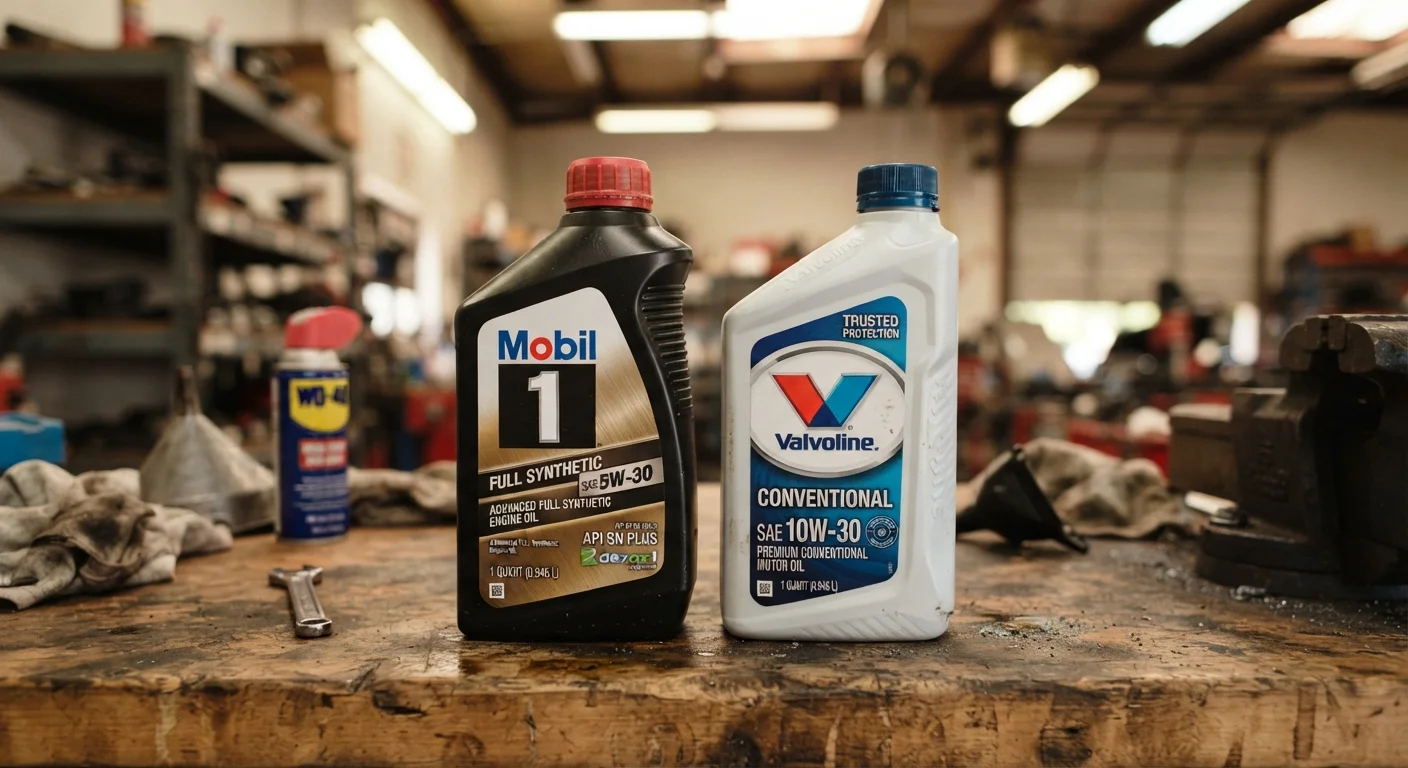
Photo credit: faqsnest.com
In this article
A clear-eyed look at the real differences between synthetic and conventional motor oil to help you make an informed choice.
Key Takeaways
- Synthetic oil is chemically engineered for greater consistency, temperature stability, and longer service life.
- Conventional oil is refined from crude petroleum and costs less upfront but typically requires more frequent changes.
- Your owner's manual — not marketing — is the most reliable guide to which oil type your engine needs.
- Switching from conventional to synthetic is generally safe, but always verify compatibility with your specific vehicle.
- The 3,000-mile oil change rule is largely outdated; most modern vehicles can go significantly longer between changes.
What's Actually Inside Each Type of Oil
Motor oil does one primary job: reduce friction between metal parts inside your engine. But not all oil is made the same way, and that matters more than most drivers realize.
Conventional motor oil starts as crude petroleum pumped from the ground. Refiners process it to remove impurities and improve its properties, but the resulting product still contains a mix of different hydrocarbon molecules with varying shapes and sizes. That inconsistency limits how well it performs under stress.
Synthetic motor oil is built differently. Chemists start with a base — often a highly refined petroleum fraction or a compound like polyalphaolefin (PAO) — and engineer the molecules to be uniform in size and shape. The result is oil that behaves more predictably across a wider range of temperatures and resists breakdown longer.
Both types receive additive packages to boost performance: detergents to clean engine deposits, antioxidants to slow degradation, and viscosity modifiers to maintain flow across temperatures. The difference is in the base stock they start with.
For a deeper look at viscosity ratings and what the numbers on the bottle actually mean, see our guide to engine oil grades and change intervals.
| Criterion | Synthetic Motor Oil | Conventional Motor Oil |
|---|---|---|
| Base stock | Engineered molecules (uniform) | Refined crude petroleum (variable) |
| Cold-weather flow | Flows faster at low temps | Slower flow in cold conditions |
| Heat resistance | Higher thermal stability | Breaks down faster under heat |
| Typical change interval | 7,500–10,000+ miles (per manual) | 3,000–5,000 miles (per manual) |
| Cost per quart | Higher upfront cost | Lower upfront cost |
| Suited for turbocharged engines | Generally recommended | Often insufficient |
| Availability | Widely available | Widely available |
Real-World Performance Differences
The molecular consistency of synthetic oil translates into measurable advantages in specific situations — though the gap isn't always dramatic for everyday driving.
Cold starts: On a frigid morning, oil must flow quickly to protect engine parts before they warm up. Synthetic oil flows faster at low temperatures, which is one of the most meaningful real-world advantages it holds over conventional oil.
High-heat conditions: Turbocharged engines, towing, and stop-and-go traffic all push oil temperatures higher. Conventional oil breaks down faster under sustained heat. Synthetic holds its protective properties longer.
Change intervals: Conventional oil generally degrades faster and is typically changed every 3,000–5,000 miles in older guidance. Most synthetics are formulated for 7,500–10,000 miles or more — though your owner's manual sets the actual standard. If you've heard the 3,000-mile rule repeated as gospel, our article on common car maintenance myths explains why that figure is largely outdated for modern vehicles.
Fuel economy: Synthetic oil can offer a slight fuel economy benefit due to reduced internal friction, though the improvement in typical driving is modest — usually a fraction of a mile per gallon.
7,500–10,000 mi
Typical synthetic oil change interval
Many vehicle manufacturers now recommend synthetic oil change intervals well beyond the old 3,000-mile standard, though drivers should always follow their specific owner's manual.
~2x
Longer synthetic service life vs. conventional
Synthetic oil's engineered base stock generally allows it to maintain protective properties roughly twice as long as conventional oil under comparable conditions.
~30%
U.S. new cars requiring synthetic oil
A growing share of new vehicles sold in the U.S. specify full synthetic oil, driven by increasingly tight engine tolerances and turbocharged powertrains.
How to Choose the Right Oil for Your Car
The single most reliable source of guidance is your vehicle's owner's manual. Manufacturers specify which oil type, viscosity grade, and change interval suits your engine based on how it was designed and tested. Ignoring that specification — even in favor of a premium synthetic — can void warranty coverage in some cases.
Signs synthetic may be the right call:
- Your manual explicitly calls for synthetic
- You have a turbocharged or direct-injection engine
- You regularly drive in extreme temperatures
- You want to extend the time between oil changes
Signs conventional may be sufficient:
- Your manual permits conventional oil
- Your vehicle has a high-mileage, non-turbocharged engine
- You change oil regularly and drive under normal conditions
One question that comes up often: can you switch from conventional to synthetic mid-life? Generally, yes — modern synthetics are compatible with conventional oil and engine seals. But it's worth reviewing common misconceptions about engine oil before making that call, because some assumptions drivers hold about switching aren't well supported.
There's also a middle ground: synthetic blend oil, which mixes conventional and synthetic base stocks. It offers some of synthetic's performance benefits at a lower price point, and some manufacturers recommend it for certain engines.
Whatever you choose, consistency matters. Regular changes using the correct type and grade do far more for engine longevity than the specific brand on the label.

Author
Cars & Driving Editorial Team
Cars & Driving Editorial Team is the collective byline for our editorial team and contributor network. Articles published under this byline or an editorial pen name are researched, written, and reviewed according to our editorial standards for clarity, consistency, and independence before publication.
View all articles →