
Merging, Yielding, and Right-of-Way: A No-Confusion Breakdown
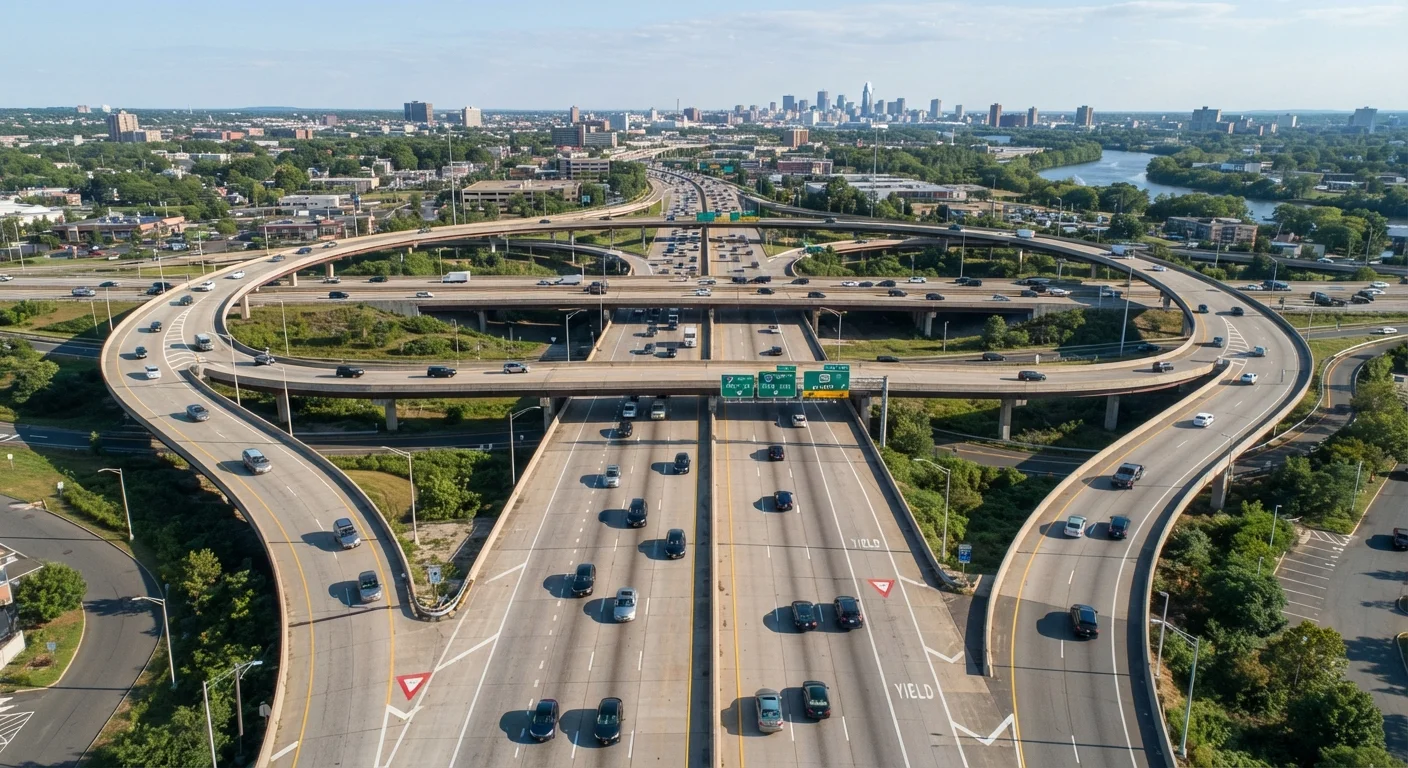
Photo credit: faqsnest.com
In this article
Right-of-way rules are widely misunderstood — even by experienced drivers. This explainer covers the key scenarios clearly and accurately.
Key Takeaways
- Right-of-way cannot be demanded — it can only be yielded to another driver.
- A yield sign means slow down and give way, not necessarily stop completely.
- At uncontrolled intersections, the driver who arrives first generally goes first.
- Merging drivers must yield to traffic already on the highway — not the other way around.
- Even when you have the right-of-way, you are still legally obligated to avoid a collision if you can.
Why Right-of-Way Confusion Causes Real Problems
Most drivers know the rules in a general sense — yet right-of-way violations are consistently among the leading causes of intersection crashes in the United States. The disconnect isn't usually ignorance; it's a mix of overconfidence, ambiguous situations, and persistent myths about who "owns" the road in a given moment.
The foundational rule to keep in mind: right-of-way is always yielded, never taken. No law gives any driver an automatic claim on a lane or intersection. Laws only specify when one driver must give way to another. That distinction matters in practice, because it means you can never rely solely on your assumed priority — you also need to confirm other drivers are actually yielding before you proceed.
For a deeper look at how these rules play out differently in highway versus urban environments, see our highway vs. city driving breakdown.
Merging: Who Yields and When
Highway on-ramps are one of the most misunderstood zones in everyday driving. The legal rule is clear: the merging driver — the one entering from the ramp — must yield to vehicles already traveling in the target lane. Highway traffic is not required by law to move over or slow down to accommodate a merge.
That said, safe merging is a two-part equation. The merging driver should accelerate to match highway speed on the ramp and find a natural gap, rather than braking or stopping at the end of a ramp. Stopping at the end of an on-ramp is both dangerous and a common trigger for rear-end collisions.
Match Highway Speed Before Merging
Use the full length of the on-ramp to accelerate to the speed of highway traffic before you merge. Entering significantly slower than surrounding traffic creates a dangerous speed differential. If the ramp is short or traffic is heavy, signal early and look for a gap rather than forcing your way in.
Lane changes mid-highway follow similar logic. The driver changing lanes must ensure the move is safe and yield to vehicles already in the destination lane. Signaling intent is required — but a turn signal does not grant the right-of-way.
Yield Signs vs. Stop Signs: A Clear Difference
These two signs are often mentally blurred together, but they carry different instructions. A stop sign requires a complete stop before proceeding. A yield sign requires you to reduce speed and give way to crossing traffic — a full stop is only required if traffic conditions make it necessary.
Yield signs typically appear at low-speed intersections, traffic circles (roundabouts), and highway acceleration ramps. At a roundabout, vehicles already circulating inside the loop have the right-of-way; entering drivers must yield until a safe gap opens.
~40%
Of U.S. crashes occur at intersections
According to the Federal Highway Administration, roughly 40 percent of all crashes in the U.S. take place at or near intersections, many involving failure-to-yield errors.
Top 3
Failure to yield: a leading crash cause
The National Highway Traffic Safety Administration consistently lists failure to yield the right-of-way among the top three critical reasons attributed to drivers in two-vehicle crashes.
1 in 4
Drivers unsure of right-of-way rules
Driver knowledge surveys conducted by various state motor vehicle agencies have found that a significant share of licensed drivers struggle to correctly identify right-of-way rules in multi-vehicle scenarios.
One common misreading is treating yield signs as suggestions. In every U.S. state, failing to yield as required by a sign is a moving violation and can expose a driver to fault in a collision.
Intersections: Four-Way Stops and Uncontrolled Crossings
Controlled intersections — those with signals, stop signs, or yield signs — give clear cues. Uncontrolled intersections, which have no signage, rely entirely on shared rules that many drivers don't fully recall.
At a four-way stop:
- First to arrive, first to go — after coming to a complete stop.
- If two vehicles arrive at the same time, the driver on the left yields to the driver on the right.
- When two drivers face each other and one is turning left, the left-turning driver yields to the driver going straight or turning right.
At an uncontrolled intersection: The same right-of-way-to-the-right principle applies. Treat it like an unmarked four-way stop — slow down, check all directions, and yield to any vehicle that arrived before you or is to your right.
Left-turn situations deserve special attention. At a green light without a protected left-turn arrow, the turning driver must yield to oncoming traffic and any pedestrians crossing the street they're turning into. This is among the most frequently misjudged scenarios on American roads — and a topic addressed in common driving myths that persist among U.S. motorists.
Pedestrians and Cyclists: Sharing the Right-of-Way
Pedestrians in marked crosswalks generally hold the right-of-way over turning vehicles, even when those vehicles have a green light. Many states extend this protection to unmarked crosswalk locations at intersections — any place where sidewalks would logically meet the roadway.
Cyclists on the road are generally subject to the same right-of-way rules as other vehicles. A cyclist riding through a green light or arriving first at a stop sign has the same priority as any other road user in that position. Drivers sometimes incorrectly assume cyclists should defer regardless of circumstances.
The overriding principle for all road users: having the right-of-way does not eliminate your responsibility to avoid a collision if you can safely do so. Courts and insurers look at the full picture of a crash — not just who had technical priority.
Frequently Asked Questions

Author
Cars & Driving Editorial Team
Cars & Driving Editorial Team is the collective byline for our editorial team and contributor network. Articles published under this byline or an editorial pen name are researched, written, and reviewed according to our editorial standards for clarity, consistency, and independence before publication.
View all articles →