
Getting Into Jazz: A Map Through the Genre's Many Worlds
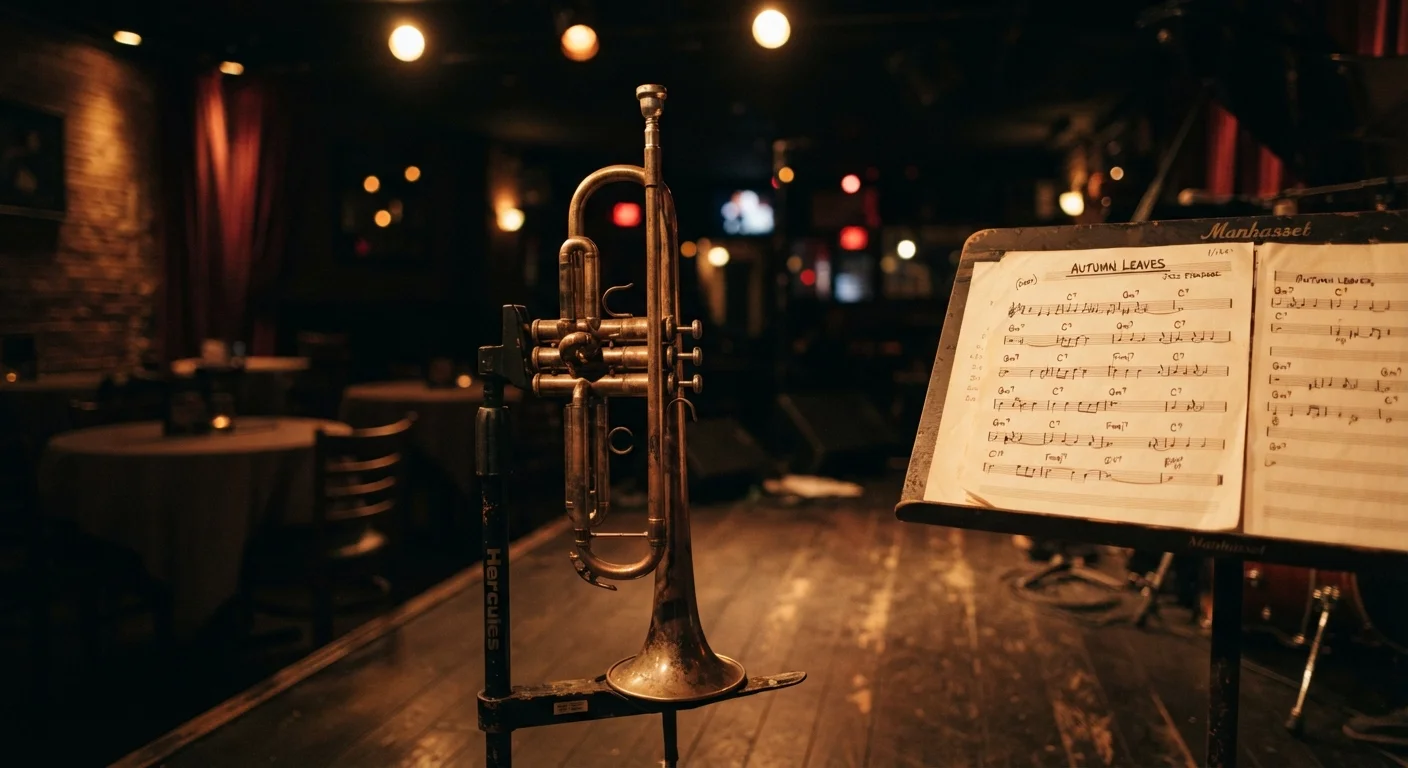
Photo credit: faqsnest.com
In this article
Jazz can feel overwhelming to newcomers. This guide traces its major eras, styles, and entry points so you can find where to start.
Key Takeaways
- Jazz is not a single genre but a family of related styles spanning more than a century.
- Its roots lie in African American musical traditions that emerged in New Orleans in the early 1900s.
- Major eras include Swing, Bebop, Cool Jazz, Hard Bop, Free Jazz, and Fusion.
- Improvisation — musicians composing melodies in real time — is the genre's defining characteristic.
- Different styles suit different listener temperaments; there is a corner of jazz for nearly every taste.
- Active, focused listening — not background listening — unlocks what makes jazz performances special.
Why Jazz Feels Complicated (and Why It Isn't)
Many curious listeners approach jazz and quickly retreat. The music seems to resist them — solos run long, rhythms shift unexpectedly, and the sheer volume of artists and styles feels impossible to navigate without a guide. That feeling is understandable. Jazz is not a genre so much as a lineage of genres, each shaped by a specific cultural moment, city, or generation of musicians.
But the complexity has a center of gravity. Jazz is built on improvisation — musicians inventing or elaborating on melodies in real time, responding to one another the way skilled conversationalists do. Everything else — the era, the instrumentation, the tempo — sits around that core. Once you hear improvisation as dialogue rather than chaos, the music opens up considerably.
If music criticism language feels like another barrier, our guide to decoding music terminology can help you build a working vocabulary before diving deeper into jazz writing or liner notes.
Improvisation
Creating or varying melodies spontaneously during a live performance, rather than reading from a fixed score. It is the defining feature of jazz.
Swing feel
A rhythmic quality where beats are slightly uneven in a way that creates a sense of momentum and groove. It's what makes jazz want to move.
Chord changes
The sequence of harmonies (chords) that underlies a jazz piece. Improvisers navigate these changes while inventing new melodies on top of them.
Modal jazz
A style that bases improvisation on scales (modes) rather than chord sequences, producing a more open, spacious sound. Miles Davis's 'Kind of Blue' is its defining example.
Head
The main melody of a jazz composition, typically played at the beginning and end of a performance. The improvised solos happen between the two statements of the head.
Rhythm section
The musicians — usually piano, bass, and drums — who provide the harmonic and rhythmic foundation over which soloists improvise.
A Brief Timeline of Jazz's Major Eras
Jazz emerged in New Orleans around the turn of the 20th century, drawing from African American musical traditions including blues, ragtime, and gospel. From there it moved — literally, as musicians migrated north — through several distinct phases.
- New Orleans / Dixieland (1900s–1920s): Collective improvisation among small ensembles. Loose, exuberant, and built for dancing and social gatherings.
- Swing Era (1930s–1940s): Big bands led by figures such as Duke Ellington and Count Basie brought jazz to mainstream American audiences. Danceable, orchestrated, and commercially dominant.
- Bebop (1940s–1950s): A deliberate departure from commercial swing. Musicians including Charlie Parker and Dizzy Gillespie pushed tempos and harmonic complexity to the limit, positioning jazz as art music for attentive listeners.
- Cool Jazz and Hard Bop (1950s): Two reactions to bebop. Cool jazz — associated with Miles Davis's early recordings — dialed back the intensity. Hard bop reconnected with blues and gospel roots, adding urgency and soul.
- Free Jazz (1960s): Artists like Ornette Coleman abandoned conventional chord structures and meters entirely, treating the performance itself as the composition.
- Fusion (1970s–1980s): Jazz absorbed electric instruments and rock rhythms. Miles Davis's Bitches Brew is the era's defining document.
- Contemporary Jazz (1990s–present): A pluralistic landscape in which artists blend jazz with hip-hop, neo-soul, global music, and electronic production.
The Main Styles and What Makes Each Distinct
Each major style asks something slightly different from the listener and offers something different in return.
- Swing
- Built on a rhythmic feel — the characteristic bounce that makes music want to move. Even in quieter arrangements, the pulse is central.
- Bebop
- Dense harmonies, breakneck tempos, and rapid melodic invention. Rewarding when you follow a soloist's logic rather than trying to absorb everything at once.
- Cool Jazz
- Understated and often lyrical. Instrumentalists emphasize tone and space over technical display. Easy to sit with.
- Hard Bop
- Emotionally direct and blues-inflected. Artists such as Art Blakey and Clifford Brown made hard bop feel urgent without being alienating.
- Free Jazz
- The most demanding style for new listeners. Structure is abandoned in favor of collective sonic exploration. Best approached after spending time with other styles first.
- Fusion
- The most immediately accessible to rock and pop listeners. Electric guitars, synthesizers, and funk grooves appear alongside traditional jazz improvisation.
Where to Start: Entry Points by Taste
Your existing listening habits are the most reliable compass.
- If you like soul or R&B: Begin with hard bop — Art Blakey's Moanin' or Horace Silver's recordings translate directly.
- If you like atmospheric or ambient music: Cool jazz and the ECM Records catalog (label home to Keith Jarrett and Jan Garbarek) will feel immediately comfortable.
- If you like hip-hop: Robert Glasper's work sits precisely at the intersection. Kamasi Washington's The Epic is another natural bridge.
- If you like classical music: The Modern Jazz Quartet and Dave Brubeck's recordings share classical music's precision and compositional structure.
- If you want the canonical starting point: Miles Davis's Kind of Blue (1959) is jazz's most-cited entry record for good reason — it is harmonically accessible, patiently paced, and deeply expressive.
Match the Format to the Moment
Start with studio albums rather than live recordings when you're new to a style. Studio sessions tend to be shorter, cleaner, and easier to follow. Once a style feels familiar, live recordings reveal the spontaneity and risk-taking that make jazz uniquely compelling. Many artists recorded the same compositions in both formats, which makes comparison revealing.
How to Listen More Deeply Over Time
Passive listening builds familiarity; active listening builds understanding. The difference is attention. When you sit with a jazz track deliberately, try isolating one instrument per listen — follow only the piano, then only the drums, then the interplay between them. Notice how soloists vary a theme across a performance rather than repeat it.
Reading liner notes adds context that transforms the listening experience. Many classic jazz albums include detailed musician and recording notes that explain the creative choices behind what you're hearing. Once you've spent time with recorded music, live performance is the medium jazz was built for — in a club setting, the spontaneity and physical presence of improvisation becomes unmistakable.
Building a coherent picture of jazz history also helps. Following a single artist across their career — say, tracking Miles Davis from his 1950s modal recordings through Bitches Brew — reveals how the genre evolved in response to culture, politics, and individual artistic restlessness. Jazz is not frozen in the past. It is a living conversation, and the more you listen, the more you can hear what each musician is actually saying.
Frequently Asked Questions

Author
Entertainment & Media Editorial Team
Entertainment & Media Editorial Team is the collective byline for our editorial team and contributor network. Articles published under this byline or an editorial pen name are researched, written, and reviewed according to our editorial standards for clarity, consistency, and independence before publication.
View all articles →