
Reading About Music Without Getting Lost in the Jargon
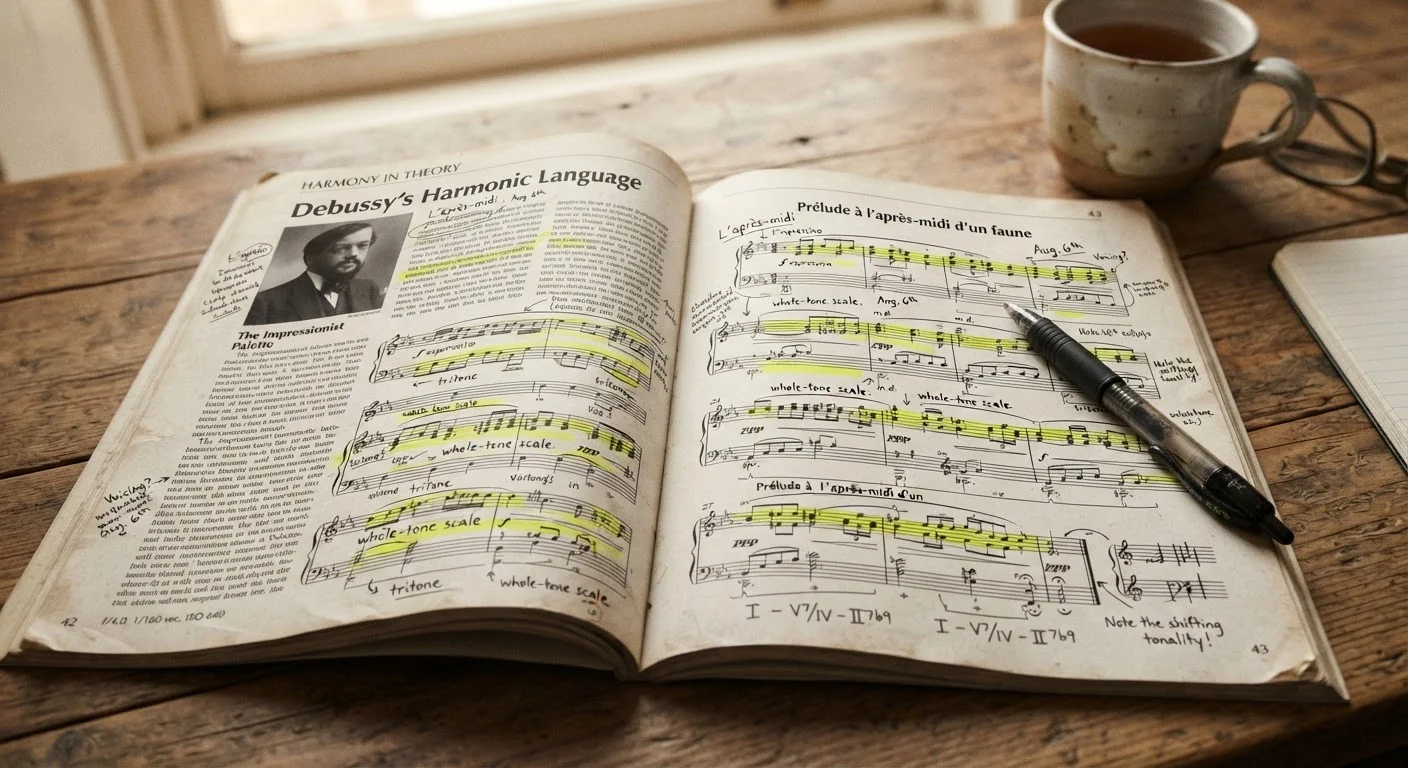
Photo credit: faqsnest.com
In this article
Music criticism is full of dense terminology. Learn what critics actually mean by words like 'timbre', 'texture', and 'dynamics'.
Key Takeaways
- Music criticism uses a specific vocabulary that becomes accessible once its core terms are defined.
- Words like 'timbre', 'texture', and 'dynamics' describe precise sonic qualities, not vague impressions.
- Understanding critical language helps you engage more deeply with both reviews and the music itself.
- Critics use structural and emotional frameworks simultaneously — knowing both helps you follow their argument.
- Active listening alongside reading is the fastest way to internalize music vocabulary.
Why Music Criticism Has Its Own Language
Music writing sits at an unusual intersection: it uses language to describe an art form that is, by nature, non-verbal. Critics developed a shared vocabulary over decades to make that translation more precise. The problem is that this vocabulary can feel exclusionary to anyone who hasn't encountered it before.
The terminology isn't arbitrary gatekeeping. Words like timbre (the tonal color or quality of a sound — what makes a violin sound different from a flute playing the same note), texture (how many musical layers are present and how they interact), and dynamics (variation in volume and intensity) each describe something that ordinary language handles clumsily. A critic who writes that a track 'builds from a sparse, monophonic opening to a dense, polyphonic climax' is giving you a structurally precise description — not showing off.
For curious listeners, decoding this language opens up a richer way of engaging with both writing and music. It also helps when exploring adjacent topics — much the way film criticism vocabulary rewards viewers who learn what terms like 'mise-en-scène' actually mean.
What you will need
The Core Vocabulary Every Reader Should Know
Before working through specific steps, it helps to front-load the terms you'll encounter most often in serious music criticism. These fall into roughly four categories:
- Timbre — the sonic 'color' or character of an instrument or voice. Critics might call a guitar tone 'warm', 'brittle', or 'abrasive' — all descriptions of timbre.
- Texture — the density of musical layers. Monophonic means a single melodic line with no accompaniment. Homophonic means one melody supported by chords. Polyphonic means multiple independent melodic lines running simultaneously. Most pop music is homophonic; Bach fugues are polyphonic.
- Dynamics — volume and intensity gradation. Critics use terms like fortissimo (very loud) and pianissimo (very soft) from classical notation, but more commonly you'll see plain descriptions: 'the track swells from near-silence to a full-band roar'.
- Rhythm and meter — the underlying pulse (meter) and how notes are placed against it (rhythm). Syncopation means placing emphasis on beats that are normally unaccented, creating a sense of rhythmic surprise — a defining quality of funk, jazz, and much hip-hop.
- Harmony — the relationship between simultaneously sounding notes. Consonant harmonies feel stable and resolved; dissonant ones feel tense or unresolved. Critics often use these terms to describe emotional effect.
- Form — the structural blueprint of a piece (verse-chorus, ABA, through-composed, etc.). Knowing form helps you understand why a critic might say an album 'refuses easy resolution'.
If you're diving into a specific genre and encounter terms that go beyond this list, a plain-English genre reference guide can extend your working vocabulary efficiently.
How to Read a Music Review Step by Step
With the core vocabulary in place, a structured reading approach turns even dense criticism into a useful analytical tool. Follow these steps each time you work through an unfamiliar review.
Read the review once without stopping
On your first pass, read the entire piece without pausing to look up terms. Your goal is to identify the critic's overall argument and emotional register. Ask yourself: is the tone admiring, skeptical, mixed? What seems to be the central claim about this music?
Identify the structural claims separately from the evaluative ones
Good criticism interweaves two types of statement: structural (what the music actually does — instrumentation, arrangement, rhythm) and evaluative (what the critic thinks of it). Separate these on a second read. A sentence like 'the compressed, reverb-drenched snare gives the album a claustrophobic density that eventually becomes exhausting' contains a structural observation ('compressed, reverb-drenched snare creates density') and an evaluation ('eventually becomes exhausting'). Disentangling them helps you form your own view independently.
Define every flagged term using context first
Return to the terms you highlighted and try to infer meaning from context before consulting a glossary. If a critic writes 'the track opens with an ostinato figure in the bass', the sentence's structure implies it's a repeating pattern — which is exactly what ostinato means. Context inference builds your vocabulary more durably than looking up a definition in isolation.
Listen to the referenced music with the review in hand
Pull up the album or track and listen actively with the review nearby. When you reach a passage the critic describes — a bridge, a specific production choice, a tonal shift — pause and re-read what they wrote. Does their description match your experience? If not, consider why: are they hearing something you're not attending to yet, or are they making an interpretive leap that your ears don't confirm?
Write two or three sentences summarizing the critic's argument in plain language
After completing the above steps, close the review and write a brief plain-language summary of the critic's core argument — without using any jargon. This exercise confirms that you've understood the piece rather than just recognized the vocabulary. If you struggle to articulate the argument in everyday language, it's a signal to re-read specific sections.
Putting It Into Practice
Listen While You Read
Pull up the album or track being reviewed and listen in real time as you read the critique. When a writer mentions 'the syncopated hi-hat pattern in the second verse', you can actually hear it. This parallel approach accelerates vocabulary retention far more effectively than reading alone.
Once you've worked through a review using these steps a few times, patterns emerge. You'll start to notice when a critic is making a structural observation versus an emotional one, and you'll recognize which writers prioritize production detail, which favor cultural contextualization, and which build primarily through historical comparison.
This matters because music doesn't exist in isolation — it shapes and reflects culture in ways that extend well beyond the listening experience. If that broader dimension interests you, frameworks for reading cultural trends critically can deepen your understanding of how music criticism fits into the wider conversation about what culture is doing at any given moment.
For readers drawn to a specific genre, applying this reading method pays particular dividends. If jazz is on your radar, a structured map through jazz's many worlds pairs well with learning to read criticism about the genre, since critics often assume familiarity with era-specific vocabulary like bebop, modal, or free jazz.
Critics Describe, Not Prescribe
Music criticism is analytical interpretation, not objective truth. When a critic calls an album 'dissonant' or 'sparse', they are describing sonic properties and making an argument — not issuing a verdict you must agree with. Reading criticism improves when you treat it as a starting point for your own listening, not a final judgment.
Reading about the myths surrounding musical genius can also sharpen your critical reading — critics sometimes rely on 'genius' narratives that obscure the craft decisions actually worth analyzing.

Author
Entertainment & Media Editorial Team
Entertainment & Media Editorial Team is the collective byline for our editorial team and contributor network. Articles published under this byline or an editorial pen name are researched, written, and reviewed according to our editorial standards for clarity, consistency, and independence before publication.
View all articles →