
The Myths Around Musical Genius That Distort How We Talk About Creativity
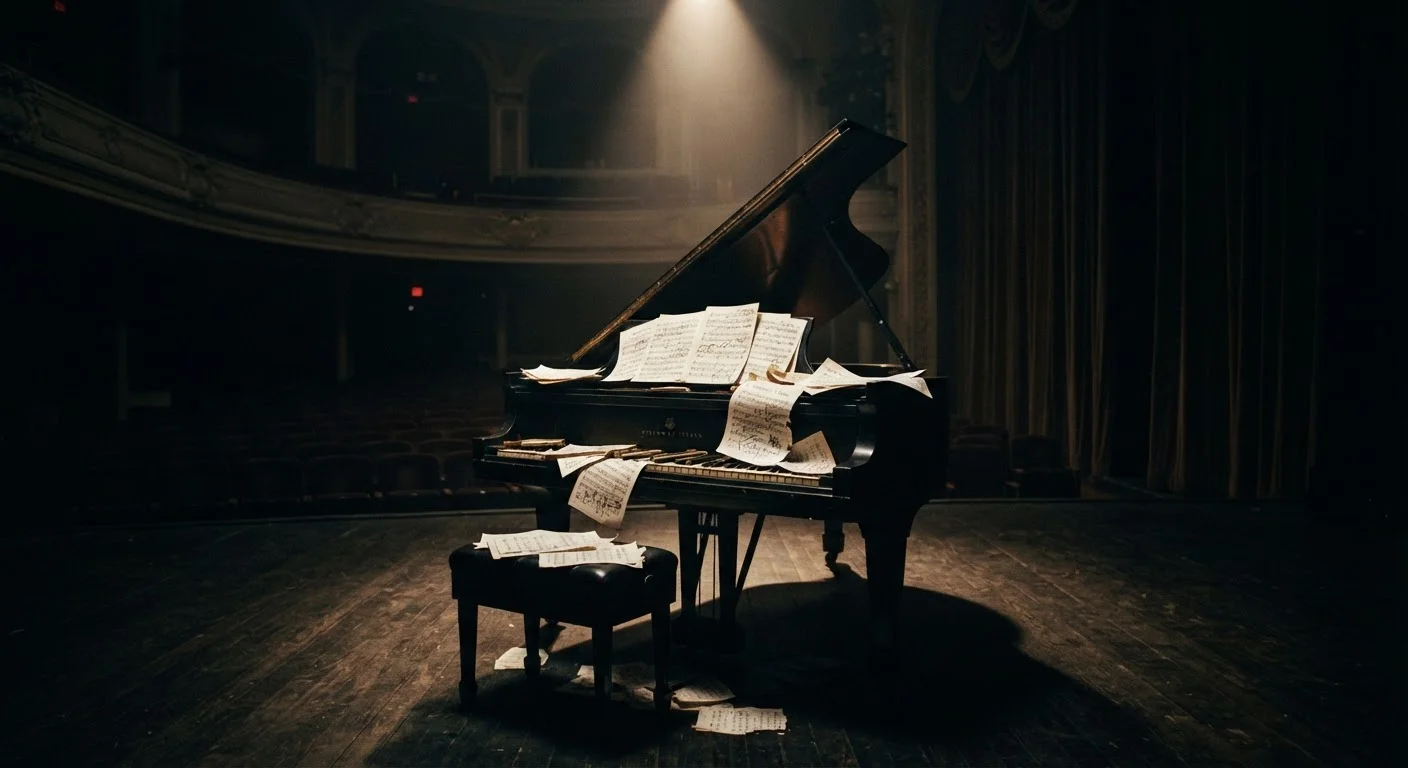
Photo credit: faqsnest.com
In this article
"Born with it" or "tortured artist" — common narratives about musical talent often obscure the real, learnable craft behind great music.
Key Takeaways
- Musical talent is shaped far more by deliberate practice and environment than innate ability alone.
- The 'tortured artist' narrative is a cultural construction that romanticizes suffering rather than explaining creative output.
- Prodigies develop through intensive early exposure and structured learning, not mysterious gifts.
- Collaboration, not solitary inspiration, drives most landmark musical achievements.
- Understanding these myths helps listeners and aspiring musicians engage with music more honestly and productively.
Why the Stories We Tell About Musicians Matter
The way we narrate musical greatness shapes everything — who gets encouraged to pursue music, whose contributions get credited, and how the broader culture understands creativity itself. Myths about musical genius aren't harmless folklore; they actively distort our understanding of how great music is actually made and by whom.
From the image of a composer seized by divine inspiration to the struggling outsider whose brilliance only made sense in hindsight, popular culture has long preferred dramatic origin stories over the messier, more instructive truth. These narratives tend to mystify creativity rather than illuminate it, and they do particular harm to learners who internalize them as explanations for their own perceived limitations.
This piece examines the most persistent myths and what the evidence actually suggests. For those interested in how musical knowledge is typically framed and communicated, navigating music criticism's dense vocabulary is a useful companion perspective.
Myth
Great musicians are simply born with it — talent is an innate gift that either exists or it doesn't.
Fact
Research consistently shows that musical ability develops through early exposure, structured practice, and supportive environments, not as a fixed inherited trait.
The notion of innate musical talent has been examined extensively in cognitive psychology and music education research. Studies of expert musicians generally find that prolonged, structured practice — often beginning in early childhood — is a far stronger predictor of advanced skill than any measurable biological predisposition. Psychologist Anders Ericsson's work on deliberate practice, while sometimes oversimplified in popular retellings, helped establish that the quality and structure of practice matters enormously in skill development across domains, including music.
This doesn't mean biological variation is irrelevant — differences in auditory processing, working memory, and motor coordination exist and have some bearing on musical learning. But these differences are modest compared to the influence of environment, instruction quality, and hours of purposeful practice. Framing talent as purely innate discourages learners who haven't had early access or training, and misattributes the results of years of work to a fixed, mysterious quality.
Myth
Musical prodigies prove that genius is real and separate from ordinary learning — they just 'know' things others have to work for.
Fact
Prodigies typically have intensive early practice environments, exceptional instruction, and high levels of parental involvement — the learning just happens faster and earlier, not differently in kind.
The prodigy narrative is among the most seductive in music culture. Young performers who can play concertos at age seven or compose symphonies in adolescence seem to transcend normal developmental logic. But research into prodigies consistently finds that behind the seemingly miraculous ability is an unusual concentration of the same ingredients that develop any musician: sustained exposure, dedicated instruction, and enormous amounts of deliberate practice compressed into early years.
Music educators and developmental psychologists have noted that prodigies often have at least one musically engaged parent, access to instruments from infancy, and instructors who adapt teaching to an unusually rapid pace of acquisition. The result appears extraordinary because the conditions were extraordinary — not because a different mechanism was at work. This matters because the prodigy myth discourages adult learners and those without early access from pursuing music seriously, implying the window has closed.
Myth
The greatest music comes from solitary, suffering artists working alone — collaboration dilutes creative purity.
Fact
Most landmark recordings and compositions emerge from deeply collaborative environments, with producers, arrangers, co-writers, and communities playing foundational roles.
The romantic image of the lone artist — isolated, tormented, producing work that springs fully formed from individual pain — is one of the most pervasive and least accurate narratives in music culture. Musicologists and industry historians have documented extensively how even figures celebrated as singular auteurs operated within rich networks of creative collaborators. Arrangements, production choices, and even melodic development frequently involved multiple contributors whose names rarely appear in the cultural mythology surrounding a release.
Collaborative processes are not a modern industry phenomenon — they have characterized music-making across cultures and throughout recorded history. Understanding this shifts attention toward the social and institutional conditions that enable great music, rather than treating exceptional output as the product of an isolated individual psyche.
Myth
Artists have to suffer to create meaningful music — pain and instability are the price of authentic creative output.
Fact
The 'tortured artist' is a cultural narrative, not a causal mechanism. Psychological distress can accompany creativity, but it does not produce it.
The tortured artist myth has real consequences. It has been used to romanticize mental illness, substance dependency, and destructive behavior as necessary conditions for authentic creative work — a framing that researchers in psychology and music have pushed back against forcefully. Studies examining the relationship between psychological distress and creative output do not support the idea that suffering improves creative quality; in many cases, severe mental health challenges impair sustained creative work rather than enabling it.
What the evidence does suggest is that artists, like all people, bring their life experiences — including difficult ones — into their work. That's meaningfully different from the claim that distress is a prerequisite or fuel source for creativity. The tortured artist narrative also tends to excuse harmful behavior and discourage artists from seeking mental health support, treating professional help as incompatible with creative authenticity. That framing is not supported by evidence and carries genuine harm.
The Industry and Cultural Structures That Sustain These Myths
Music industries have historically benefited from genius mythology. A singular, larger-than-life artist is easier to market than a collaborative network of session musicians, producers, arrangers, and sound engineers. When a single name becomes synonymous with an entire sonic universe, the commercial logic is clear — but the creative reality is obscured.
Streaming-era algorithms compound the problem by surfacing individual artist identities rather than the processes behind them. Credits that would have appeared in physical liner notes — crediting backing vocalists, co-writers, and mixing engineers — are often buried or absent entirely in digital interfaces. This structural invisibility reinforces the illusion of solo genius.
10,000+
Hours of practice in elite musicians' development
Research into expert musicianship frequently cites the accumulation of many thousands of hours of structured, deliberate practice as a common factor among highly skilled performers, regardless of early aptitude assessments.
~50%
Of major charting songs co-written by producers
Industry analyses of credited songwriting on major-label releases have consistently found that producers hold co-writing credits on a substantial share of commercially successful recordings, underscoring the collaborative nature of popular music production.
Cultural historians have also noted that genius mythology tends to favor certain demographics over others. When collaborative contributors are systematically rendered invisible, the credited auteur is more likely to reflect existing power structures than actual creative hierarchy. Understanding this dynamic is part of reading musical history critically.
Aspiring musicians who treat these myths as accurate maps of how the industry works are poorly prepared for its actual collaborative, iterative, and highly social nature. The same applies to those who believe self-directed learning can't produce serious musicianship — a misconception examined in depth in the context of self-taught expertise more broadly.
Reframing Creativity Without Diminishing the Work
Debunking genius myths isn't an argument that exceptional music is ordinary or that talent doesn't exist. The point is more precise: extraordinary musical output emerges from the intersection of environment, opportunity, sustained effort, collaborative scaffolding, and yes, individual aptitude — not from aptitude alone operating in a vacuum.
This reframing is actually more respectful of great musicians, not less. It acknowledges the real labor, discipline, and years of development behind work that mythology collapses into a single moment of inspiration or a personality type defined by suffering. It credits the producers, engineers, mentors, and musical communities that shaped seemingly solitary figures.
For listeners, understanding music this way deepens engagement. Recognizing the craft decisions embedded in a recording — the structural choices, the harmonic tensions deliberately constructed, the production layering that took weeks to refine — makes the music richer, not less impressive. The mythology of effortless genius, by contrast, keeps listeners passive and slightly mystified, which ultimately serves neither art nor audience.

Author
Entertainment & Media Editorial Team
Entertainment & Media Editorial Team is the collective byline for our editorial team and contributor network. Articles published under this byline or an editorial pen name are researched, written, and reviewed according to our editorial standards for clarity, consistency, and independence before publication.
View all articles →