
Reading American Cultural Trends Without Getting Misled by Them
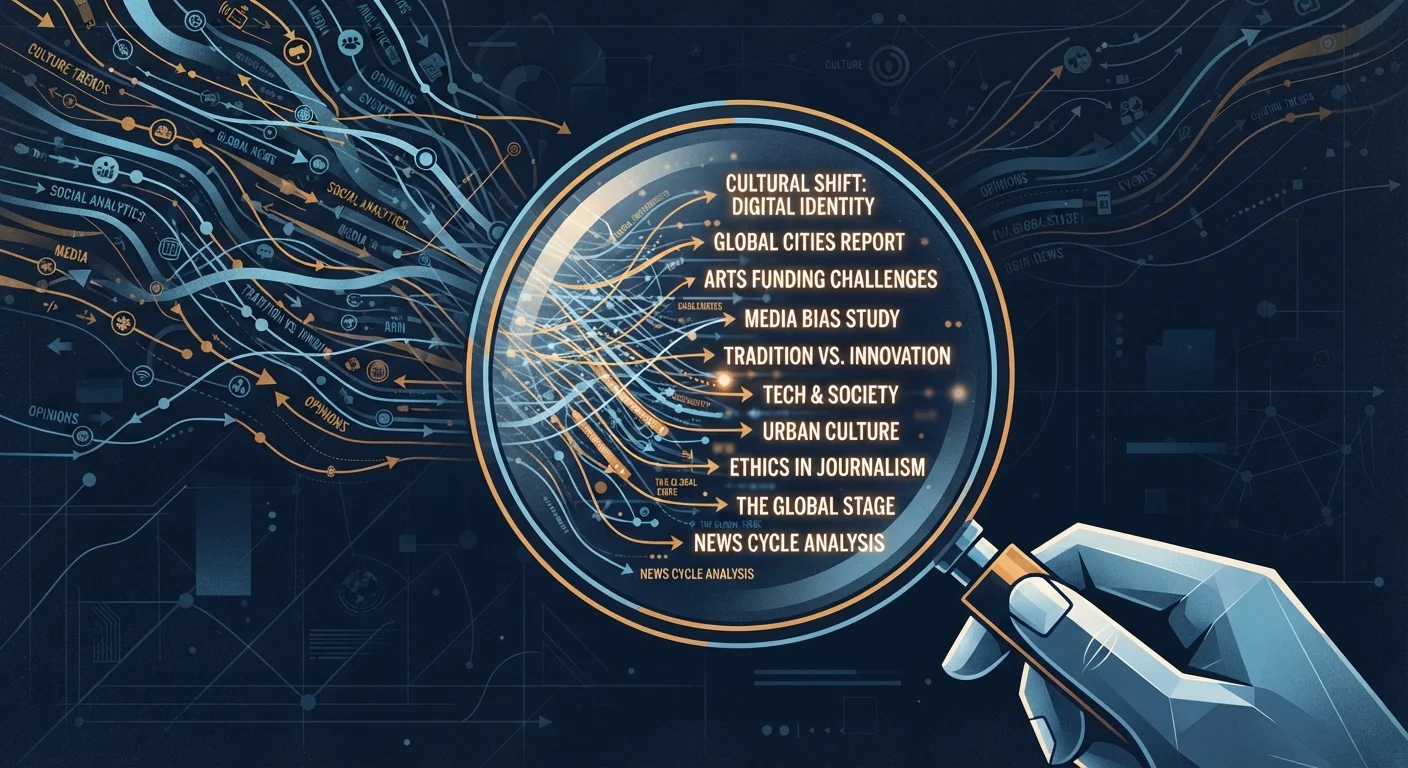
Photo credit: faqsnest.com
In this article
Trend coverage can distort as much as it reveals. Learn what analytical frameworks help distinguish genuine cultural shifts from media amplification and moral panics.
Key Takeaways
- Most reported "trends" reflect media amplification rather than broad, measurable behavioral change.
- Distinguishing a genuine cultural shift from a moral panic requires asking who benefits from the narrative.
- Scale, duration, and cross-demographic uptake are the three most reliable indicators of a real trend.
- Nostalgia cycles and viral moments are often mistaken for cultural turning points but rarely sustain structural change.
- Applying sociological frameworks helps readers evaluate trend claims without cynicism or credulity.
Why Trend Coverage So Often Misleads
Every week brings a new proclamation: Americans are abandoning home ownership, Gen Z is killing casual dining, or a cultural moment has "changed everything." These claims are compelling precisely because they offer narrative clarity in a fragmented media environment. But clarity and accuracy are not the same thing.
Trend journalism operates under structural pressures that distort analysis. Engagement metrics reward novelty and alarm. Anecdotes drawn from social media are mistaken for data. A behavior visible among a vocal urban subculture gets projected onto 330 million people. The result is coverage that can distort as much as it reveals — a problem well-documented in media criticism and sociology alike.
Understanding the difference between a genuine cultural shift and a media-manufactured narrative is not a matter of cynicism. It is a foundational analytical skill for anyone trying to make sense of American life. Our decade-by-decade timeline of American cultural shifts offers a useful baseline: most changes that genuinely restructured everyday life took years or decades to solidify, not news cycles.
Best Practices for Evaluating Cultural Trend Claims
Applying a consistent analytical framework doesn't mean dismissing every observation about change — it means calibrating your response to the actual evidence behind a claim.
The Role of Virality and Nostalgia in Distorting the Picture
Two forces in contemporary American culture are especially prone to being misread as trend indicators: viral moments and nostalgia cycles. Both are real phenomena with genuine cultural weight, but both are also systematically overstated.
Viral events — a meme, a speech clip, a cultural controversy — generate intense, compressed attention. As our companion piece on what going viral has done to American attention spans explores, these cycles reshape perception without necessarily reflecting durable behavioral change. A topic that dominates feeds for seventy-two hours can feel epochal during those hours and then vanish entirely.
Nostalgia presents a different distortion. When reboots, retro aesthetics, and "simpler times" rhetoric surge — as they periodically do — it's tempting to read this as evidence of cultural retreat or conservatism. But as our analysis of nostalgia as a cultural force argues, these cycles most often indicate collective anxiety about present uncertainty, not a coherent ideological direction. Treating nostalgia as a trend is often a category error.
“The media's power is not to tell people what to think, but to tell them what to think about — and that agenda-setting function shapes which behaviors get counted as trends and which remain invisible.”
— Maxwell McCombs, Agenda-setting theory researcher and communications scholar
It is also worth noting that the fragmentation of American media has made monoculture-style trend identification increasingly unreliable. The shared reference points that once allowed commentators to speak of a unified national moment — the TV event everyone watched, the song everyone heard — have largely dissolved. Our piece on cultural touchstones that united a generation traces why that fragmentation happened and what it means for reading collective sentiment today.
Quick Actions for Sharper Trend Literacy
Developing stronger cultural literacy doesn't require a sociology degree. A few targeted habits can significantly improve how you evaluate claims about American life.
Structural Change vs. Aesthetic Churn
Perhaps the most useful distinction in cultural analysis is the one between structural change and aesthetic churn. Structural changes alter how Americans actually live — how they form households, earn income, relate to institutions, or define community. Aesthetic changes alter surfaces: the music playing in retail stores, the visual grammar of social media posts, the vocabulary of generational identity.
Both are culturally interesting. But they are not equivalent, and conflating them produces misleading analysis. The rise of remote work is structural. A resurgence of '90s fashion is aesthetic. Both may appear in the same trend round-up, but their implications for everyday American life are categorically different.
Sound cultural analysis — whether you're reading about music and pop culture, media and streaming, or social behavior — consistently asks: is this changing what people do, or only what they say and signal? The answer shapes everything else.
Applying this kind of analytical pressure doesn't make cultural commentary less interesting. It makes it more honest — and ultimately more useful for understanding how American life is actually evolving.

Author
People & Culture Editorial Team
People & Culture Editorial Team is the collective byline for our editorial team and contributor network. Articles published under this byline or an editorial pen name are researched, written, and reviewed according to our editorial standards for clarity, consistency, and independence before publication.
View all articles →