
What "Going Viral" Has Done to American Attention Spans
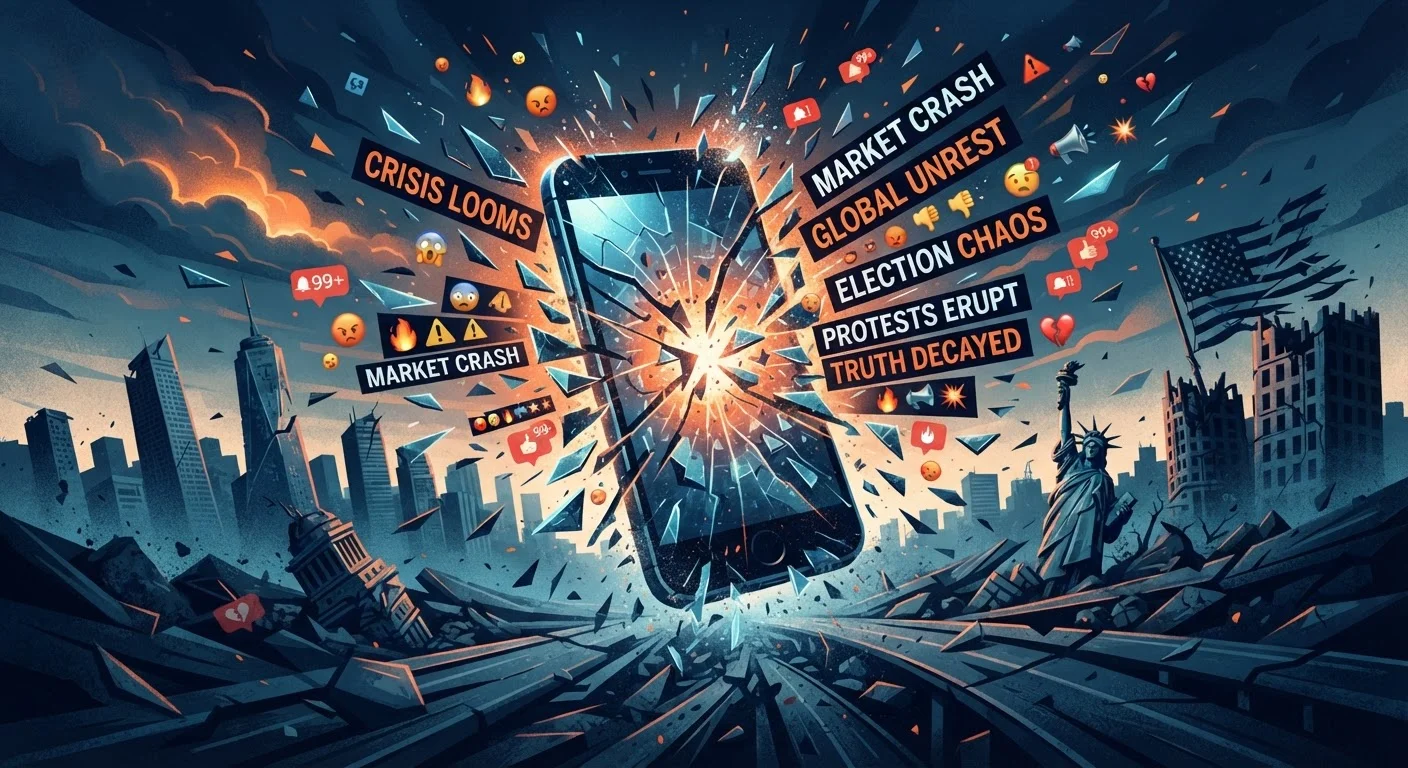
Photo credit: faqsnest.com
In this article
Viral media cycles have reshaped how Americans consume news, humor, and outrage. Here's what researchers and cultural critics observe about the long-term effects.
Key Takeaways
- Viral media cycles compress the lifespan of public attention from days to hours, creating a culture of rapid obsolescence.
- Outrage and novelty are structurally rewarded by platform algorithms, shaping what kinds of content Americans repeatedly consume.
- Researchers observe a correlation between high-volume viral exposure and reduced tolerance for narrative complexity.
- The virality economy has fragmented shared cultural reference points, making monoculture increasingly rare.
- Understanding how virality works is a prerequisite for reading cultural trends without being misled by them.
The Mechanics of a Viral Moment
Before examining the consequences, it helps to understand what virality actually requires. A piece of content does not simply spread because it is good, true, or important. Research on information diffusion — including large-scale studies of Twitter sharing patterns — consistently finds that content spreads when it triggers rapid emotional arousal, offers an easy sharing mechanism, and arrives at a moment when network conditions are receptive.
Platform design accelerates this process. Algorithmic feeds on major social networks prioritize content that generates fast engagement signals: likes, shares, comments, and watch time accumulated in the first minutes after posting. Content that achieves early momentum is amplified to wider audiences, creating a feedback loop that rewards speed over substance and novelty over accuracy.
The result is a media environment that operates on what some researchers call an attention economy — a system in which human attention is the scarce resource being competed for, monetized, and ultimately depleted. Understanding this structural reality is the foundation for grasping why viral culture has had such measurable effects on American cognitive and cultural habits. For a broader context on how these dynamics fit into longer-term cultural change, see this decade-by-decade reference to American cultural shifts.
What Virality Has Done to the News Cycle
The traditional American news cycle once operated on a 24-hour rhythm anchored by evening broadcasts and morning newspapers. The emergence of cable news compressed that to continuous rolling coverage. Social media compressed it further still, to something closer to a 4-to-6-hour "spike-and-fade" pattern for most stories.
This compression has real consequences for how Americans form understanding of ongoing events. Complex situations — infrastructure policy, public health crises, foreign conflicts — resist the clean narrative arc that viral content demands. They do not have satisfying endings within the viral window. The result, media scholars argue, is a systematic under-coverage of slow-moving consequential stories and an over-coverage of emotionally vivid but ultimately minor events.
24–72 hrs
Typical peak lifespan of a viral topic on major platforms
Social media trend analyses consistently find that most viral stories begin fading from peak engagement within one to three days of initial spread.
~6x
Speed advantage of false news over true news on Twitter
A landmark 2018 MIT study published in Science found that false information spread approximately six times faster than accurate information on the platform.
63%
Americans who get news from social media at least occasionally
According to Pew Research Center surveys, a substantial majority of U.S. adults encounter news through social media platforms, making algorithmic curation central to public information flow.
The virality economy has also changed what journalists and editors optimize for. Publications that track engagement metrics in real time face structural pressure to produce stories likely to be shared, regardless of editorial weight. This is not a failure of individual ethics but a rational response to algorithmic incentive structures — a distinction worth holding clearly when analyzing media behavior. For a guide on how to read cultural trends without being misled by amplification effects, see analytical frameworks for distinguishing genuine shifts from media noise.
The Cognitive and Cultural Residue
Researchers studying media consumption and cognition are careful not to overstate the case: attention span as a fixed cognitive capacity has not been proven to shrink in the way popular discourse often claims. What the evidence does support is a shift in attention allocation — the practical decisions people make about what is worth sustained focus.
Exposure to high volumes of short, emotionally intense content appears to raise the threshold for what feels engaging. Longer-form journalism, documentary film, and books require readers to tolerate ambiguity and delay gratification — skills that benefit from regular exercise. When the media diet skews heavily toward viral formats, those capacities can feel harder to access, even when they remain intact.
The cultural consequences are visible in how shared reference points have fragmented. Where a single television moment or news event once gave Americans a common conversational anchor, the viral ecosystem produces hundreds of micro-moments simultaneously. Different demographic slices of the country are "going viral" in entirely separate content universes on the same day, making true monoculture increasingly rare — a phenomenon explored in depth in this analysis of why shared cultural touchstones are harder to sustain now.
Outrage as a Viral Format
Among the most consequential features of the viral economy is the disproportionate spread of outrage content. Behavioral science research has established that moral-emotional language — words signaling disgust, threat, or injustice — significantly increases the rate at which content is shared within politically homogenous networks. A study published in the Proceedings of the National Academy of Sciences found that each moral-emotional word added to a tweet increased its retweet rate measurably.
This creates a systematic distortion in what Americans collectively perceive as culturally significant. Events or statements that generate outrage circulate far more widely than equally consequential stories that inspire thoughtful reflection. Over time, this skews both the ambient emotional register of public life and the kinds of communication that feel rhetorically effective.
“The problem is not that people are distracted. The problem is that we have built an information environment that makes distraction structurally rational — because paying sustained attention to complex, unresolved situations produces no reward within the system as designed.”
— Zeynep Tufekci, Sociologist and technology researcher; author of 'Twitter and Tear Gas'
It is worth noting that outrage is not inherently irrational or manipulated — some events genuinely warrant moral indignation. The structural problem is that algorithmic amplification cannot distinguish between proportionate and disproportionate outrage, rewarding the emotional intensity of a response rather than its accuracy or relevance. This dynamic is directly connected to broader conversations about how social media has changed public discourse around sensitive topics — including, as explored in this analysis of mental health discourse, how viral amplification can both help and distort important cultural conversations.
Navigating a Viral Culture Intentionally
Diagnosing the effects of viral media is not the same as prescribing remedies, and this article does not claim that individual behavior changes can override structural algorithmic incentives. What the research does support is that media literacy — an accurate understanding of how virality works — meaningfully changes how people interpret and respond to the content they encounter.
Knowing that a story is trending because it triggered outrage rather than because it represents the most important news of the day is a form of cognitive protection. Recognizing that the emotional intensity of one's reaction to a viral moment is partly an artifact of platform design, rather than purely a measure of the event's significance, allows for a more calibrated response.
The relationship between viral content cycles and viewing habits more broadly is also worth tracing. The same attention economy that powers social virality has reshaped how Americans consume long-form content — a shift documented in this examination of how viewing habits have evolved over a decade. And the tension between binge-release models and weekly episodic formats reflects similar questions about what pacing does to audience engagement — explored in this comparison of binge-watching versus weekly release schedules.
The viral economy is not going away. But understanding its mechanics — rather than simply being subject to them — is a meaningful starting point for engaging with American culture more deliberately.
Frequently Asked Questions

Author
People & Culture Editorial Team
People & Culture Editorial Team is the collective byline for our editorial team and contributor network. Articles published under this byline or an editorial pen name are researched, written, and reviewed according to our editorial standards for clarity, consistency, and independence before publication.
View all articles →