
Cultural Touchstones That United a Generation — and Why That's Harder Now
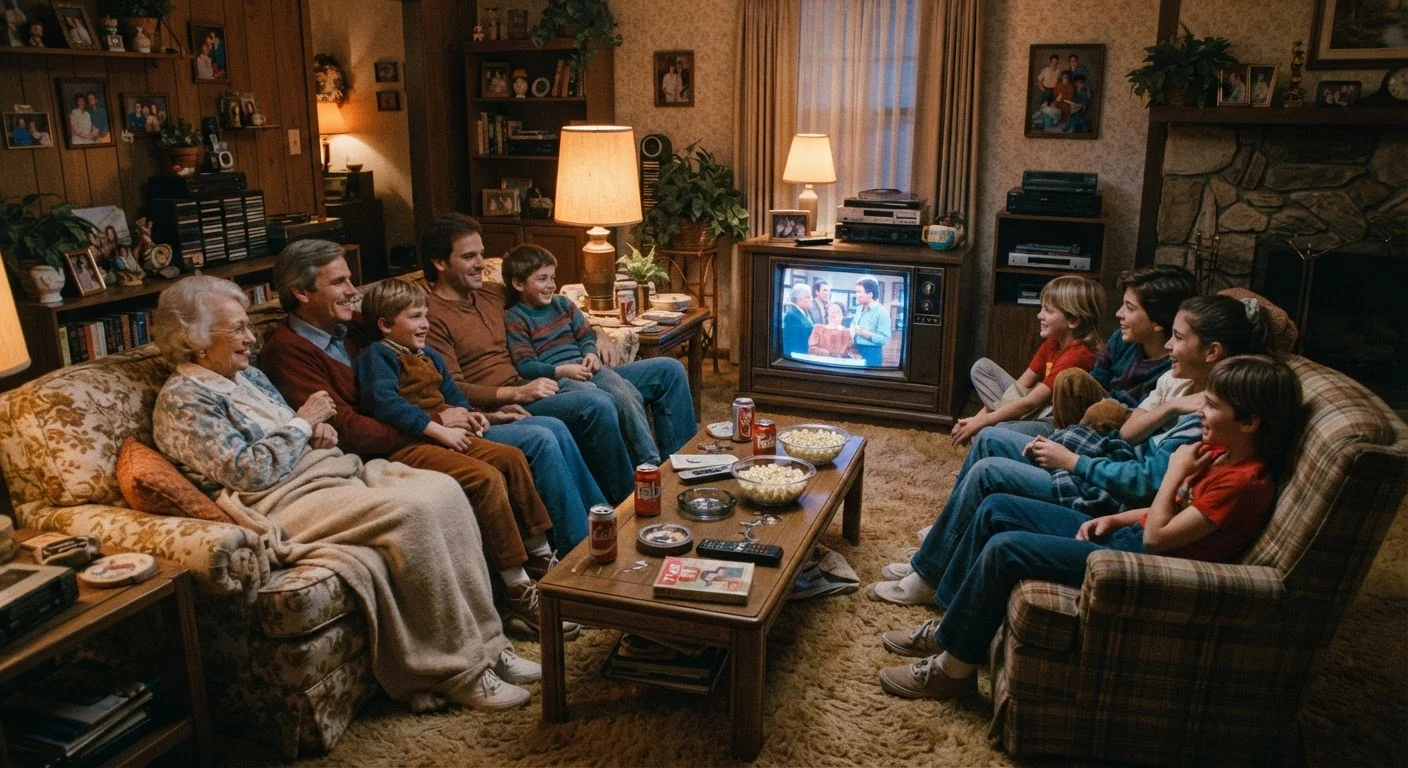
Photo credit: faqsnest.com
In this article
Shared TV moments, blockbuster films, and watercooler events once bound Americans together. Discover why monoculture faded and what replaced it.
Key Takeaways
- Monoculture thrived when Americans had only three major TV networks and a handful of radio formats to choose from.
- Shared cultural moments do more than entertain — they build collective identity and social cohesion.
- Streaming, social media, and algorithmic curation have fragmented audiences into thousands of micro-communities.
- Today's touchstones tend to be shorter-lived and more tribal, resonating within groups rather than across them.
- The loss of monoculture carries real social consequences, including reduced common ground for civic conversation.
The Architecture of Shared Experience
To understand why cultural touchstones once felt so powerful, it helps to understand the media environment that made them possible. For most of the 20th century, Americans navigated a remarkably narrow broadcast landscape. Three major television networks — ABC, NBC, and CBS — controlled prime time. A handful of AM radio formats shaped popular music taste. When M*A*S*H aired its series finale in February 1983, more than 106 million Americans watched the same episode on the same night. That single broadcast remains one of the most-watched television events in U.S. history.
This wasn't just passive consumption. These shared moments created what sociologists call collective effervescence — a concept introduced by Émile Durkheim to describe the energy and sense of connection people feel when participating in a shared cultural event. The watercooler conversation the next morning wasn't incidental; it was a ritual of social bonding. Knowing the same plot twist, hearing the same joke, feeling the same shock — these experiences quietly reinforced the sense that Americans, despite their differences, inhabited a common cultural world. For a deeper look at how these dynamics show up across decades, see the timeline of American cultural shifts since 1970.
What Made a Moment Into a Touchstone
Not every popular film or hit song became a genuine cultural touchstone. The ones that did tended to share several characteristics: they arrived at a moment of cultural readiness, they addressed something people were already feeling but hadn't quite named, and they were accessible enough to reach across demographic lines.
Consider the original Star Wars in 1977, released into a post-Watergate, post-Vietnam America hungry for unambiguous heroism. Or the debut of The Cosby Show in 1984, which reset expectations about how Black American families could be portrayed in mainstream media. Or the way Michael Jackson's Thriller album — drawing on pop, funk, rock, and R&B — briefly made genre boundaries feel irrelevant to tens of millions of listeners. These weren't just popular; they were legible to nearly everyone, regardless of age, region, or background.
Music offers some of the clearest examples of this phenomenon. Decade-defining songs often carry an entire era's emotional texture in a few minutes of audio — not just because they were chart hits, but because they arrived at precisely the right cultural moment and spoke to something widely felt.
“Monoculture wasn't just about everybody watching the same show. It was about having a shared symbolic vocabulary — a set of references that could bridge strangers and create the feeling of a common world.”
— Michael Schudson, Sociologist and media scholar, Columbia University
The Fragmentation That Changed Everything
The erosion of monoculture didn't happen overnight. Cable television in the 1980s introduced dozens of channels catering to specific interests. MTV segmented youth culture from adult culture. ESPN gave sports fans a destination separate from general-audience programming. Each new channel pulled viewers away from the shared prime-time experience.
Then came the internet, and with it, an almost infinite proliferation of niches. By the time streaming platforms arrived in earnest in the 2010s, the idea that any single piece of content could command the simultaneous attention of 100 million Americans had become structurally impossible for most programming. Algorithms now curate individualized content queues so precisely that two people in the same household may consume nearly non-overlapping media diets.
106M+
Americans who watched the M*A*S*H finale
The February 1983 series finale remains one of the most-watched U.S. television broadcasts in history, illustrating the scale monoculture once achieved.
500+
Scripted TV series produced annually in the U.S.
FX Networks research tracking what it calls 'peak TV' documented more than 500 scripted original series airing annually by the late 2010s, compared with a fraction of that number in the network era.
~3
Major U.S. broadcast TV networks in the 1970s
For most of the 1970s, ABC, NBC, and CBS collectively captured the vast majority of primetime viewers, concentrating cultural attention in a way today's landscape makes structurally impossible.
The social consequences are worth examining honestly. Shared cultural references function as conversational infrastructure — they give strangers a fast path to connection. When those references diverge sharply, American friendship and community-building face a subtler but real obstacle. It becomes harder to find the opening line, the shared laugh, the common emotional shorthand.
Micro-Touchstones and the New Cultural Logic
Fragmentation hasn't eliminated cultural touchstones — it has multiplied them and shrunk their radius. Today's touchstones are often community-specific: a moment from a beloved streaming series that devoted fans dissect obsessively, a TikTok audio clip that becomes inescapable within a particular age cohort, a meme that conveys an entire emotional state to those who know the reference and nothing at all to those who don't. Cultural fluency has become increasingly tribal.
This has genuine upsides. Subcultures and communities that were ignored or misrepresented by 20th-century monoculture now generate their own touchstones on their own terms. The rise of K-pop fandoms, Latinx media, and LGBTQ+ storytelling platforms illustrates how fragmentation can expand whose cultural experiences get to matter and be reflected back. Nostalgia for monoculture sometimes obscures this trade-off — the era of universal touchstones was also an era of systematic cultural exclusion for many Americans.
The watercooler hasn't disappeared; it has simply multiplied into thousands of parallel conversations. Whether those conversations occasionally converge — and under what conditions — may be one of the defining cultural questions of the coming decades. The challenge isn't mourning what monoculture was, but understanding what genuinely shared experience still makes possible.
Frequently Asked Questions

Author
People & Culture Editorial Team
People & Culture Editorial Team is the collective byline for our editorial team and contributor network. Articles published under this byline or an editorial pen name are researched, written, and reviewed according to our editorial standards for clarity, consistency, and independence before publication.
View all articles →