
How Sampling Transformed Hip-Hop Into a Genre of Living History
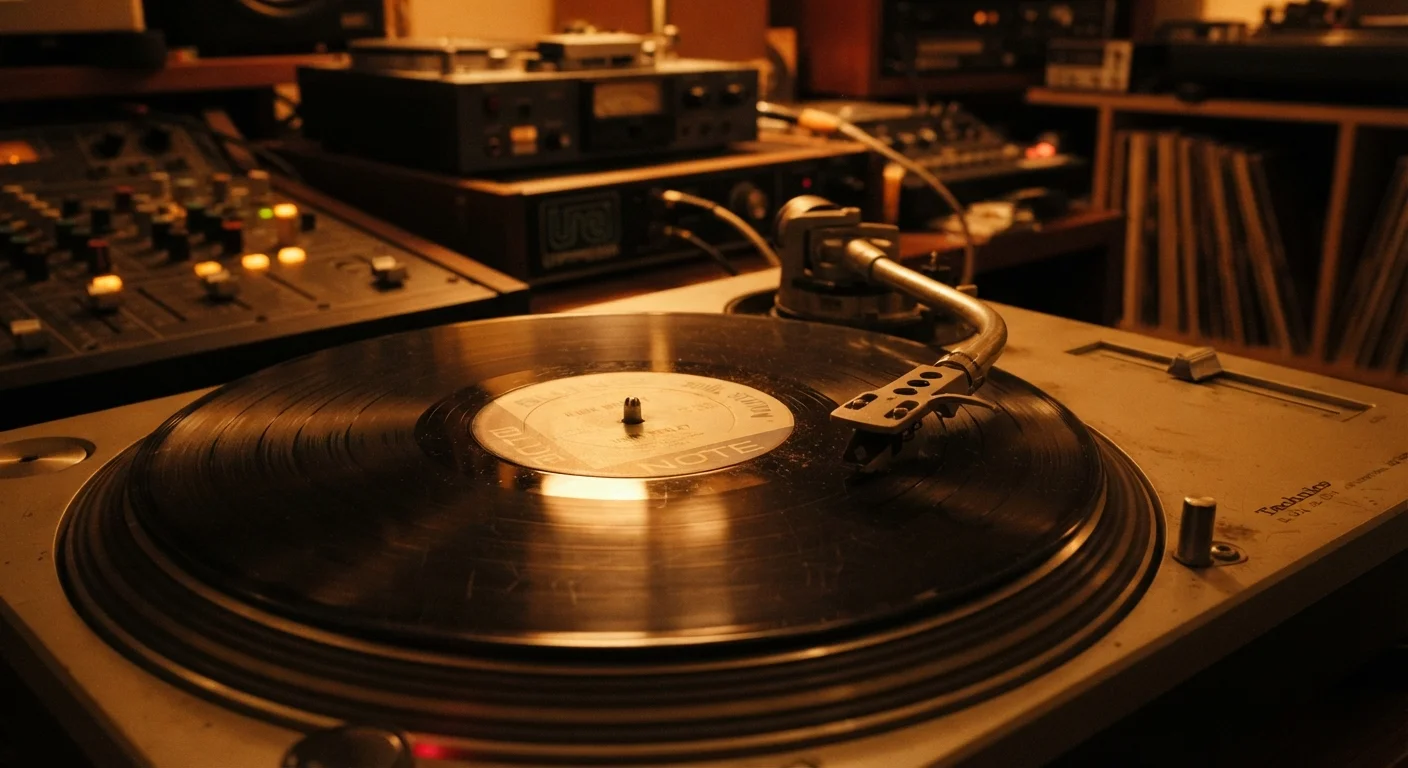
Photo credit: faqsnest.com
In this article
From James Brown loops to chopped soul, explore how music sampling became hip-hop's creative backbone and a legal flashpoint.
Key Takeaways
- Sampling began as a DJ technique in the 1970s Bronx before becoming hip-hop's primary production method.
- James Brown's recordings — particularly his drum breaks — became the most sampled source material in music history.
- The 1991 Biz Markie court ruling forced the industry to formalize sample clearance, reshaping how producers work.
- Sampling functions as cultural memory, connecting contemporary artists to gospel, soul, funk, and jazz traditions.
- Clearance costs have pushed many producers toward interpolation and replay as legal alternatives to direct sampling.
From the Bronx to the Studio: How Sampling Began
Sampling did not originate in a recording studio — it originated on a street corner in the South Bronx. In the early 1970s, DJs like Kool Herc discovered they could extend the instrumental break sections of funk and soul records by switching between two copies of the same record on dual turntables. This technique, called the "merry-go-round" or breakbeat DJing, allowed dancers to stay in rhythm indefinitely. The crowd's response to these percussion-heavy passages helped define what would become hip-hop's sonic foundation.
By the early 1980s, hardware samplers — machines capable of digitally recording a snippet of audio and playing it back on command — brought this idea into the studio. Producers like Marley Marl and the Bomb Squad began treating vinyl as a palette. Rather than simply looping records live, they could chop, pitch-shift, and layer fragments with surgical precision. What started as a DJ performance technique became a full compositional method.
This evolution was inseparable from the communities producing the music. Hip-hop emerged from Black and Latino neighborhoods with limited access to traditional music infrastructure — studios, session musicians, expensive instruments. Sampling democratized music production, making it possible to create sophisticated, layered tracks with a sampler, a drum machine, and a crate of records.
The Architecture of a Sample: What Producers Actually Do
Understanding sampling requires moving past the idea that producers simply "steal" someone else's music. The creative process is considerably more involved. A producer might spend hours — sometimes days — digging through records to find a single two-bar phrase that carries the right emotional texture. Once found, that fragment is loaded into a sampler and subjected to transformation.
Common techniques include chopping (slicing the sample into individual hits and rearranging them), pitching (raising or lowering the sample's key to match a new composition), filtering (removing certain frequencies to create warmth or distance), and layering (stacking multiple samples to build harmonic depth). The result is often unrecognizable from its source.
#1
Most sampled artist in music history
James Brown holds the top position for most-sampled artist according to WhoSampled, a database tracking sample usage across genres.
100+
Estimated samples in a single album
The Beastie Boys' 1989 album Paul's Boutique reportedly contained over 100 samples, a density that would be financially unworkable under post-1991 clearance requirements.
1991
Year formal sample clearance became standard
The Grand Upright Music ruling in 1991 established legal precedent that made unauthorized sampling copyright infringement, forcing the industry to adopt formal licensing procedures.
Producer RZA of Wu-Tang Clan, for example, built much of the group's early sound by layering obscure kung fu film scores with soul samples at slowed tempos, creating a murky, cinematic atmosphere that bore little sonic resemblance to the original sources. Similarly, Kanye West's early work with sped-up soul samples — a style sometimes called "chipmunk soul" — reframed 1970s gospel and R&B within contemporary hip-hop structures, simultaneously honoring and reinventing the source material. The craft lies in the transformation, not the extraction.
A Genre of Living History: What Gets Sampled and Why It Matters
The records hip-hop producers have chosen to sample are not arbitrary. They form a kind of collective canon — a set of recordings that producers have returned to across decades because they carry particular cultural weight or sonic utility. James Brown's catalog sits at the top of this canon. His recordings, particularly the stripped-down percussion breaks featuring drummer Clyde Stubblefield, provided a rhythmic directness that underpinned thousands of tracks. Sampling Brown meant connecting to the lineage of Black American music in a direct, audible way.
Soul and gospel records from the 1960s and 1970s have been equally central. When a producer samples a vocal phrase from a Curtis Mayfield or Aretha Franklin record, they carry that emotional resonance — and cultural history — into a new context. This is one reason hip-hop has been described as a genre of living history: it keeps older recordings in active circulation, introducing them to audiences who might never otherwise encounter them. This dynamic connects closely to the broader story of how Black musical tradition persists across forms — as explored in the Motown sound's lasting influence.
Sampling also functions as cultural commentary. When Public Enemy's production collective the Bomb Squad layered sirens, news clips, and gospel fragments into dense sonic collages, they were constructing argument as much as music — using found audio to express urgency and critique. The sample was not decoration; it was meaning.
The Legal Turning Point and Its Lasting Consequences
For much of the 1980s, sampling operated in a legal gray area. Record labels tolerated the practice, clearances were rarely sought, and enforcement was inconsistent. That changed dramatically in 1991, when a federal judge ruled against rapper Biz Markie for sampling Gilbert O'Sullivan's "Alone Again (Naturally)" without permission. The ruling — Grand Upright Music, Ltd. v. Warner Bros. Records Inc. — sent a clear signal: unauthorized sampling was copyright infringement, full stop.
The industry adapted quickly, and not always in ways that benefited artists. Clearance costs surged, making dense sample-heavy productions financially unworkable for independent artists. Albums like the Beastie Boys' Paul's Boutique (1989) — which reportedly contained over 100 samples — would have been nearly impossible to clear at post-1991 prices. Many producers migrated toward interpolation, replaying musical ideas rather than lifting actual recordings, or toward royalty-free sample packs.
“Sampling isn't about stealing. It's about archaeology — digging through the past to find something that still has life in it, and giving it a new purpose.”
— DJ Premier, Hip-hop producer and DJ, Gang Starr
A 2004 Sixth Circuit ruling in Bridgeport Music, Inc. v. Dimension Films further complicated matters by establishing that even a single unaltered note sampled from a recording required a license. Critics argued the ruling failed to account for creative transformation. The legal landscape has remained contested, and debates over fair use, de minimis copying, and transformative work continue to shape how producers and labels navigate sampling today. Understanding what makes any musical moment culturally resonant — and legally distinct — connects directly to what makes a track feel like its era.
Sampling's Cultural Footprint Beyond the Studio
Sampling's influence extends well beyond music production. It shaped an aesthetic philosophy — the idea that culture is not created from scratch but assembled from what already exists, remixed and given new purpose. That philosophy echoes through visual art, fashion, and film. The same sensibility that led hip-hop producers to excavate record crates informed the streetwear movement's appropriation of athletic and workwear references, a cultural fusion explored further in how fashion and music have historically merged.
Sampling also created a secondary economy around music discovery. When a hip-hop track prominently featured an older record, that record often experienced renewed commercial interest. Artists like the Ohio Players, the Isley Brothers, and Minnie Riperton saw younger audiences discover their catalogs through hip-hop samples. Record digging — the practice of hunting through thrift stores and estate sales for obscure vinyl — became a subculture of its own, tied directly to the production needs of hip-hop.
Today, sampling remains central to hip-hop and has spread into pop, electronic, and R&B production. The tools have changed — producers now access streaming platforms and digital archives rather than physical crates — but the underlying impulse is the same: to find what already resonates, extract its essence, and build something new that carries that resonance forward. In this sense, sampling is not just a production technique. It is hip-hop's primary mode of cultural inheritance.
Frequently Asked Questions

Author
Entertainment & Media Editorial Team
Entertainment & Media Editorial Team is the collective byline for our editorial team and contributor network. Articles published under this byline or an editorial pen name are researched, written, and reviewed according to our editorial standards for clarity, consistency, and independence before publication.
View all articles →