
Studio Albums vs. Live Records: What Each Format Reveals About an Artist
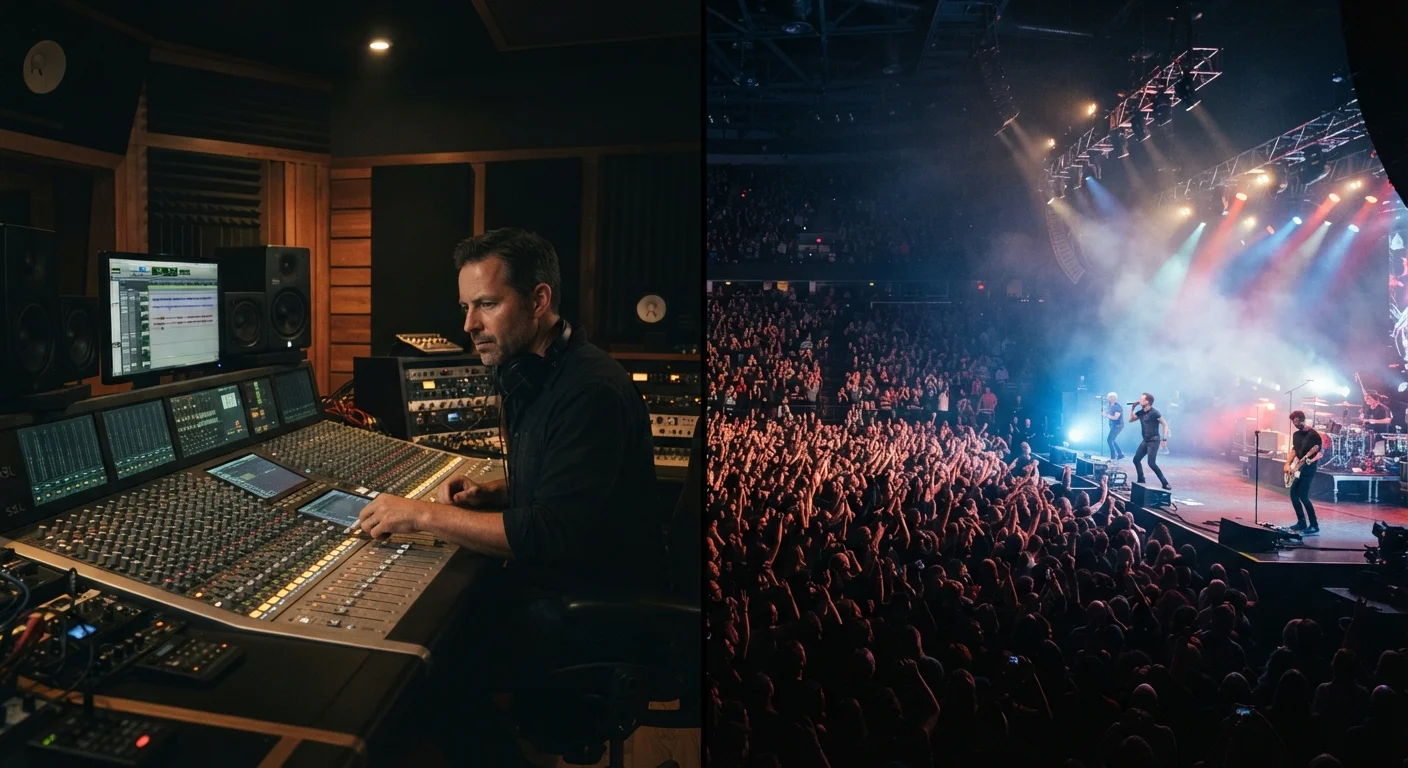
Photo credit: faqsnest.com
In this article
Studio and live albums serve very different purposes. Understanding both changes how you experience and evaluate a musician's body of work.
Key Takeaways
- Studio albums reflect an artist's deliberate creative vision, shaped by production choices and editorial control.
- Live records document spontaneity, crowd energy, and real-time musical decisions that studios cannot replicate.
- Both formats reveal different dimensions of artistic identity — neither is superior, but each serves a distinct purpose.
- How an artist performs live versus how they record can expose meaningful gaps or surprising consistencies in their craft.
- Listeners who engage with both formats develop a richer, more complete understanding of a musician's body of work.
The Studio Album: Architecture of Intent
A studio album is, above all, an act of deliberate construction. Every sonic element — the reverb on a vocal, the choice of tempo, the arrangement of instruments — is a decision made with time, resources, and artistic purpose. Artists and producers can record dozens of takes, splice together performances, and shape the emotional arc of a record across months or even years.
This control is not a form of artifice; it is a form of authorship. When listeners engage with a studio album, they are encountering the artist's most considered self-expression. The Beatles' Sgt. Pepper's Lonely Hearts Club Band, for instance, could not exist as a live document — its very identity was born in the studio. Similarly, Kendrick Lamar's To Pimp a Butterfly uses layered production as a narrative device that live performance cannot fully replicate.
Studio albums also function as cultural artifacts. They represent a moment in an artist's thinking — their politics, preoccupations, and sonic ambitions crystallized into a fixed, reproducible form. This is why debut albums and so-called "difficult third albums" are studied so closely: they reveal the trajectory of an artistic mind.
| Studio Album | Live Record | |
|---|---|---|
| Primary quality | Deliberate artistic vision | Spontaneity and energy |
| Production control | High — multiple takes, editing | Low — real-time performance |
| Reveals | Compositional intent and craft | Musicianship and adaptability |
| Audience role | Absent — imagined listener | Present — active participant |
| Emotional register | Constructed, layered | Raw, immediate |
| Best for | First introduction to an artist | Deepening understanding of an artist |
| Risk of misrepresentation | Over-polished, artificial sound | Technical imperfection, inconsistency |
The Live Record: Truth Under Pressure
If the studio album is architecture, the live record is geology — shaped by real forces, in real time, with real consequences. A live recording documents what an artist does when there is no second take, no editing bay, and thousands of people watching. That pressure reveals something no producer can manufacture.
Live albums capture improvisation, audience interaction, and the subtle shifts that occur when a song breathes differently each night. Miles Davis's Kind of Blue may be his most celebrated studio work, but recordings like In a Silent Way's live-adjacent sessions and his documented concert performances show how those ideas evolved and fractured under live conditions. James Brown's Live at the Apollo (1963) is widely considered more definitive than many of his studio recordings, precisely because the audience's presence transformed his performance into something electric and unrepeatable.
Live records also expose vulnerabilities. A vocalist who relies heavily on studio processing may struggle to connect in a raw setting. Conversely, artists who seem unassuming on record — think Johnny Cash at Folsom Prison — can reveal extraordinary emotional authority when placed before an audience. The format strips away the safety net and rewards genuine craft.
What the Gap Between Formats Tells You
Perhaps the most analytically useful exercise a music listener can undertake is comparing an artist's studio output directly against their live recordings of the same material. The gap — or its absence — is deeply revealing.
When an artist sounds nearly identical live and in the studio, it typically signals strong foundational musicianship and a commitment to performing rather than producing. Bands like Wilco and Phish are frequently cited for this consistency, suggesting their studio work captures live energy rather than constructing an artificial one.
A significant gap, however, is not necessarily a criticism. Some artists — electronic producers, studio composers, experimental artists — explicitly conceive their work as non-performable in its recorded form. They may develop entirely different live contexts rather than attempting replication. This is a legitimate creative philosophy, not a deficiency.
Where the gap becomes meaningful is when it appears unintentional — when live performances reveal that the studio product was propped up by technology in ways that undermine the emotional authenticity a listener assumed they were receiving. This is why the comparison matters: it recalibrates how we assign value to what we hear.
As media formats themselves evolve, this question of what different delivery systems reveal about creative intent becomes increasingly relevant. The tension between polished production and raw authenticity plays out beyond music — as explored in discussions about how audio and video streaming are reshaping creator identity across the entertainment landscape.
How to Listen to Both Formats More Critically
Approaching studio and live albums as complementary texts rather than interchangeable products changes the listening experience entirely. A few frameworks help.
- Track the same song across both formats. Notice what the artist emphasizes differently — tempo, dynamics, lyrical delivery — and consider why.
- Listen for what's added and what's removed. Studio albums often layer elements a live band cannot reproduce; live albums often strip arrangements to their emotional essentials.
- Pay attention to crowd response as data. Audience reactions in live recordings function as real-time critical feedback. Which moments generate applause before a song ends? Which verses earn silence?
- Consider the production of the live record itself. A live album is still produced — microphone placement, mixing, and mastering shape the final document. Some live recordings are heavily overdubbed post-show, narrowing the distinction between formats.
Understanding both formats is ultimately about developing a fuller picture of artistic identity — not just what an artist makes, but how they inhabit and defend their work when the stakes are highest.

Author
Entertainment & Media Editorial Team
Entertainment & Media Editorial Team is the collective byline for our editorial team and contributor network. Articles published under this byline or an editorial pen name are researched, written, and reviewed according to our editorial standards for clarity, consistency, and independence before publication.
View all articles →