
Podcast vs. Video Streaming: Two Formats, Two Audiences, One Converging Industry
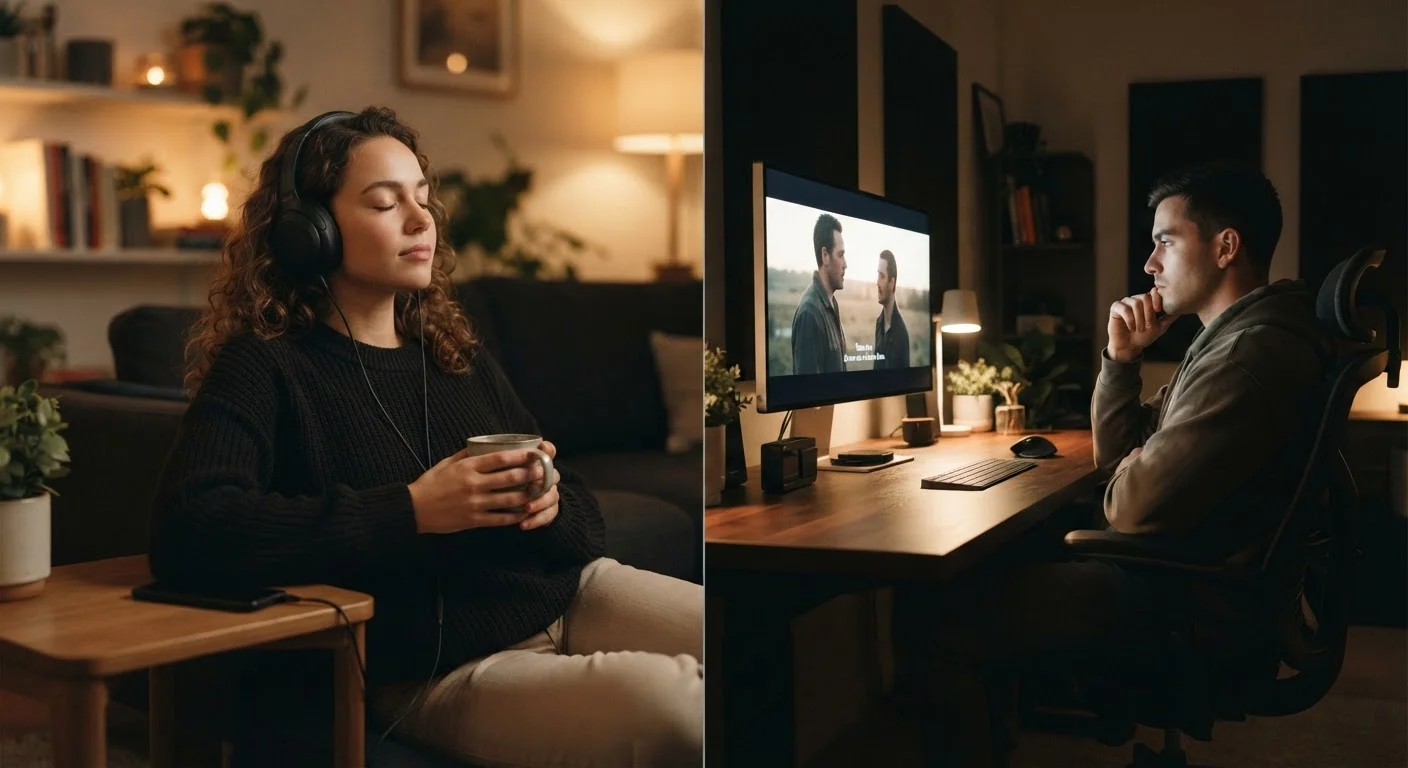
Photo credit: faqsnest.com
In this article
Examine how audio and video streaming are borrowing from each other and what the blurring of formats means for creators and listeners.
Key Takeaways
- Podcasting built its audience on audio intimacy and low production barriers; video streaming grew through high-budget visual storytelling.
- Both formats are converging: major podcast networks now record video, and streaming platforms are investing in talk-show and conversational formats.
- Monetization strategies differ significantly — podcasting leans on advertising and subscriptions, while streaming relies heavily on subscriber fees and licensing.
- Audience behavior shapes both formats: podcast listeners tend to engage longer per episode, while streaming viewers cycle through content more rapidly.
- The blurring of audio and video boundaries is creating new opportunities and new pressures for independent creators.
Different Origins, Different Promises
Podcasting emerged in the early 2000s as a democratized extension of radio — a medium anyone with a microphone and an internet connection could publish to a global audience via open RSS (Really Simple Syndication) feeds. Its early appeal was structural: no gatekeepers, no broadcast licenses, no production minimums. That openness attracted independent journalists, comedians, and subject-matter experts who couldn't find space in legacy media.
Video streaming followed a different trajectory. It was built on the infrastructure of pay-television and the collapse of physical media rental. When Netflix shifted from DVD-by-mail to streaming in 2007 and began producing original content in 2013, it set off a platform arms race. As explored in The Streaming Wars Explained, the competition that followed has reshaped not just how content is delivered but how it is financed, greenlit, and cancelled.
These divergent origins created two distinct value propositions. Podcasting promised intimacy and portability. Video streaming promised premium, on-demand access to content that rivaled theatrical and broadcast quality. For years, the audiences barely overlapped.
How Each Format Captures and Holds Attention
Audience behavior in each format reflects its structural design. Podcast listeners tend to commit at a deeper level per session — average podcast episode consumption regularly exceeds 70% completion, a figure most video platforms can only approximate with short-form content. The audio-only environment removes visual distraction, and the conversational format creates a sense of one-sided familiarity — what researchers call a parasocial relationship — between listener and host.
Video streaming engagement, by contrast, is shaped more by algorithmic recommendation and catalog volume. Viewers move laterally across a platform's library, guided by suggestions, trailers, and trending rows. This encourages breadth over depth. Binge-watching — consuming multiple episodes in rapid succession — is a behavior native to video streaming, tied directly to how platforms release content. The debate between full-season drops and weekly episodes is itself a strategic one, as covered in Binge-Watching vs. Weekly Release Schedules.
| Criterion | Podcasting | Video Streaming |
|---|---|---|
| Primary medium | Audio (increasingly video) | Video |
| Typical episode length | 30–90 minutes | 20–60 minutes (TV); 90–180 min (film) |
| Distribution model | Open RSS + platform apps | Closed platform subscriptions |
| Primary revenue source | Host-read ads, subscriptions | Subscriber fees, AVOD tiers |
| Production cost barrier | Low to moderate | Moderate to very high |
| Audience engagement depth | High per-episode completion | Broader catalog browsing |
| Creator platform risk | Low (RSS) to growing (Spotify/YouTube) | High (algorithm-dependent) |
Neither retention model is inherently superior — they serve different content types and audience expectations. A true-crime podcast benefits from the serialized intimacy of audio. A prestige drama needs visual performance and production design that only a screen can deliver.
The Convergence Nobody Predicted
The clearest sign that these two formats are merging is behavioral, not technological. Major podcast operations — including those produced by large media companies and independent creators alike — now routinely record video versions of their audio shows. Spotify has invested aggressively in video podcast infrastructure. YouTube has become one of the most-used podcast listening platforms in the United States, according to Edison Research data, even though it is technically a video platform.
At the same time, video streaming platforms are expanding into conversational and long-form talk formats that structurally resemble podcasts: unscripted roundtables, interview series, and commentary programming. The production value is higher, but the format logic — extended dialogue between informed participants — is borrowed directly from audio.
The Video Podcast Is Not New — But Its Scale Is
Video recordings of podcast-style conversations have existed since the early YouTube era. What has changed is the industrial scale of the practice. Spotify reported in 2024 that video podcast consumption on its platform had grown substantially year-over-year, and YouTube publicly positioned itself as a leading podcast platform in the US market. This is no longer a niche experiment — it is a core distribution strategy for major media operations.
This convergence is also reshaping monetization. Podcast advertising has historically operated on a host-read model, where the presenter delivers integrated ad copy, generating strong listener trust. Video streaming relies more heavily on subscriber fees and, increasingly, ad-supported tiers (known as AVOD — Advertising-Based Video on Demand — in industry terminology; see Key Terms Every Streaming Industry Watcher Should Know for a full glossary). As formats blur, so do the revenue models.
What This Means for Creators and Audiences
For independent creators, the convergence is a double-edged development. On one hand, producing both audio and video versions of the same content extends reach across more platforms and audience segments. On the other, it raises production expectations and costs. A podcast that once required a decent microphone and editing software now competes visually with video-native creators who have invested in lighting, cameras, and graphic design.
Platform dependency is also a growing concern. When podcasting distributed through open RSS, no single company controlled access to the audience. As podcast content migrates to Spotify, YouTube, and Apple Podcasts — platforms with their own algorithmic and contractual rules — creators face the same discovery and demotion risks that video creators have navigated for years. The Hidden Costs of Subscribing to Multiple Streaming Platforms piece illustrates how fragmentation affects audiences; creators feel an analogous fragmentation on the supply side.
For audiences, the practical effect is more choice with more complexity. A listener who followed a podcast for its audio intimacy now faces a version of that same show designed for a screen. The experience shifts — the parasocial warmth of audio gives way to a more visually mediated relationship. Whether that is an improvement or a dilution depends entirely on what drew the listener in the first place.
What is clear is that the line between podcast and video stream — once defined by the presence or absence of a screen — is becoming a distinction of emphasis rather than category. The industry will continue to borrow across formats, and the audiences that form around each will increasingly overlap.

Author
Entertainment & Media Editorial Team
Entertainment & Media Editorial Team is the collective byline for our editorial team and contributor network. Articles published under this byline or an editorial pen name are researched, written, and reviewed according to our editorial standards for clarity, consistency, and independence before publication.
View all articles →