
The Hidden Costs of Subscribing to Multiple Streaming Platforms
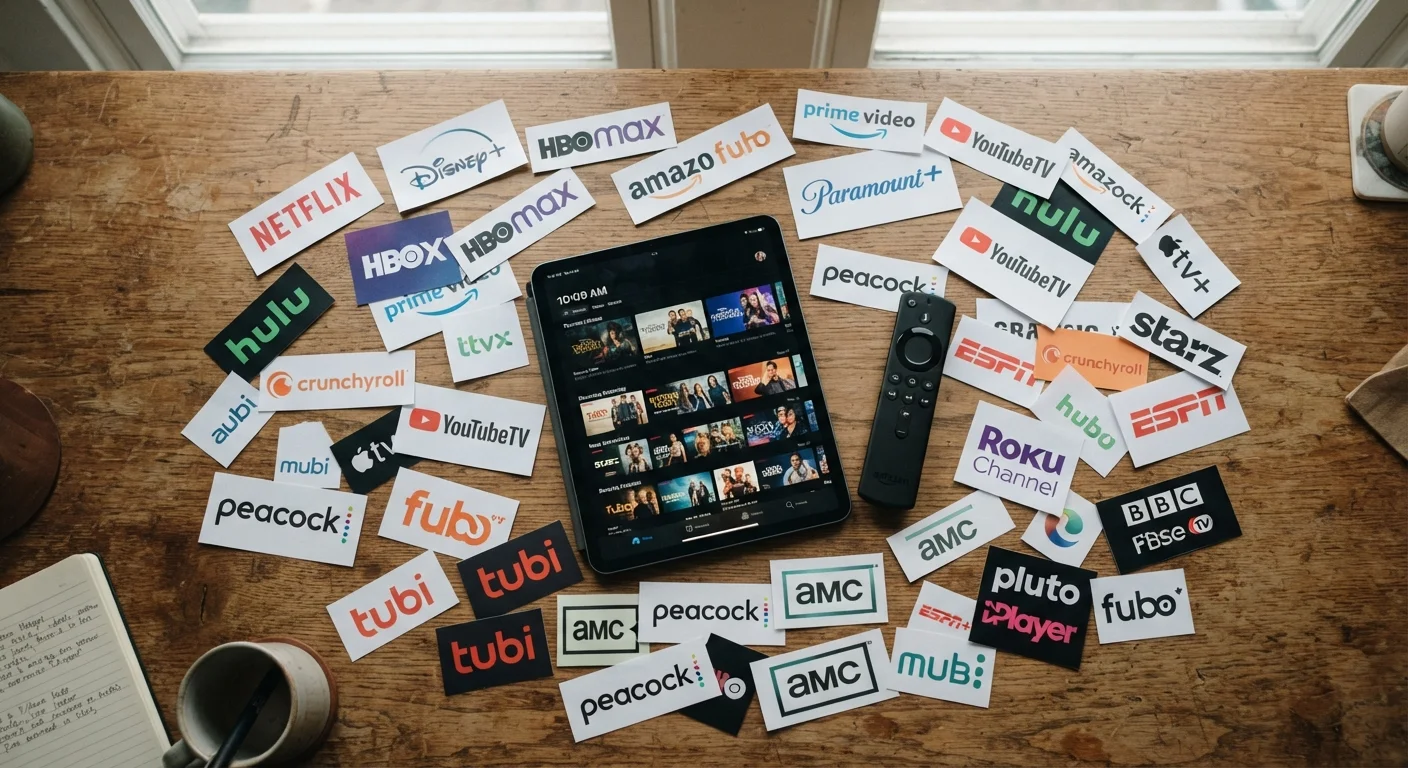
Photo credit: faqsnest.com
In this article
Beyond the monthly fee: overlapping content, cognitive load, and subscription sprawl — and how to think about managing them.
Key Takeaways
- The average US household subscribing to multiple streaming platforms spends significantly more annually than many realize when fees compound.
- Content overlap across platforms means paying for the same licensed titles more than once is common.
- Managing several services creates measurable cognitive load, contributing to decision fatigue and less satisfying viewing.
- Password sharing crackdowns and price hikes have made multi-platform costs less predictable over time.
- Strategic rotation — subscribing, watching, and canceling — can reduce cost without sacrificing access to desired content.
Access to exclusive originals across multiple studios
Major studios and networks have fragmented their most valuable content across proprietary platforms, meaning access to the full range of prestige originals requires multiple subscriptions.
Serves households with diverse viewing tastes
Families with children, sports fans, documentary enthusiasts, and drama viewers rarely find all their needs met by a single platform, making multiple subscriptions a practical solution.
No fixed schedule or channel-bundle constraints
Unlike cable, streaming subscriptions allow on-demand access without paying for hundreds of unwanted channels, offering more targeted value per service.
Flexibility to cancel and restart at any time
Most streaming services operate on a month-to-month basis with no long-term contract, enabling strategic rotation to minimize cumulative spend.
Cumulative monthly cost rivals or exceeds cable
Three to five services at standard pricing can total $50–$90 per month, undermining the savings narrative that initially drove cord-cutting.
Significant content overlap across platforms
Licensed catalog titles frequently appear on multiple services simultaneously, meaning subscribers often pay for duplicated access without realizing it.
Choice overload reduces viewing satisfaction
Research in behavioral economics consistently shows that an excess of options can lead to decision paralysis and reduced enjoyment of the choices ultimately made.
Managing multiple interfaces adds cognitive overhead
Each platform maintains separate watchlists, recommendation algorithms, and UX conventions, requiring mental context-switching that accumulates into genuine friction.
Price hikes make budgeting unpredictable
Major platforms have raised subscription rates multiple times in recent years, meaning a fixed monthly entertainment budget can erode without a deliberate reassessment.
Password-sharing restrictions increase per-household costs
Recent enforcement changes across several major platforms have effectively eliminated informal household sharing, pushing additional accounts onto paying tiers.
The Real Price Tag Behind the Stacked Subscriptions
The pitch for any individual streaming service sounds reasonable enough — a modest monthly fee for access to thousands of hours of content. But most households don't stop at one. According to research from Deloitte's Digital Media Trends survey, US consumers have averaged four or more paid streaming subscriptions in recent years, a figure that has remained stubbornly high even as individual prices have risen.
The arithmetic compounds quickly. Three or four services at standard pricing can total anywhere from $40 to $80 or more per month — approaching or exceeding what many households once paid for cable. For context, that's before accounting for premium tiers, add-on channels bundled inside platforms, or live sports packages that sit behind additional paywalls. To understand why so many services exist competing for that wallet share, see our overview of the streaming wars.
Price increases have also accelerated. Major platforms have raised standard subscription rates multiple times since 2020, and the introduction of ad-supported tiers — while ostensibly cheaper — has restructured pricing ladders in ways that push ad-free access further up the cost curve. The trade-offs between ad-supported and paid tiers deserve careful consideration when evaluating what you're actually paying for.
Access to exclusive originals across multiple studios
Major studios and networks have fragmented their most valuable content across proprietary platforms, meaning access to the full range of prestige originals requires multiple subscriptions.
Serves households with diverse viewing tastes
Families with children, sports fans, documentary enthusiasts, and drama viewers rarely find all their needs met by a single platform, making multiple subscriptions a practical solution.
No fixed schedule or channel-bundle constraints
Unlike cable, streaming subscriptions allow on-demand access without paying for hundreds of unwanted channels, offering more targeted value per service.
Flexibility to cancel and restart at any time
Most streaming services operate on a month-to-month basis with no long-term contract, enabling strategic rotation to minimize cumulative spend.
What You Actually Gain from Multiple Services
There are genuine advantages to maintaining access to more than one platform simultaneously, particularly for households with varied tastes. The streaming landscape has fragmented deliberately — studios and networks have pulled their most valuable intellectual property toward proprietary platforms, meaning no single service holds a comprehensive library. Breadth of access, at least in theory, follows from breadth of subscription.
For families with children, genre enthusiasts, sports viewers, and documentary fans under one roof, a single platform rarely serves everyone well. Multiple subscriptions can effectively replace the channel bundling that cable once provided, with the added benefit of no fixed schedule. The role of original programming versus licensed content in driving this kind of platform loyalty is explored in depth in our piece on what actually keeps subscribers on a platform.
The Overlooked Costs: Overlap, Fatigue, and Cognitive Load
Perhaps the most underappreciated cost of multi-platform subscribing isn't financial — it's attentional. When content is distributed across four or five different interfaces, each with its own recommendation engine, watchlist system, and UI logic, the task of simply deciding what to watch becomes genuinely effortful. Behavioral researchers refer to this as choice overload — a well-documented phenomenon in which an abundance of options leads to worse decisions and lower satisfaction with the choices made.
The Psychology of Too Much Content
The difficulty of choosing what to watch across multiple platforms is more than anecdotal frustration — it reflects well-documented behavioral patterns. When the number of available options exceeds a cognitive threshold, the decision process itself becomes exhausting, often resulting in either defaulting to familiar rewatches or abandoning the choice altogether. This dynamic is explored in depth in our related piece on streaming fatigue and decision paralysis. Understanding it can help subscribers make more intentional, satisfying choices about what — and how many services — to maintain.
Content overlap compounds this further. Licensed titles — older films and catalog television — frequently appear on more than one platform simultaneously, meaning subscribers may be paying for access to the same content twice without realizing it. Exclusive originals are the real differentiator, but they represent only a fraction of any platform's total library. Password-sharing policy changes have added another layer of complexity; recent enforcement efforts have forced many households to either formalize or abandon informal sharing arrangements, effectively increasing per-household costs. Our analysis of what platforms are actually enforcing around password sharing breaks down what's changed.
Cumulative monthly cost rivals or exceeds cable
Three to five services at standard pricing can total $50–$90 per month, undermining the savings narrative that initially drove cord-cutting.
Significant content overlap across platforms
Licensed catalog titles frequently appear on multiple services simultaneously, meaning subscribers often pay for duplicated access without realizing it.
Choice overload reduces viewing satisfaction
Research in behavioral economics consistently shows that an excess of options can lead to decision paralysis and reduced enjoyment of the choices ultimately made.
Managing multiple interfaces adds cognitive overhead
Each platform maintains separate watchlists, recommendation algorithms, and UX conventions, requiring mental context-switching that accumulates into genuine friction.
Price hikes make budgeting unpredictable
Major platforms have raised subscription rates multiple times in recent years, meaning a fixed monthly entertainment budget can erode without a deliberate reassessment.
Password-sharing restrictions increase per-household costs
Recent enforcement changes across several major platforms have effectively eliminated informal household sharing, pushing additional accounts onto paying tiers.
How to Think About Managing Streaming Subscriptions Strategically
The most effective counterweight to subscription sprawl is intentional rotation rather than permanent accumulation. Subscribing to a service for one or two months, consuming its most relevant content, then canceling before renewing offers access to a wider range of content over the course of a year at a meaningfully lower average monthly cost. This approach requires more management overhead but aligns spending with actual consumption rather than passive availability.
Auditing your current subscriptions against actual viewing data — most platforms surface watch history in account settings — often reveals that one or more services function as dormant expenses. Industry analysts have noted that a meaningful share of subscribers retain services they use fewer than two or three times per month, sometimes for months at a time.
For those new to navigating the landscape, particularly anyone moving away from traditional cable, a grounded starting point for cord-cutters can help clarify priorities before committing to any combination of services. The goal isn't to subscribe to everything — it's to pay for what you'll actually watch, and to revisit that calculus regularly as libraries shift and prices change.
4+
Average paid streaming subscriptions per US household
Deloitte's Digital Media Trends survey has consistently found US consumers maintaining four or more paid streaming subscriptions in recent years.
~$85/mo
Estimated monthly cost for four ad-free streaming tiers
At standard 2024 pricing for major platforms, four ad-free subscriptions combined approach or exceed what many households paid for basic cable packages.
~40%
Subscribers who consider canceling due to cost
Industry research from Parks Associates has found that a significant minority of subscribers report cost as their primary reason for considering cancellation at any given time.

Author
Entertainment & Media Editorial Team
Entertainment & Media Editorial Team is the collective byline for our editorial team and contributor network. Articles published under this byline or an editorial pen name are researched, written, and reviewed according to our editorial standards for clarity, consistency, and independence before publication.
View all articles →