
Hydration and Food: How Much Water You're Already Eating
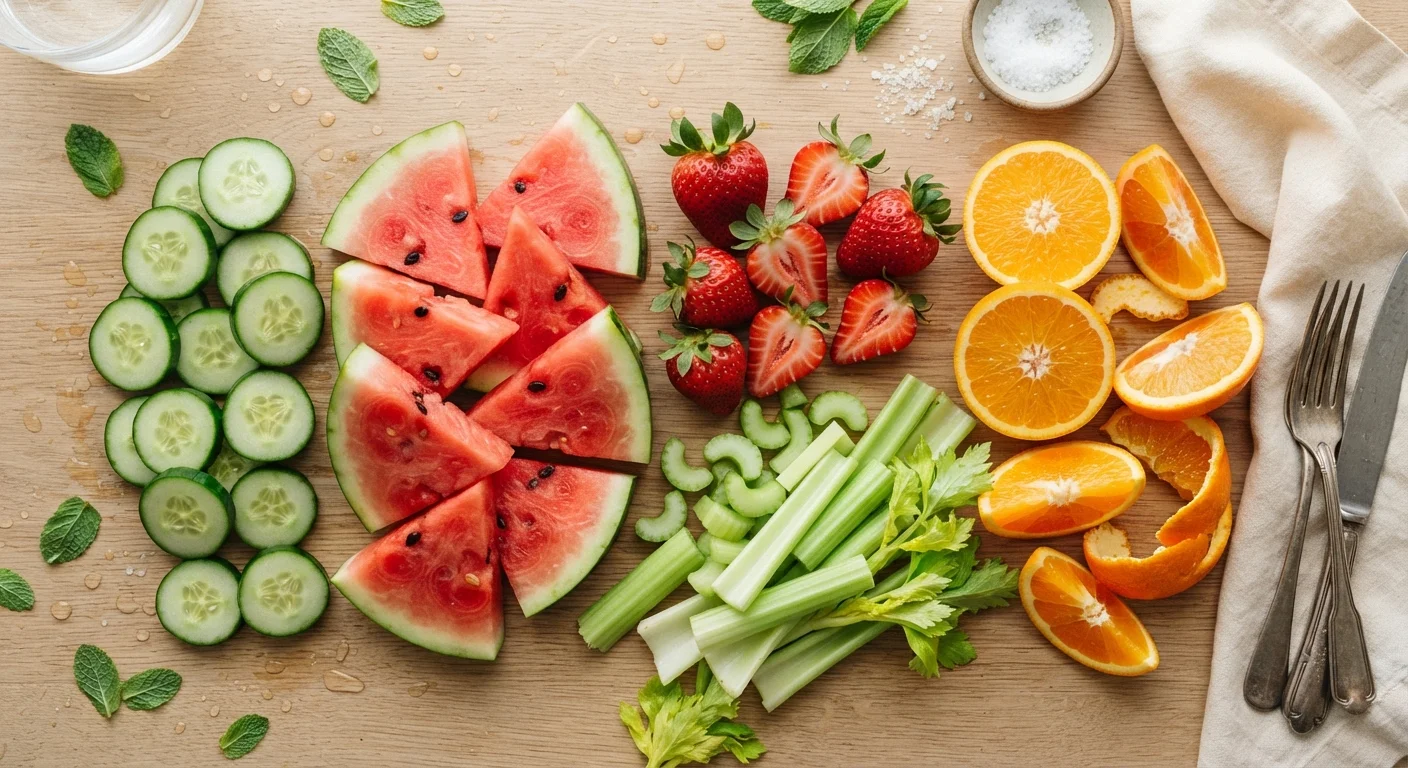
Photo credit: faqsnest.com
In this article
A surprising amount of daily fluid intake comes from food. Here's which foods contribute most and how hydration fits into eating well.
Key Takeaways
- Around 20–30% of daily fluid intake typically comes from food, not beverages.
- Fruits and vegetables are the most water-dense foods, often exceeding 90% water by weight.
- Eating water-rich foods also delivers fiber, vitamins, and minerals alongside hydration.
- Soups, yogurt, and cooked grains contribute more water than most people realize.
- You don't need to track food-water separately — just eating a varied diet helps.
The Hidden Fluid in Your Meals
Most hydration conversations focus entirely on beverages — how many glasses of water per day, whether juice counts, what sports drinks do. What rarely gets mentioned is that a meaningful share of your daily fluid intake arrives on a fork, not in a glass.
According to research published by the European Food Safety Authority and referenced by nutrition bodies including the U.S. National Academies, food accounts for approximately 20–30% of total daily water intake for adults following a typical diet. That percentage climbs considerably for people who eat more fruits, vegetables, soups, and dairy.
Understanding this doesn't mean you should drink less water. It means hydration is more connected to overall eating patterns than most people recognize — and that a nutritious diet does double duty, delivering fluids alongside fiber, vitamins, and minerals. For a broader look at how everyday habits support your health, see our daily wellness habits overview.
Which Foods Deliver the Most Water
Water content in food is typically expressed as a percentage of total weight. Here's a practical breakdown by food category:
Fruits and Vegetables
These are by far the most water-dense foods in a typical diet. Cucumbers, iceberg lettuce, celery, tomatoes, zucchini, and radishes all sit at 95% water or above by weight. Watermelon and strawberries come in around 91–92%. Even denser produce like oranges and apples still contain roughly 85% water.
Eating a large salad, a bowl of berries, or a side of steamed zucchini contributes a surprisingly significant volume of fluid — without requiring a single extra glass of water.
Soups and Broths
Broth-based soups are among the most efficient hydrating foods. A standard serving of vegetable or chicken soup can easily contain 200–300ml of water, depending on preparation. Soups also tend to be slower to leave the stomach than plain water, which may help maintain fluid levels over time.
Dairy and Dairy Alternatives
Plain yogurt is roughly 85% water; milk sits around 87–89%. These foods contribute meaningfully to fluid intake while also delivering protein and calcium. Most unsweetened plant-based milks have a similar water content.
Cooked Grains and Legumes
Oatmeal cooked in water, boiled rice, and lentil-based dishes absorb significant liquid during preparation. A bowl of oatmeal, for example, can contain well over 200ml of water depending on how it's made. These foods are often overlooked as hydration contributors.
20–30%
Daily fluid intake from food
Estimated by the European Food Safety Authority and consistent with findings from the U.S. National Academies of Sciences, Engineering, and Medicine.
~96%
Water content of cucumber by weight
Cucumbers are among the most water-dense whole foods commonly eaten, alongside lettuce and celery.
~91%
Water content of watermelon by weight
Watermelon and strawberries are two of the most hydrating fruits, according to USDA food composition data.
Why It Matters for How You Eat
Framing hydration as something separate from food sets up an unnecessary mental division. In practice, eating more whole fruits and vegetables — which most people are already encouraged to do for fiber, vitamins, and minerals — also helps maintain fluid balance.
This matters practically. People who eat a produce-rich diet may feel less urgently thirsty not because they're ignoring a need, but because food is partially meeting it. Conversely, a diet heavy in processed, low-moisture foods provides almost no fluid from eating, making beverage intake more critical.
High-water foods like cucumber and celery also tend to be high in fiber, supporting digestion. Our article on dietary fiber and why most people don't eat enough explores that connection further.
For anyone looking to improve their eating patterns without rigid rules, consistent habits that support healthy eating offers practical framing that applies here too.
Putting It into Practice
You don't need to calculate the water content of every meal. A few practical habits naturally increase food-based hydration:
- Include raw produce at most meals. A side salad, sliced cucumber, or a handful of berries adds meaningful water volume without effort.
- Eat soup regularly. Broth-based soups at lunch or dinner are one of the easiest ways to combine hydration with satisfying nutrition.
- Choose whole fruit over juice. Whole fruit retains the fiber and water structure; juice removes the fiber and concentrates sugars.
- Notice what you're eating, not just drinking. On days when your diet skews toward processed or dry foods, deliberate water intake matters more.
The broader nutrients in water-rich foods — potassium, folate, vitamin C, and more — are covered in our guide to micronutrients in everyday food.
None of this replaces the need to drink water throughout the day. But it does reframe hydration as something that happens across your whole diet — not just in your water bottle.
This article is for general informational and educational purposes only and is not a substitute for professional medical or nutritional advice. Consult a qualified healthcare provider for guidance tailored to your individual health needs.
Frequently Asked Questions

Author
Everyday Lifestyle Editorial Team
Everyday Lifestyle Editorial Team is the collective byline for our editorial team and contributor network. Articles published under this byline or an editorial pen name are researched, written, and reviewed according to our editorial standards for clarity, consistency, and independence before publication.
View all articles →