
Whole Grains vs Refined Grains: What Changes When You Process Wheat
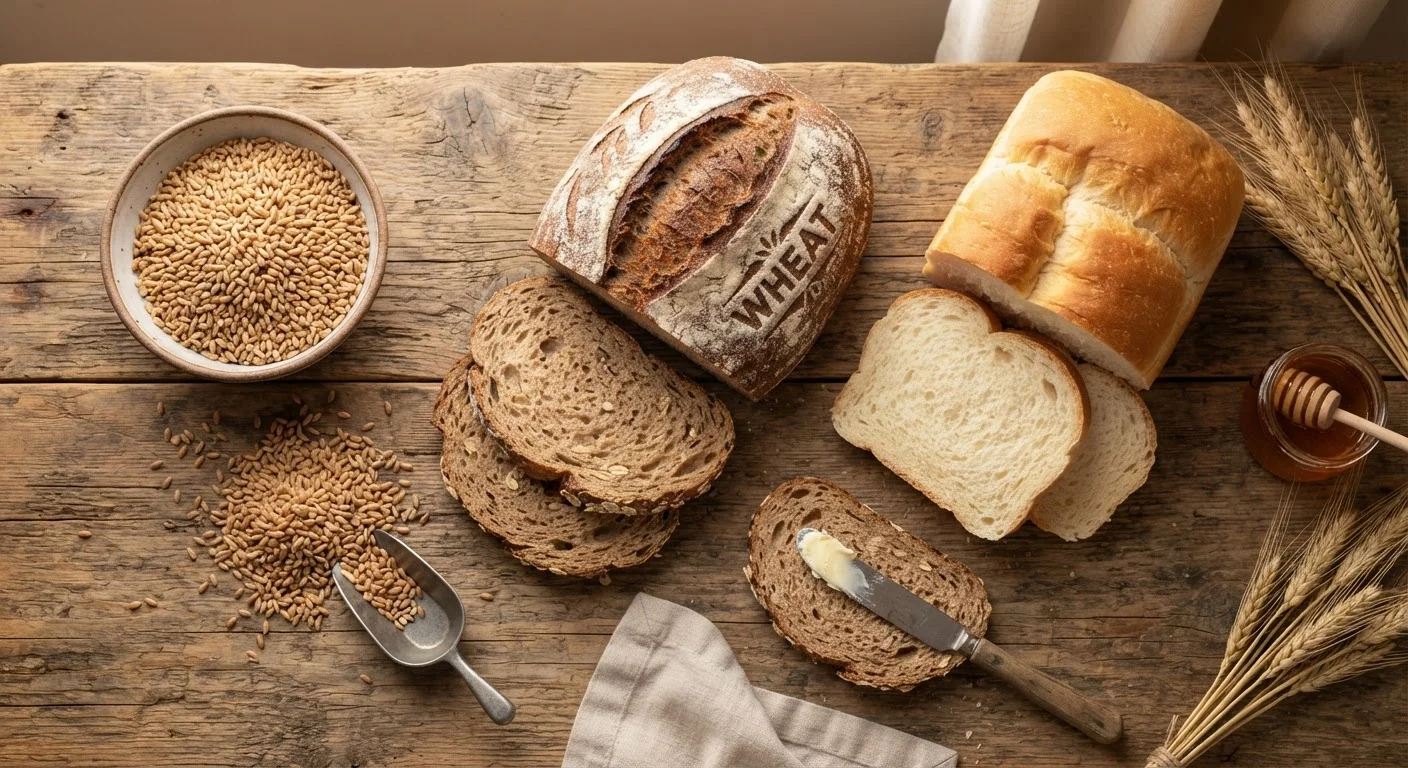
Photo credit: faqsnest.com
In this article
Understand what's lost during grain refining, why it matters nutritionally, and when the difference is worth caring about.
Key Takeaways
- Refining removes the bran and germ, stripping most fiber, B vitamins, and minerals from the grain.
- Enrichment adds back a few nutrients but does not fully restore what processing removes.
- Whole grains are consistently linked to lower risks of cardiovascular disease and type 2 diabetes in population studies.
- Refined grains aren't universally harmful — context, overall diet quality, and portion size all matter.
- Most nutrition guidelines recommend making at least half of daily grain servings whole grain.
What the Milling Process Actually Does
A grain kernel has three distinct parts: the bran (the fibrous outer layer), the germ (the nutrient-dense embryo), and the endosperm (the starchy center). Whole grains keep all three. Refined grains — white flour, white rice, most commercial bread — have had the bran and germ milled away, leaving only the endosperm.
That sounds like a small structural change, but the nutritional consequences are significant. The bran carries the majority of a grain's dietary fiber along with magnesium, potassium, and antioxidants. The germ contributes vitamin E, B vitamins including thiamine, folate, and B6, plus healthy fats. Once those layers are removed, you're left with a food that delivers calories and starch efficiently but comparatively little else.
Manufacturers sometimes respond to this with enrichment — adding back iron, folic acid, niacin, riboflavin, and thiamine after milling. Enrichment is required by law for many refined grain products sold in the United States. It meaningfully reduces nutritional gaps, but it doesn't restore fiber, vitamin E, magnesium, or the full spectrum of phytochemicals lost in processing.
| Criterion | Whole Grains | Refined Grains |
|---|---|---|
| Kernel parts retained | Bran, germ, endosperm | Endosperm only |
| Dietary fiber | High (3–4g per serving) | Low (under 1g per serving) |
| B vitamins | Naturally occurring, full range | Partially restored via enrichment |
| Vitamin E & magnesium | Present from germ | Largely absent post-milling |
| Blood glucose impact | Slower, more gradual rise | Faster, more pronounced rise |
| Shelf life | Shorter (oils in germ go stale) | Longer, more stable |
| Texture | Denser, chewier | Lighter, softer |
| Cost & availability | Widely available, similar price | Ubiquitous, often slightly cheaper |
The Health Evidence: What Research Shows
Large observational studies — including data from Harvard's long-running cohort studies — consistently find that higher whole grain intake is associated with reduced risk of cardiovascular disease, type 2 diabetes, and certain digestive cancers. These associations hold even after adjusting for overall diet quality and lifestyle factors. Researchers attribute much of this benefit to fiber's role in slowing glucose absorption, supporting gut microbiome diversity, and lowering LDL cholesterol.
~25%
Lower cardiovascular disease risk
A meta-analysis published in the BMJ found roughly a 25% lower risk of cardiovascular disease in people with the highest whole grain intake compared to the lowest.
70–80%
Fiber lost during refining
According to USDA nutritional data, milling wheat into white flour removes approximately 70–80% of its original dietary fiber content.
~50%
Recommended whole grain share of daily grains
The USDA Dietary Guidelines for Americans recommend that at least half of all grain servings each day come from whole grain sources.
Refined grains, meanwhile, are metabolized more quickly because the starchy endosperm has less structural resistance. This produces a faster rise in blood glucose — a consideration particularly relevant for people managing insulin sensitivity. However, context matters. A slice of enriched white bread eaten with protein, fat, and vegetables has a very different metabolic effect than the same bread eaten alone. Population-level risk data reflects average dietary patterns, not individual meals.
It's also worth noting that not all whole grain products are equally nutritious. A packaged food labeled "made with whole grains" may contain a token amount alongside refined flour and added sugar. Reading ingredient labels — where whole grain flour should appear first — is more informative than relying on front-of-pack claims.
Making Practical Swaps Without Overhauling Your Diet
Nutrition guidelines from bodies including the USDA Dietary Guidelines Advisory Committee recommend that at least half of daily grain servings come from whole grain sources. For most adults eating the standard American diet, that means making deliberate swaps rather than a total overhaul.
Common entry points include switching from white rice to brown or wild rice, choosing oats over sweetened refined cereals, and using whole wheat or whole grain bread for sandwiches. These changes don't require specialty stores or premium prices — most mainstream grocery chains carry whole grain staples at comparable cost to refined versions.
If you're also thinking about how grains fit into your broader protein intake, our comparison of protein sources across food groups covers how grain-based proteins like quinoa and amaranth stack up against animal and legume options.
A few practical considerations worth keeping in mind:
- Texture and taste take adjustment time — whole grain pasta and bread have a denser, earthier profile that most people adapt to within a few weeks.
- Storage matters: whole grain flours contain natural oils from the germ and go rancid faster than refined flour. Store them in the refrigerator or freezer if using infrequently.
- Special populations — including people with certain digestive conditions, older adults, or those with specific medical needs — should consult a healthcare professional before significantly changing fiber intake.
This article is for general informational and educational purposes only and is not medical or dietary advice. Consult a qualified healthcare professional for guidance specific to your health needs.

Author
Everyday Lifestyle Editorial Team
Everyday Lifestyle Editorial Team is the collective byline for our editorial team and contributor network. Articles published under this byline or an editorial pen name are researched, written, and reviewed according to our editorial standards for clarity, consistency, and independence before publication.
View all articles →