
Protein Sources Compared: Animal, Legume, Grain, and Beyond
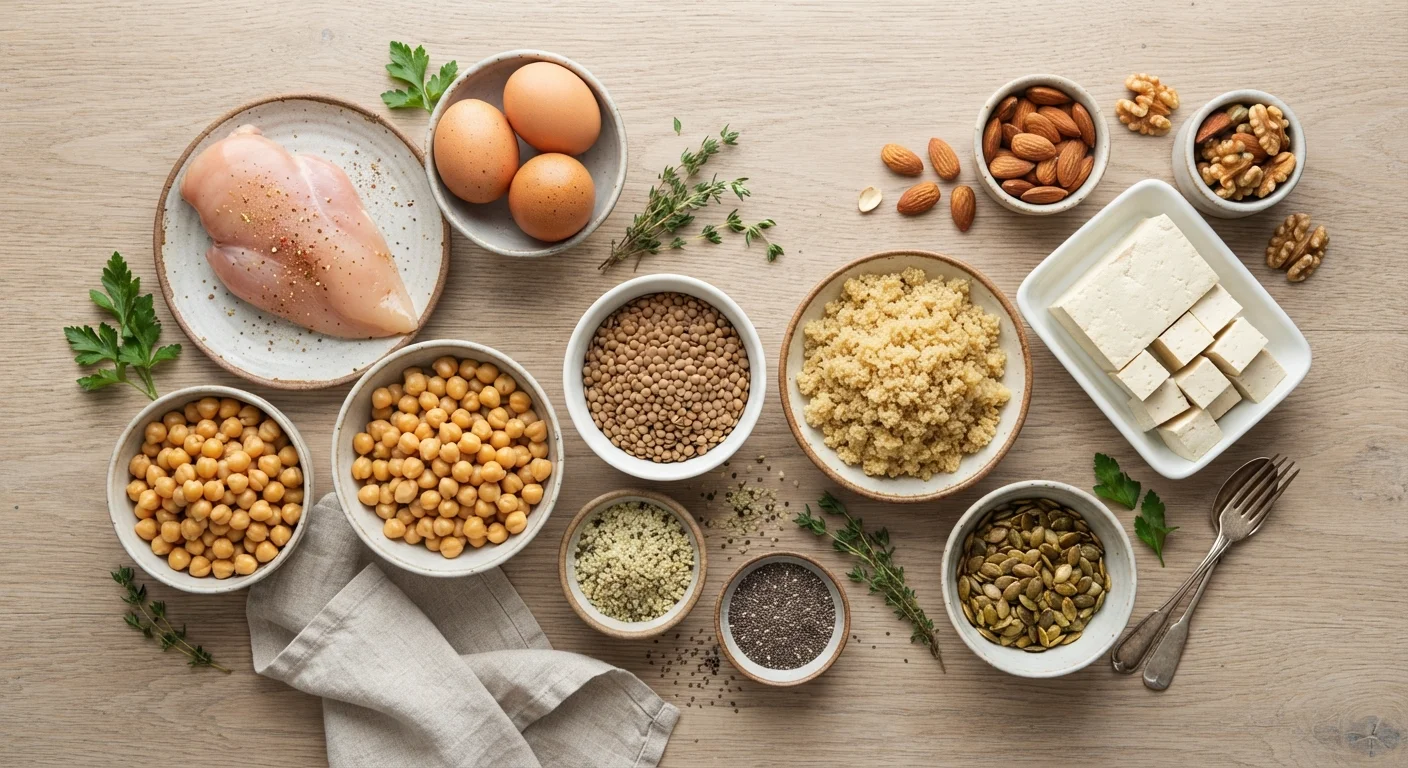
Photo credit: faqsnest.com
In this article
How do different protein sources stack up nutritionally? This comparison covers completeness, digestibility, and everyday accessibility.
Key Takeaways
- Animal proteins are nutritionally complete, containing all essential amino acids in readily usable ratios.
- Most plant proteins are incomplete on their own but can cover all amino acids when varied across the day.
- Digestibility differs significantly between sources — a factor often overlooked when comparing protein content on labels.
- Legumes and grains provide protein alongside fiber, vitamins, and minerals that animal sources often lack.
- No single source is universally superior; dietary pattern and variety matter more than any one food.
Why Protein Source Matters Beyond the Gram Count
Most people check the grams of protein per serving and stop there. But two foods with identical protein counts can behave very differently once you eat them. Three factors drive real nutritional value: amino acid completeness, digestibility, and the nutrients that come along for the ride.
Proteins are built from 20 amino acids, nine of which the body cannot synthesize — these are called essential amino acids. A complete protein contains all nine in adequate proportions. An incomplete protein is missing or low in one or more. This matters most if a single food makes up the bulk of your protein intake. When your diet is varied, the gaps tend to fill themselves.
Digestibility is the other underrated metric. The DIAAS is a scoring system developed by the Food and Agriculture Organization that measures how well the body can actually absorb and use protein from a given source. A food can look impressive on a label but score lower once digestibility is factored in. Understanding both measures gives a more honest picture than grams alone. For a practical guide to reading those labels accurately, see The Nutrition Labels on Packaged Food, Decoded.
Animal Proteins: High Efficiency, Real Trade-Offs
Eggs, poultry, fish, red meat, and dairy all share a key advantage: they are nutritionally complete and score high on digestibility. Eggs, for instance, are often cited as a reference protein in research precisely because of how efficiently the body uses them. Fish brings omega-3 fatty acids alongside protein. Dairy adds calcium and, in fermented forms like yogurt, beneficial bacteria.
The trade-offs depend on the specific food. Fatty red meat carries saturated fat in quantities that, consumed heavily, have been associated with cardiovascular risk in a substantial body of research. Processed meats — bacon, sausage, deli slices — carry additional concerns related to sodium and preservatives. White-fleshed fish, eggs, and low-fat dairy tend to have the most favorable nutritional profiles among animal sources for everyday use.
Environmental footprint is a separate but increasingly relevant consideration for many people. Ruminant meats generally carry a significantly higher greenhouse gas cost than poultry, fish, or plant proteins — a factor some eaters weigh alongside nutrition.
| Animal Proteins | Legumes | Grains | Soy Foods | Nuts & Seeds | |
|---|---|---|---|---|---|
| Amino acid completeness | Complete | Incomplete (low methionine) | Incomplete (low lysine) | Complete | Varies; hemp is complete |
| Digestibility (DIAAS) | High | Moderate | Moderate | High | Moderate |
| Fiber content | None | High | Moderate–high | Moderate | Moderate |
| Saturated fat | Varies (low–high) | Very low | Very low | Low | Low–moderate |
| Typical cost per serving | Moderate–high | Low | Low | Low–moderate | Moderate–high |
| Meal planning effort | Low | Low–moderate | Low | Low | Low |
Legumes and Grains: Protein With Extra Cargo
Lentils, chickpeas, black beans, kidney beans, and split peas sit at the heart of protein-rich plant eating. A cooked cup of lentils provides roughly 18 grams of protein along with substantial fiber, iron, folate, and potassium. The catch: most legumes are low in the amino acid methionine, making them incomplete on their own.
Grains tell the other side of the story. Wheat, rice, oats, and corn are relatively low in lysine but adequate in methionine — the amino acid legumes lack. This is why rice-and-beans combinations, common across many global food cultures, work so well nutritionally: together they cover the full amino acid spectrum without requiring any deliberate planning beyond eating both regularly. For more on what grain processing affects nutritionally, Whole Grains vs Refined Grains explains the key differences.
Quinoa and buckwheat are grains that break the incomplete-protein rule — both contain all essential amino acids and are worth including specifically for that reason. The digestibility of legumes and grains is somewhat lower than animal proteins (partly due to antinutrients like phytates), but soaking, cooking, and fermentation all improve this meaningfully. As a bonus, the fiber legumes and grains carry is a nutrient most Americans fall short on — see Fibre: The Nutrient Most People Undereat for context.
Soy, Nuts, and Seeds: The Plant Outliers
Soy deserves special mention. Tofu, tempeh, edamame, and soy milk provide a complete amino acid profile and digestibility scores comparable to many animal proteins — unusual among plant foods. Tempeh, which is fermented, offers added digestibility and a small probiotic benefit. Soy has been studied extensively; the evidence does not support concerns about its phytoestrogen content causing harm in typical dietary amounts for healthy adults, though individuals with specific conditions should discuss it with a healthcare provider.
Nuts and seeds — almonds, pumpkin seeds, hemp seeds, sunflower seeds — contribute meaningful protein but generally in smaller per-serving amounts. Hemp seeds are a notable exception: they contain all essential amino acids and are easy to add to meals without changing flavor significantly. Nut butters add protein but also come with calorie density, worth noting for those monitoring intake.
Building more meals around these plant sources is approachable for most people. Plant-Based Eating: A Realistic Starting Point offers practical meal-building guidance for those exploring that direction. And combining protein sources strategically — like pairing rice with lentils or hummus with whole grain bread — can further improve overall amino acid intake, a topic explored in Foods That Work Well Together.
This article is for general informational and educational purposes only and is not a substitute for professional medical or dietary advice. Consult a qualified healthcare provider or registered dietitian for guidance specific to your health needs.

Author
Everyday Lifestyle Editorial Team
Everyday Lifestyle Editorial Team is the collective byline for our editorial team and contributor network. Articles published under this byline or an editorial pen name are researched, written, and reviewed according to our editorial standards for clarity, consistency, and independence before publication.
View all articles →