
The Nutrition Labels on Packaged Food, Decoded
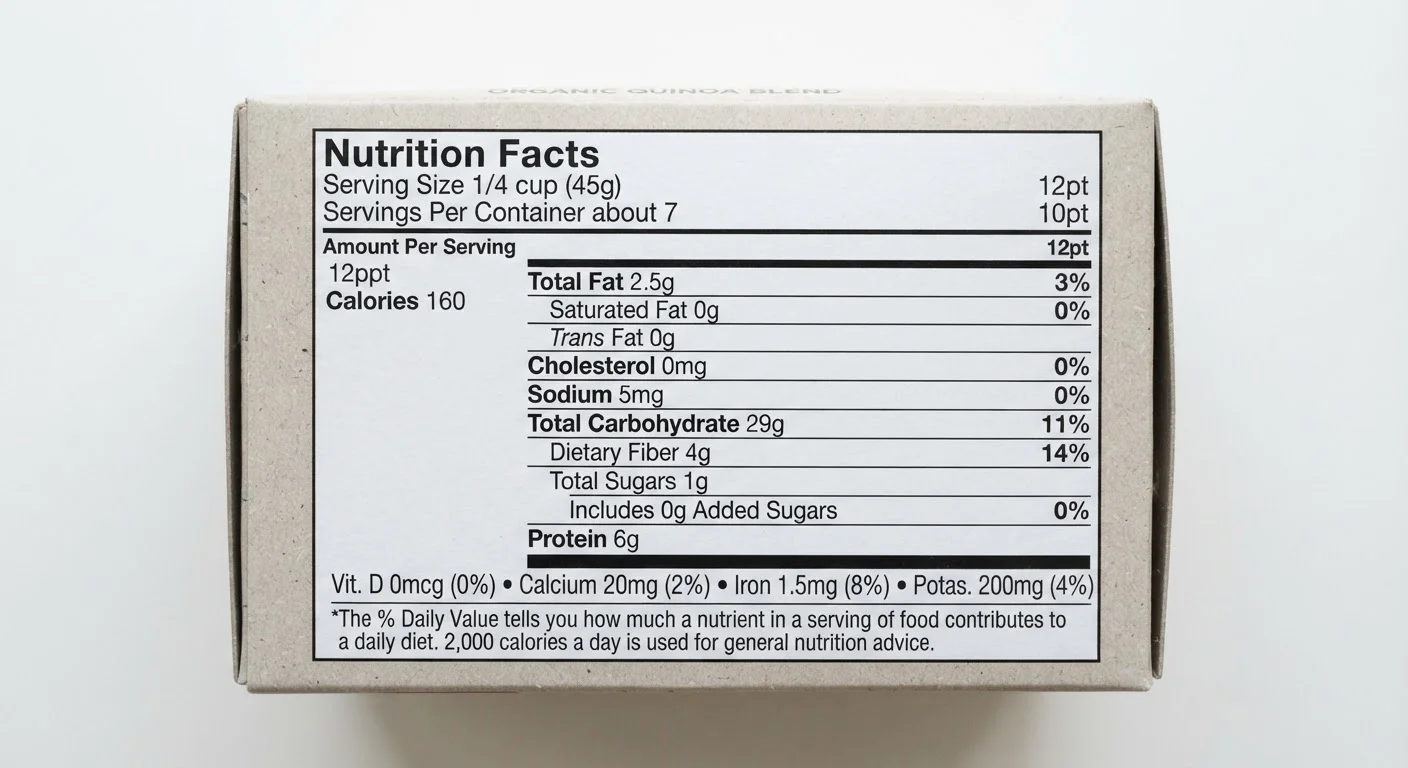
Photo credit: faqsnest.com
In this article
A plain-language guide to reading nutrition panels — what each row means, which figures matter most, and what's easy to misread.
What You're Actually Looking At
The Nutrition Facts panel is a standardized label regulated by the U.S. Food and Drug Administration (FDA). Its format was significantly updated in 2016 and 2020 to reflect current nutritional science, and most packaged foods now carry the updated version. Once you know its structure, you can scan any label in seconds.
The panel always follows the same top-to-bottom order: serving information, calories, nutrients to limit, nutrients to get enough of, and the percent daily values column on the right. Understanding that hierarchy is the first step to using the label rather than just glancing at it.
For a broader look at how these numbers translate to an actual meal, see our guide on what a balanced plate actually looks like.
Serving Size
A standardized reference amount set by the FDA for a specific food category. It is used as the basis for all nutrient figures on the label and is not a dietary recommendation.
Percent Daily Value (%DV)
The share of a recommended daily nutrient amount that one serving of the food provides, based on a 2,000-calorie reference diet. It allows quick comparisons across products.
Added Sugars
Sugars incorporated into food during processing or preparation, distinct from sugars that occur naturally in ingredients like fruit or milk. The updated label lists these separately.
Saturated Fat
A type of dietary fat found primarily in animal products and some plant oils. Dietary guidelines suggest limiting intake as part of an overall healthy eating pattern.
Dietary Fiber
The indigestible portion of plant foods that supports digestive health, helps regulate blood sugar, and contributes to feelings of fullness. Most adults in the U.S. consume less than the recommended amount.
Trans Fat
An industrially produced fat formed by partially hydrogenating vegetable oils. Largely removed from the U.S. food supply, but trace amounts may still appear and must be disclosed on labels.
Serving Size and Servings Per Container
This is the most commonly misread part of the label, and misreading it throws off every other number. Serving size is not a recommendation — it is a standardized reference amount the FDA sets for each food category to make comparison easier.
All the nutrition figures on the label apply to one serving, not the whole package. If a bag of chips lists 140 calories per serving but contains 3.5 servings, eating the full bag means consuming 490 calories. The updated label now prints calorie counts in larger, bolder type and makes servings per container harder to overlook — but it still requires the reader to do that multiplication.
A practical habit: before reading any other row, check the serving size and honestly estimate how much of the package you'll actually eat in one sitting.
| FDA label update year | 2016 (phased in through 2020) (U.S. Food and Drug Administration) |
| Daily value reference calorie base | 2,000 calories (FDA Nutrition Facts label guidelines) |
| Daily value for sodium | 2,300 mg (FDA Nutrition Facts label guidelines) |
| Daily value for added sugars | 50 g (FDA Nutrition Facts label guidelines) |
| %DV considered 'low' | 5% or less (FDA general guidance) |
| %DV considered 'high' | 20% or more (FDA general guidance) |
Nutrients to Limit — and Why
The middle section of the panel lists saturated fat, trans fat, cholesterol, and sodium. These are grouped together because most Americans consume them in excess, and consistent overconsumption is associated with increased risk of cardiovascular and other chronic conditions.
- Saturated fat: Found in many animal products and some tropical oils. Dietary guidelines generally suggest keeping this below 10% of total daily calories.
- Trans fat: Largely phased out of the U.S. food supply, but trace amounts can still appear. The label must list any amount present.
- Sodium: The daily value reference is 2,300 mg. Processed and packaged foods are the primary source of dietary sodium for most people, making this row particularly worth checking.
- Added sugars: Now listed separately beneath total sugars, this row shows how much sugar was added during processing — not what occurs naturally in fruit or dairy. The daily value for added sugars is 50 g.
For context on how marketing language around these nutrients can mislead, see popular nutrition claims the evidence doesn't support.
Nutrients to Prioritize — Fiber, Vitamins, and Minerals
Below the nutrients-to-limit section, the label lists nutrients many Americans fall short on: dietary fiber, vitamin D, calcium, iron, and potassium. These are required disclosures specifically because under-consumption is a recognized public health concern.
Fiber deserves particular attention. Most adults consume well under the recommended 25–38 g per day, and fiber plays a significant role in digestive health, blood sugar regulation, and satiety. Our deeper look at dietary fiber and why it matters covers the research in detail.
The label does not list every micronutrient — only those the FDA has determined are most relevant to public health. For a more complete picture of vitamins and minerals in food, the article on understanding micronutrients in everyday food is a useful companion reference.
Percent Daily Value: What It Means in Practice
The %DV column on the right side of the panel tells you how much of a nutrient one serving contributes toward a standard 2,000-calorie daily diet. It gives you a fast relative sense of whether a food is high or low in a given nutrient — no math required.
The FDA's general rule of thumb:
- 5% DV or less = low in that nutrient
- 20% DV or more = high in that nutrient
Use this to compare similar products quickly, or to spot when a food you thought was healthy delivers a surprisingly high sodium %DV. Note that the 2,000-calorie baseline is a reference point, not a target for everyone — individual needs vary by age, sex, body size, and activity level. Always consult a healthcare provider or registered dietitian for personalized guidance.
Finally, the ingredient list — required to appear near the panel — is listed by weight, highest first. If a refined grain or added sugar appears in the first two or three positions, that ingredient dominates the product regardless of what the front of the package claims. The ingredient list and the Nutrition Facts panel together tell a more complete story than either does alone.
This article provides general nutritional education and is not a substitute for advice from a qualified healthcare professional or registered dietitian.

Author
Everyday Lifestyle Editorial Team
Everyday Lifestyle Editorial Team is the collective byline for our editorial team and contributor network. Articles published under this byline or an editorial pen name are researched, written, and reviewed according to our editorial standards for clarity, consistency, and independence before publication.
View all articles →