
The Science Behind Why Habits Are So Hard to Break
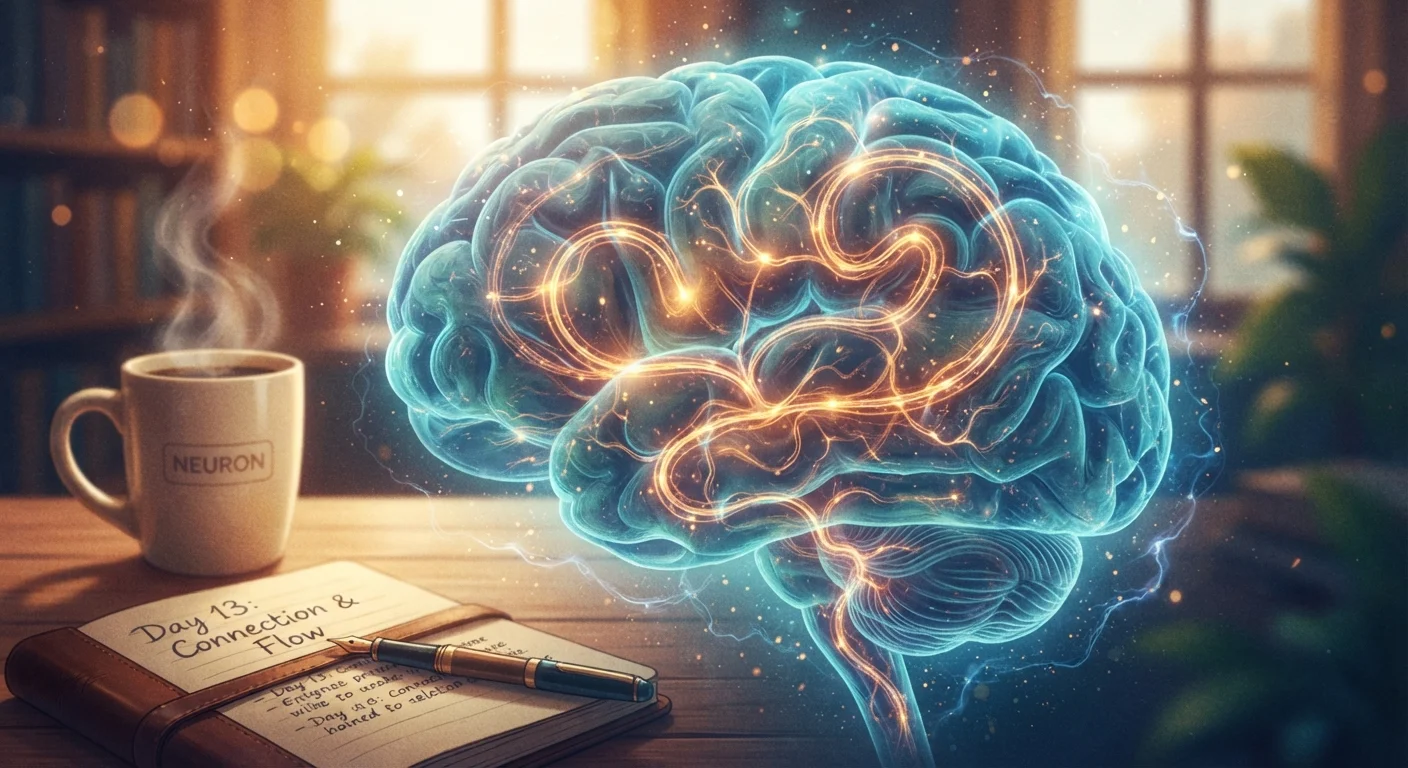
Photo credit: faqsnest.com
In this article
Understand the neurological loop that locks habits in place, why willpower alone rarely works, and what behavioral research suggests instead.
Key Takeaways
- Habits are encoded in the basal ganglia, not the conscious decision-making brain.
- The cue-routine-reward loop becomes more automatic with each repetition.
- Willpower alone is neurologically insufficient for breaking established habits.
- Replacing a habit's routine while preserving its cue and reward is more effective than suppression.
- Environmental redesign is one of the most research-supported strategies for behavior change.
- Understanding the science shifts habit change from a willpower problem to a design problem.
What the Brain Is Actually Doing When a Habit Forms
Every habit, from reaching for your phone in the morning to biting your nails during a tense meeting, begins as a deliberate choice. The first time you perform a behavior, your prefrontal cortex — the seat of planning, reasoning, and self-control — is heavily involved. But repetition changes everything.
As a behavior is repeated in consistent contexts, the brain begins a process called chunking: it compresses the sequence of actions into a single, efficient neural unit stored in the basal ganglia. This shift moves the behavior from effortful conscious control to near-automatic execution. From the brain's perspective, this is an energy-saving feature, not a flaw. Automating routine behaviors frees up cognitive resources for novel problems.
The neurologist Ann Graybiel's research at MIT has been central to mapping this process, showing that once a habit is chunked, the brain essentially brackets the behavior — activating at the cue and deactivating at the reward — with minimal deliberate processing in between. The implication is significant: by the time a behavior feels like a habit, it has already migrated out of the brain region most responsive to conscious intention.
The Cue-Routine-Reward Loop Explained
The habit loop has three components, and understanding each one is essential for understanding why habits are sticky.
- Cue: A trigger that tells the brain to initiate an automatic behavior. Cues can be a time of day, an emotional state, a location, a social context, or an immediately preceding action.
- Routine: The behavior itself — what most people think of when they say "habit." This is the part of the loop most visible to others and most targeted by change attempts.
- Reward: The payoff the brain receives, reinforcing the loop. Rewards can be physiological (a nicotine hit), emotional (stress relief), or social (connection or approval).
What makes this loop so durable is that the reward trains the brain to anticipate it the moment the cue appears. This anticipation — called craving in the behavioral literature — is the motivational engine of habit. It means that simply trying not to perform a routine, while the cue and craving remain intact, is working against a powerful neurological drive.
This is also why popular assumptions about willpower and self-control frequently fall short of explaining real behavior — the loop operates below the level of rational resolve.
“Habits are, simply, reliable solutions to recurring problems in our environment. Over time, they become so automatic that we stop noticing we have them — and that invisibility is exactly what makes them hard to change.”
— Wendy Wood, Research psychologist and author specializing in habit formation at the University of Southern California
Why Willpower Fails as a Sole Strategy
The idea that breaking a habit is primarily a matter of wanting it badly enough is one of the most persistent and least helpful cultural narratives around behavior change. Behavioral research has consistently shown that willpower is a limited, depletable resource — a finding often discussed under the concept of ego depletion, first studied by psychologist Roy Baumeister.
When people exert self-control in one domain, they have measurably less available for subsequent challenges. This is why late-afternoon decisions, or decisions made during stress, tend to favor habitual over intentional behavior — the regulatory resource is running low. The habit loop, meanwhile, requires no such resource. It fires automatically.
There's also a reinforcement asymmetry at work: the brain's reward circuitry, particularly dopamine pathways, is well-calibrated to reinforce existing habits but does not automatically reward the absence of behavior. Saying no to a craving typically produces no positive neurological signal — which is one reason suppression strategies rarely hold long-term.
Understanding what actually sustains behavior over time helps explain why punishing yourself for lapsing on a habit change tends to be counterproductive — it generates negative affect without rewiring the underlying loop.
What the Research Actually Recommends
Because the habit loop is structural, the most evidence-supported strategies for change are also structural. Three approaches stand out in the behavioral literature:
- Routine substitution, not elimination: Keep the cue and the reward; change only the routine. If stress (cue) triggers snacking (routine) that delivers a momentary calm (reward), finding a different routine that provides a similar emotional relief is far more sustainable than trying to resist the loop entirely.
- Environmental redesign: Reducing exposure to cues is one of the most powerful levers available. Research on behavior change consistently shows that altering the physical or social context — the places and people that trigger habitual behavior — produces more durable change than internal resolve alone.
- Implementation intentions: Forming specific "if-then" plans ("If I feel the urge to check my phone, I will take three deep breaths instead") has been shown in multiple studies to significantly increase follow-through compared to vague goal-setting.
These strategies work with the brain's architecture rather than against it. For a deeper look at building routines that actually hold, see our coverage of what behavioral science says about routines that stick and the core principles for making wellness habits last.
Reframe the Goal: Design, Don't Resist
Instead of relying on willpower to stop a habit, try identifying its specific cue and reward first. Then ask: what else could deliver a similar reward when that cue appears? Pairing this routine substitution with environmental changes — moving the trigger out of your daily path — gives you two structural levers instead of one internal one.
Frequently Asked Questions

Author
People & Culture Editorial Team
People & Culture Editorial Team is the collective byline for our editorial team and contributor network. Articles published under this byline or an editorial pen name are researched, written, and reviewed according to our editorial standards for clarity, consistency, and independence before publication.
View all articles →