
Popular Beliefs About Human Nature That Research Keeps Contradicting
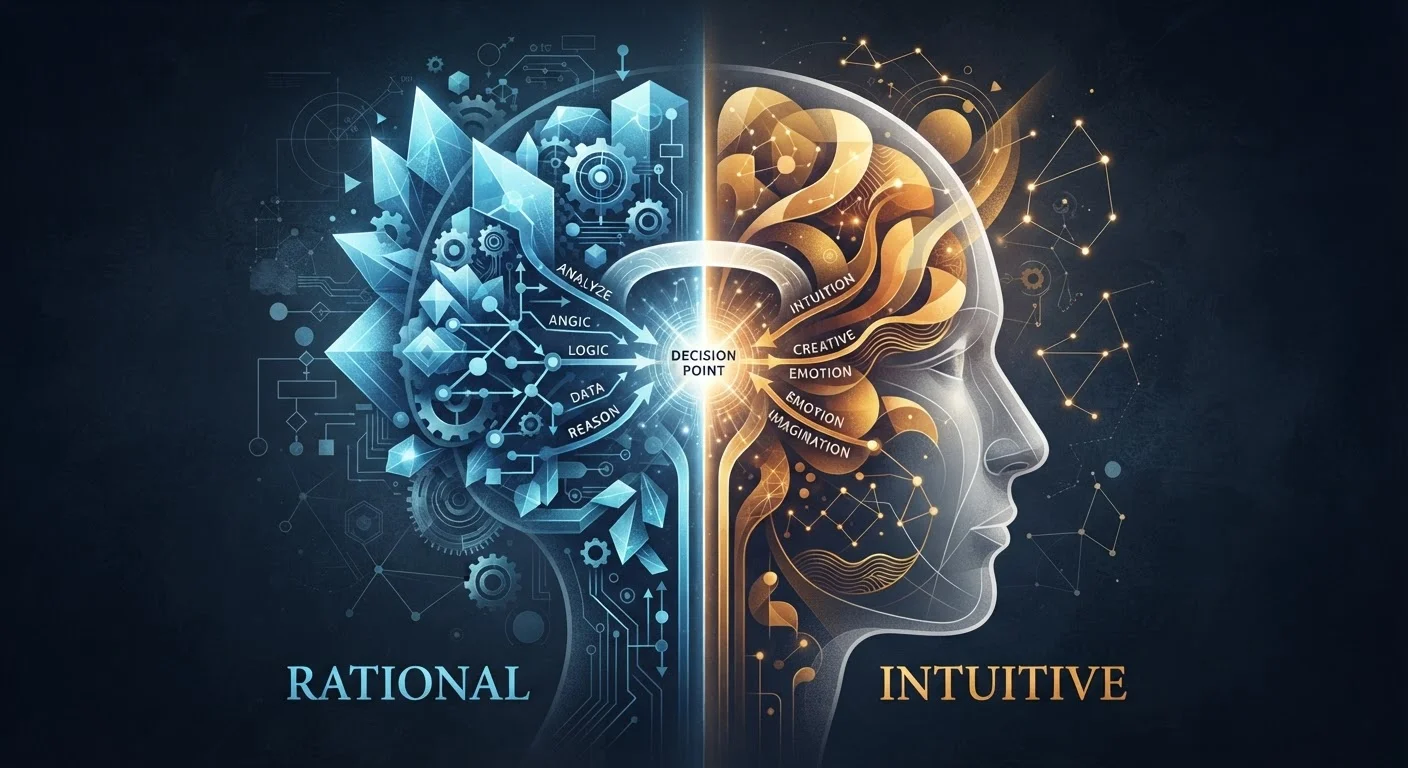
Photo credit: faqsnest.com
In this article
From multitasking myths to the idea that people are purely rational, behavioral science pushes back on some of our most common assumptions.
Key Takeaways
- Humans cannot truly multitask — the brain rapidly switches between tasks, reducing accuracy and speed.
- People are not primarily rational decision-makers; emotion and context shape most choices.
- Venting anger does not reduce it — research suggests it can intensify negative feelings.
- Strangers are more willing to help than most people predict, according to behavioral studies.
- Willpower is not a fixed trait; environmental design often outperforms self-discipline alone.
Why We Keep Getting Human Nature Wrong
Humans are confident observers of themselves — and frequently mistaken ones. We carry a dense web of folk wisdom about motivation, emotion, and behavior, much of it passed down through culture rather than tested against evidence. The problem is that behavioral science, psychology, and sociology have been quietly dismantling many of these assumptions for decades.
This is not a case of researchers nitpicking at harmless beliefs. The misconceptions explored here shape how people parent, manage teams, build habits, and judge one another. Getting them wrong has real costs. For a grounding in the broader science behind these patterns, this introduction to behavioral science is a useful starting point.
Below, research-backed corrections to six of the most persistent beliefs about human nature.
Six Beliefs That Research Keeps Contradicting
These myths are not fringe ideas. They appear in corporate training materials, self-help culture, and everyday conversation. Each one has been examined repeatedly in controlled research settings — and the evidence consistently points elsewhere.
Myth
Most people can multitask effectively — doing two things at once simply takes practice.
Fact
The brain does not truly multitask. It switches rapidly between tasks, and each switch carries a measurable cognitive cost.
Research by cognitive psychologist David Meyer and colleagues found that task-switching — even between simple activities — produces a lag they called the "switching cost." Performance degrades in both speed and accuracy when attention is divided. A small subset of people (sometimes called "supertaskers") appear to show minimal switching costs, but studies estimate they represent roughly 2–3% of the population. For the vast majority, the sensation of multitasking is an illusion of rapid toggling. The practical case for single-tasking explores what the evidence recommends instead.
Myth
People are fundamentally rational — when given enough information, they make logical decisions.
Fact
Decades of behavioral economics research show that emotion, framing, and social context routinely override logical analysis.
The work of Daniel Kahneman and Amos Tversky, among others, established that humans operate through two broad cognitive modes: fast, intuitive thinking and slower, deliberate reasoning. The intuitive system handles most daily decisions — and it is heavily influenced by how choices are framed, what others around us are doing, and emotional state at the moment of decision. This is not a flaw unique to certain people; it is a structural feature of human cognition. Dual-process theory and other foundational frameworks are outlined in our key behavioral science models guide.
Myth
Venting anger — expressing it freely — helps release it and restores emotional balance.
Fact
Research on catharsis consistently finds that venting tends to amplify anger rather than reduce it.
The catharsis hypothesis — the idea that releasing aggression discharges it — was popularized through Freudian theory but has fared poorly in experimental settings. Studies by Brad Bushman at Ohio State University found that participants who punched a bag while thinking about someone they were angry at reported more hostility afterward, not less. Allowing the emotional state to persist while engaging in an aggressive outlet appears to rehearse and reinforce the feeling. Distraction or calming activities tend to be more effective at reducing anger intensity.
Myth
Strangers will not help in an emergency — most people look out for themselves first.
Fact
Research on bystander behavior shows that individuals are often quite willing to help when they feel clear personal responsibility.
The bystander effect — where help is less likely in crowds than in one-on-one situations — is real, but it is frequently misread as evidence of general selfishness. A 2019 study published in American Psychologist analyzing real-world conflict situations across multiple countries found that at least one bystander intervened in roughly 90% of cases. The issue is diffusion of responsibility in large groups, not indifference. When people feel singularly responsible, helping rates rise substantially. Social conformity research helps explain the group dynamics that can suppress individual action.
Myth
Willpower is a personal trait — some people simply have more of it than others.
Fact
Willpower behaves more like a muscle susceptible to fatigue, and environmental design consistently outperforms relying on self-control alone.
The concept of "ego depletion," proposed by Roy Baumeister, suggested that self-control draws on a limited mental resource that gets exhausted with use. While some replication challenges have complicated the original model, the broader conclusion stands: consistently relying on willpower to override habits or impulses is an unreliable strategy. Behavioral researchers consistently find that changing the environment — removing temptation, restructuring defaults, building friction into unwanted behaviors — produces more durable results than self-discipline applied to an unchanged context.
Myth
Memory works like a recording — we store experiences accurately and retrieve them intact.
Fact
Memory is reconstructive, not reproductive. Each recall is an active rebuild that is vulnerable to distortion and suggestion.
Elizabeth Loftus's decades of research on eyewitness memory demonstrated that recollections shift reliably in response to post-event information. In a classic study, participants who were asked leading questions about a filmed car accident (using the word "smashed" vs. "hit") later recalled higher speeds and even false details like broken glass. Memory traces are not fixed at encoding; they are updated each time they are retrieved. This has significant implications not just for legal testimony but for everyday confidence in personal history and autobiographical certainty.
The patterns above connect to a broader landscape of cognitive shortcuts and judgment errors. Our field guide to cognitive biases maps many of these in greater detail.
What This Means for How We Understand Ourselves
A recurring theme across these corrections is that human behavior is far more contextual than intuition suggests. We tend to explain our own actions by circumstances — I was tired, I was pressed for time — but attribute others' behavior to fixed character. Researchers call this the fundamental attribution error, and it distorts social perception in ways large and small. Read more about how this bias plays out in daily life.
Similarly, behaviors we treat as individual willpower problems — like breaking a habit — are often better understood as responses to environmental cues. The neuroscience of habit formation explains why restructuring your environment tends to outperform sheer resolve. And when individuals gather into groups, entirely different dynamics emerge — collective behavior regularly diverges from individual action in ways that surprise even seasoned observers.
Misapplying These Findings Can Backfire
Behavioral science findings are sometimes oversimplified into pop-psychology prescriptions. The research described here reflects group-level patterns, not deterministic laws about every individual. Human behavior is shaped by culture, context, history, and circumstance in ways that laboratory studies only partially capture. Use these insights as prompts for reflection, not as rigid rules about what people will always do.
None of this is cause for fatalism. Knowing that you are susceptible to a bias is not the same as being immune to it, but awareness does create space for more deliberate choices. The first step is letting go of the assumption that our intuitions about human nature are reliable without scrutiny.

Author
People & Culture Editorial Team
People & Culture Editorial Team is the collective byline for our editorial team and contributor network. Articles published under this byline or an editorial pen name are researched, written, and reviewed according to our editorial standards for clarity, consistency, and independence before publication.
View all articles →