
Reading Situations Wrong: Fundamental Attribution Error in Daily Life
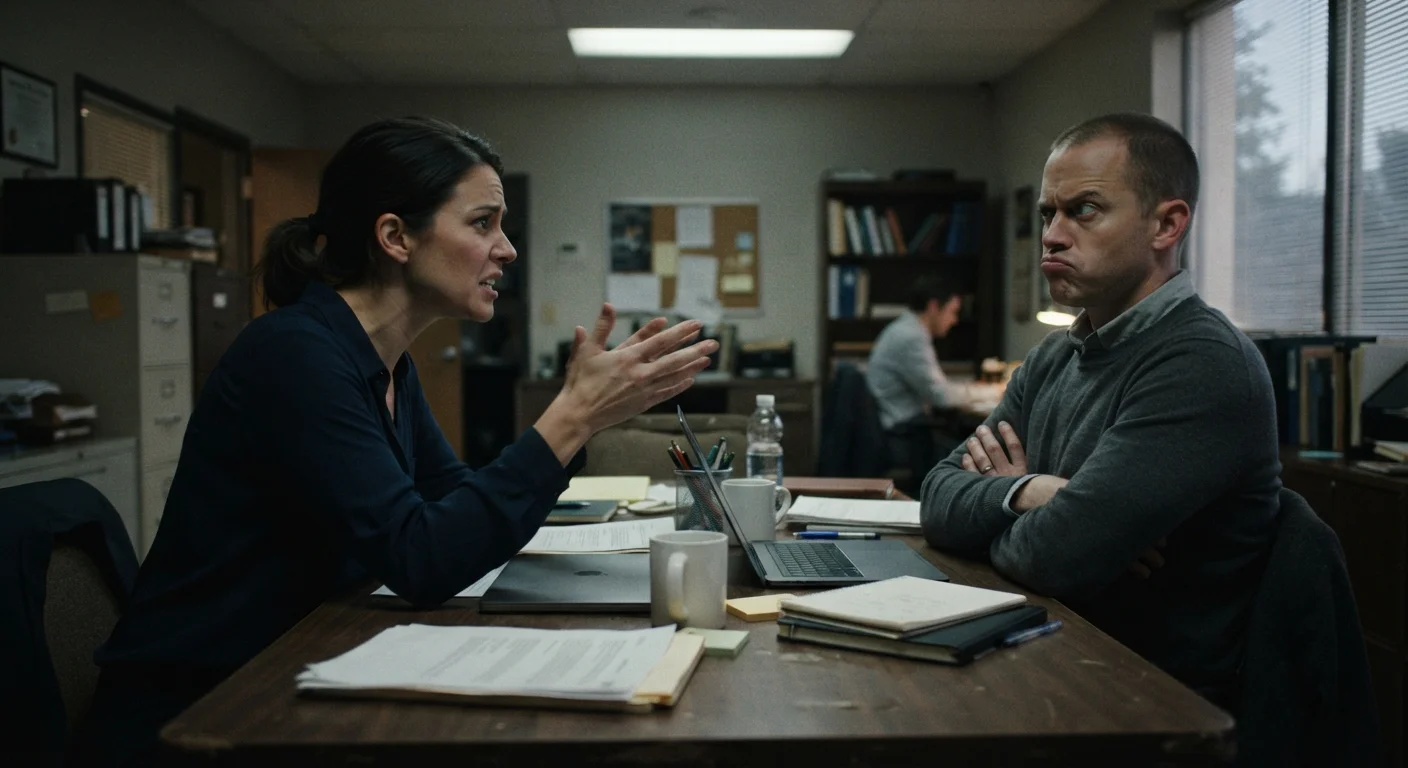
Photo credit: faqsnest.com
In this article
We routinely judge others by character and ourselves by circumstance. Here's how this pervasive bias distorts social perception and conflict.
Key Takeaways
- The fundamental attribution error leads us to explain others' behavior through character rather than context.
- We apply a double standard: judging ourselves by circumstances but others by personality traits.
- This bias amplifies conflict, fuels stereotyping, and distorts how we navigate relationships and workplaces.
- Awareness and deliberate perspective-taking are the most research-supported correctives available.
- Cultural background influences how strongly this bias operates, but no group is immune to it.
What the Fundamental Attribution Error Actually Means
The fundamental attribution error (FAE) — sometimes called correspondence bias — describes a well-documented human tendency: when we observe someone else's behavior, we overweight their personality or character as the cause and underweight the situational pressures acting on them. It's one of the most replicated findings in social psychology, first rigorously documented in the late 1960s and named by psychologist Lee Ross in 1977.
The classic demonstration involved participants reading essays assigned to writers by a coin flip. Even knowing the position was randomly assigned, observers still rated the essay content as reflecting the writer's genuine beliefs. The situation — total constraint — was discounted in favor of a dispositional explanation. This finding has been replicated across cultures, age groups, and contexts, making it a genuine cornerstone of how human social cognition works.
Understanding the FAE matters well beyond academic psychology. It shapes how we judge coworkers, neighbors, political opponents, and strangers — and it does so quietly, beneath the threshold of conscious deliberation. As explored in our field guide to cognitive biases, the FAE sits among the most consequential of our mental shortcuts precisely because it feels like accurate perception rather than distortion.
Why We're Wired This Way — and When It Gets Worse
The FAE isn't a flaw in broken minds — it's an efficiency mechanism in normal ones. Processing the full situational context of every social interaction would be cognitively overwhelming. Personality labels are stable and predictive: if someone is 'reliable' or 'rude,' you know what to expect next time. Situational explanations, by contrast, require ongoing data collection and nuanced inference.
Several factors intensify the error. Emotional arousal — anger, anxiety, stress — narrows attention and makes dispositional explanations even more automatic. Power differentials matter too: research suggests that people in positions of power are more likely to make the FAE about subordinates, partly because they have less motivation to understand another person's situational constraints. And cultural context shapes baseline rates — individualist cultures tend to produce stronger FAE effects than collectivist ones, though no cultural group is immune.
The psychology of everyday decision-making helps illustrate why: our brains are constantly running fast, automatic inference systems that were shaped by environments far simpler than modern social life. The FAE is one product of that mismatch.
Assuming a colleague's missed deadline reflects laziness or indifference rather than competing pressures or unclear instructions.
Why it happens: When we observe behavior without full context, our brains take a cognitive shortcut: behavior equals personality. The colleague's internal situation — a family emergency, ambiguous scope, tool failure — is invisible to us, so we fill the gap with character inference.
Interpreting someone's silence in a meeting as arrogance or disengagement when shyness, cultural background, or power dynamics may be the real driver.
Why it happens: Silence is ambiguous, and ambiguity invites projection. We default to the most salient personality trait that fits the observed behavior rather than cataloging the range of situational reasons a person might stay quiet.
Holding other drivers, strangers, or public figures to a character-based standard while excusing your own equivalent behavior as situationally justified.
Why it happens: This is the actor-observer asymmetry — a close cousin of the fundamental attribution error. As the 'actor' in your own story, you have access to your full context; as an 'observer' of others, you only see the behavior.
Using a single negative incident to form a permanent character assessment of someone — 'He's just that kind of person.'
Why it happens: The brain prefers stable, predictive models of other people. A character label is cognitively efficient: once applied, it filters future observations through confirmation bias, making the label feel increasingly justified.
Applying the attribution error at group scale — concluding that an entire community, demographic, or nationality behaves a certain way because of fixed cultural or moral character.
Why it happens: Group-level attribution errors follow the same cognitive logic as individual ones, but they carry greater social harm because they reinforce stereotyping. Systemic context, historical pressures, and structural constraints disappear from the explanation.
Retraining Social Perception: What Actually Helps
The research on de-biasing is honest: awareness alone rarely eliminates the FAE. Knowing the bias exists provides a small but meaningful buffer, particularly when combined with deliberate strategy. The goal isn't to eliminate rapid social judgments — that's neither realistic nor always useful — but to build in checkpoints before those judgments harden into conclusions.
This Bias Escalates Conflict Quickly
When both parties in a disagreement default to the fundamental attribution error simultaneously — each interpreting the other's behavior as a character flaw — minor misunderstandings can escalate into entrenched hostility. In workplace settings, research suggests that attribution errors are a significant driver of interpersonal conflict that goes unresolved because neither side examines the situational pressures the other may be facing.
Perspective-taking is the most supported corrective in the literature. Actively imagining the situational pressures another person faces — rather than simply noting that pressures might exist — measurably shifts attributions in a more accurate direction. This is distinct from sympathy; it's a cognitive exercise in assembling someone else's context.
A second strategy is behavioral specificity: instead of forming a global character judgment ('She's difficult'), describe only what was observed ('She interrupted me twice in that meeting'). Specific behavioral records are revisable; character labels are not. Finally, recognizing the actor-observer asymmetry in yourself — the tendency to give your own behavior the situational pass you deny others — is particularly useful in conflict situations. Researchers have noted that people who regularly practice this kind of self-monitoring make fewer attribution errors over time, though the effect requires ongoing effort rather than a one-time insight. For a deeper look at how these patterns connect to broader assumptions about human nature, see popular beliefs behavioral science keeps contradicting.
This article is for general informational and educational purposes only. It does not constitute psychological or professional advice.

Author
People & Culture Editorial Team
People & Culture Editorial Team is the collective byline for our editorial team and contributor network. Articles published under this byline or an editorial pen name are researched, written, and reviewed according to our editorial standards for clarity, consistency, and independence before publication.
View all articles →