
The Honest Pros and Cons of Extended Service Intervals
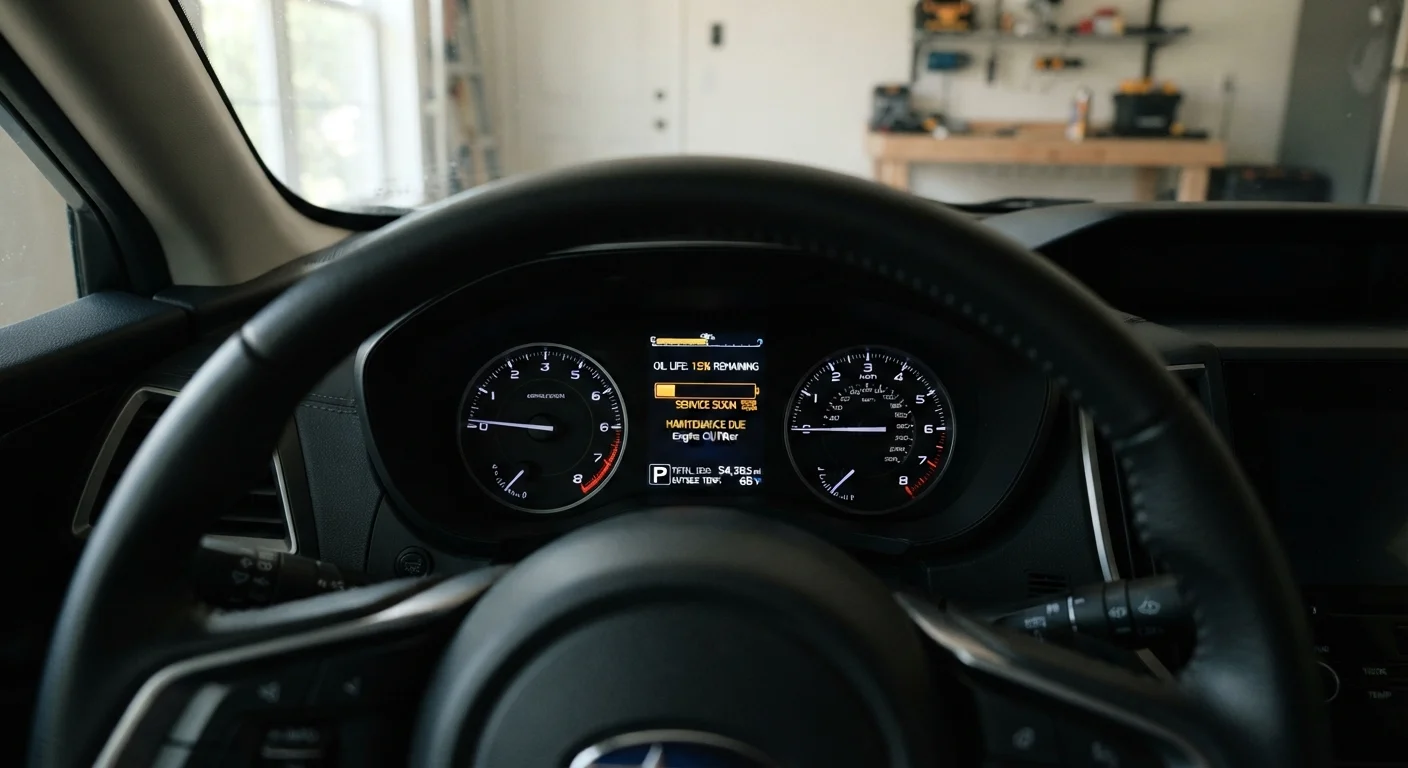
Photo credit: faqsnest.com
In this article
Manufacturers now recommend longer gaps between services — but longer isn't always better. Here's a balanced look at the trade-offs.
Key Takeaways
- Manufacturers have extended recommended service intervals thanks to better oils and engine technology.
- Longer intervals don't automatically mean less risk — driving conditions matter significantly.
- Your owner's manual and oil life monitor are the most reliable guides for your specific vehicle.
- Skipping inspections entirely during extended intervals can allow small problems to grow undetected.
- Short-trip, dusty, or towing-heavy driving often calls for more frequent service regardless of interval guidelines.
Fewer service visits saves money over time
With synthetic oil and modern engine design, longer intervals can reduce annual maintenance costs without compromising protection when the correct oil specification is used.
Better oils genuinely last longer
Full-synthetic motor oils resist thermal breakdown and oxidation more effectively than conventional oils, making extended intervals technically supportable rather than a manufacturer shortcut.
Oil life monitors add accuracy to timing
Many modern vehicles calculate remaining oil life based on real driving data — temperature, load cycles, trip lengths — rather than a fixed mileage number, reducing both over-servicing and under-servicing.
Less time spent scheduling and waiting
Halving the number of annual service visits frees up meaningful time for drivers, particularly those in areas without convenient quick-service options.
Reduced environmental footprint from less waste oil
Generating less used motor oil per year has a measurable environmental benefit, since used oil disposal and recycling carry their own resource costs.
Severe driving conditions often override the guidance
Towing, frequent short trips, dusty roads, and extreme temperatures all degrade oil faster. Drivers in these conditions who follow standard extended intervals may be under-protecting their engines.
Fewer inspections means problems go undetected longer
Service visits are also opportunities for technicians to catch developing issues. Stretching intervals reduces that oversight, allowing small problems to compound quietly.
Wrong oil type undermines the extended interval rationale
Extended interval recommendations are tied to specific oil grades and quality certifications. Using a lesser specification and still stretching the interval removes the engineering basis for doing so.
Older or high-mileage vehicles may not be suitable candidates
Engines with worn components or existing leaks may need more frequent attention, and the transition to full-synthetic formulations can sometimes affect older seals.
Creates a false sense of security between visits
Drivers may assume that because the service light isn't on, everything is fine — while fluid levels drop, tire pressures drift, or coolant slowly leaks unnoticed.
What Extended Service Intervals Actually Mean
Not long ago, the 3,000-mile oil change was treated as gospel. Today, many manufacturers recommend intervals of 5,000, 7,500, or even 10,000 miles — and some full-synthetic oil specifications push that number to 15,000 miles under ideal conditions. This shift isn't marketing spin; it reflects real engineering progress.
Modern engines run with tighter tolerances. Synthetic and semi-synthetic motor oils hold up longer under heat and pressure than conventional oils did decades ago. Many vehicles now include an oil life monitoring system — a computer that calculates remaining oil life based on engine temperature, load, and driving cycles rather than just mileage. That's a meaningful improvement over a one-size-fits-all number stamped on a windshield sticker.
What counts as a "service interval" can also vary. Some manufacturers bundle oil changes with multi-point inspections; others treat them separately. It's worth checking your owner's manual to understand exactly what's included at each recommended interval — and what isn't. For more context on what a complete service record should capture, see why a thorough service history matters.
The Real Advantages of Going Longer Between Services
Fewer service visits saves money over time
With synthetic oil and modern engine design, longer intervals can reduce annual maintenance costs without compromising protection when the correct oil specification is used.
Better oils genuinely last longer
Full-synthetic motor oils resist thermal breakdown and oxidation more effectively than conventional oils, making extended intervals technically supportable rather than a manufacturer shortcut.
Oil life monitors add accuracy to timing
Many modern vehicles calculate remaining oil life based on real driving data — temperature, load cycles, trip lengths — rather than a fixed mileage number, reducing both over-servicing and under-servicing.
Less time spent scheduling and waiting
Halving the number of annual service visits frees up meaningful time for drivers, particularly those in areas without convenient quick-service options.
Reduced environmental footprint from less waste oil
Generating less used motor oil per year has a measurable environmental benefit, since used oil disposal and recycling carry their own resource costs.
The cost savings argument is straightforward: fewer trips to a shop means fewer labor charges and less oil purchased over the life of a vehicle. For drivers who stick to this schedule faithfully and use the correct oil specification, the engine protection doesn't have to suffer for it — that's what modern formulations are designed to deliver.
There's also a time benefit that's easy to underestimate. Scheduling, dropping off, and waiting for a vehicle to be serviced takes time out of a workday or weekend. Cutting the frequency of that task matters to a lot of people.
Where Extended Intervals Can Work Against You
Severe driving conditions often override the guidance
Towing, frequent short trips, dusty roads, and extreme temperatures all degrade oil faster. Drivers in these conditions who follow standard extended intervals may be under-protecting their engines.
Fewer inspections means problems go undetected longer
Service visits are also opportunities for technicians to catch developing issues. Stretching intervals reduces that oversight, allowing small problems to compound quietly.
Wrong oil type undermines the extended interval rationale
Extended interval recommendations are tied to specific oil grades and quality certifications. Using a lesser specification and still stretching the interval removes the engineering basis for doing so.
Older or high-mileage vehicles may not be suitable candidates
Engines with worn components or existing leaks may need more frequent attention, and the transition to full-synthetic formulations can sometimes affect older seals.
Creates a false sense of security between visits
Drivers may assume that because the service light isn't on, everything is fine — while fluid levels drop, tire pressures drift, or coolant slowly leaks unnoticed.
The biggest problem with extended intervals is that they assume average, or better-than-average, conditions. Most manufacturer interval recommendations come with a caveat buried in the owner's manual: severe service — defined as frequent short trips, towing, dusty environments, extreme heat or cold, or stop-and-go commuting — often cuts the recommended interval in half.
There's also the inspection gap. Oil changes have historically been low-cost opportunities for technicians to spot emerging issues: a fraying belt, a slow coolant leak, a tire wearing unevenly. Spacing those visits further apart means problems can develop longer before anyone looks at them. The connection between deferred maintenance and larger repair bills is well established — and extended intervals can unintentionally encourage more time between eyes-on inspections.
The 'Severe Service' Definition Is Broader Than Most Drivers Expect
Most automakers define severe service to include trips under five miles in normal temperatures, trips under ten miles in freezing temperatures, sustained stop-and-go traffic, towing or hauling heavy loads, and operating in dusty or sandy environments. If any of these describe your typical driving more than occasionally, the extended interval in your manual may not apply to you. Check the severe-service schedule, which is usually listed separately in the owner's manual.
How to Decide What's Right for Your Driving
The honest answer is that one interval doesn't fit every driver or vehicle. A few factors to weigh honestly:
- Your driving pattern: Highway miles are gentler on oil than urban stop-and-go. If most of your miles are short trips under five miles, your oil never fully warms up — that accelerates contamination regardless of what the interval says.
- Your vehicle's age and condition: Older engines with higher mileage may benefit from more frequent changes. Some older seals can also be sensitive to the detergent packages in full-synthetic oils.
- The oil type specified: Extended intervals are built around specific oil grades and specifications. Using the wrong oil and stretching the interval is a combination worth avoiding.
- What else gets checked: If your service includes a multi-point inspection, stretching the interval means stretching that check too. Consider whether you're willing to do basic visual checks yourself in between — fluid levels, tire pressure, and obvious leaks.
A useful complement to any service schedule is the seasonal maintenance checklist, which keeps common wear items on your radar between full service visits.
If budget is a consideration, prioritizing what matters most in car maintenance is a practical framework for making those calls without cutting corners on the things that genuinely protect the engine.

Author
Cars & Driving Editorial Team
Cars & Driving Editorial Team is the collective byline for our editorial team and contributor network. Articles published under this byline or an editorial pen name are researched, written, and reviewed according to our editorial standards for clarity, consistency, and independence before publication.
View all articles →