
Modern Driver-Assistance Features: A Plain-Language Glossary
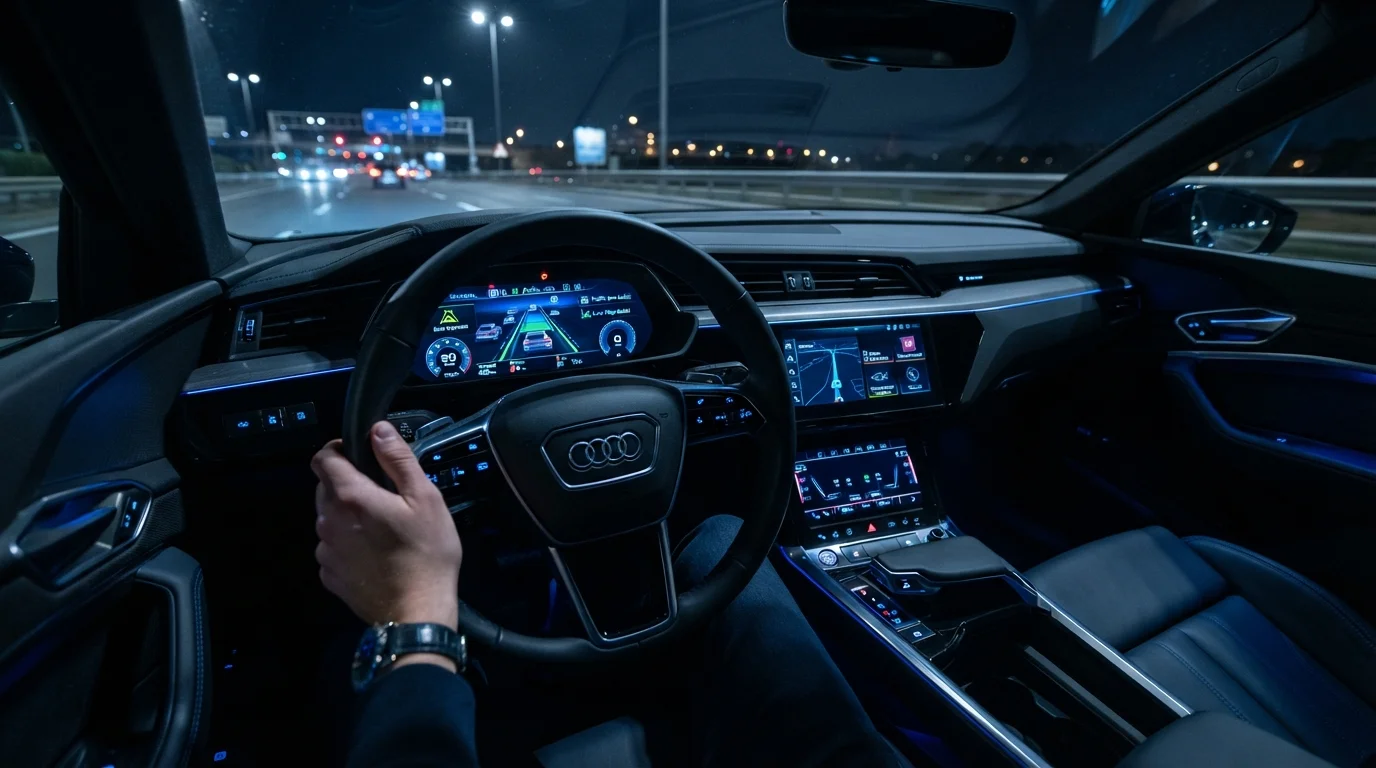
Photo credit: faqsnest.com
In this article
From lane-keep assist to adaptive cruise control — a lookup-ready guide to ADAS acronyms, what each system actually does, and its limitations.
Why This Glossary Exists
Automotive acronyms multiply every model year. Dealerships list feature packages by abbreviation, owners' manuals bury definitions in fine print, and media coverage often conflates driver-assistance with self-driving. The result: many drivers activate features without really understanding what those features will — and won't — do.
This glossary covers the most common ADAS terms in plain language, explains how each system works at a functional level, and flags the limitations manufacturers rarely advertise upfront. Use it as a lookup reference, whether you're reading a vehicle spec sheet or decoding your dashboard. For a broader look at vehicle systems worth understanding, see our guide to key systems under the bonnet.
ADAS
Advanced Driver-Assistance Systems. A broad umbrella term for the suite of sensor-based technologies built into modern vehicles to monitor road conditions, warn drivers, and in some cases take corrective action automatically.
Adaptive Cruise Control (ACC)
A cruise control system that uses radar or cameras to maintain a set following distance from the vehicle ahead, automatically adjusting speed without driver input. It does not replace attentive driving.
Lane-Keep Assist (LKA)
A system that detects lane markings and applies gentle steering corrections if the vehicle begins to drift without a turn signal activated. Effectiveness depends heavily on visible road markings.
Automatic Emergency Braking (AEB)
A system that detects an imminent collision — typically with a vehicle or pedestrian — and applies the brakes if the driver does not respond in time. It reduces crash severity but cannot prevent all collisions.
Blind-Spot Monitoring (BSM)
Uses radar sensors in the rear bumper to detect vehicles in adjacent lanes that are outside the driver's line of sight. An alert — usually a light in the side mirror — activates when it is unsafe to change lanes.
Forward Collision Warning (FCW)
An alert-only system (no automatic braking) that warns the driver when the gap to the vehicle ahead is closing too quickly. It is often paired with AEB on newer vehicles.
Rear Cross-Traffic Alert (RCTA)
Warns the driver of approaching cross-traffic while reversing, such as in a parking lot. Works alongside — but does not replace — checking mirrors and turning to look.
Traffic Sign Recognition (TSR)
A camera-based system that reads posted speed limit and regulatory signs and displays them on the instrument cluster or head-up display. Accuracy varies with sign condition and regional road markings.
Driver Monitoring System (DMS)
Uses infrared cameras or sensors to detect signs of driver inattention or drowsiness — such as prolonged eye closure or head drooping — and issues an alert to refocus the driver.
Park Assist / Automated Parking
A system that uses sensors and, in some implementations, cameras to steer the vehicle into a parallel or perpendicular parking space automatically. The driver typically controls the accelerator and brake.
SAE Automation Levels
A 0–5 scale published by SAE International describing the degree of driving automation, from Level 0 (no automation) to Level 5 (full self-driving under all conditions). Most consumer vehicles today fall between Level 1 and Level 2.
Sensor Fusion
The process by which a vehicle's computer combines data from multiple sources — radar, cameras, ultrasonic sensors, and sometimes LiDAR — to build a more complete and reliable picture of its surroundings.
How the Main Systems Actually Work
Adaptive Cruise Control uses radar mounted behind the grille to measure the distance and relative speed of the vehicle ahead, then adjusts throttle and — in many implementations — braking to hold a gap you select. It works well on highways with consistent traffic but can struggle in heavy rain, dense fog, or when a vehicle cuts in abruptly.
Automatic Emergency Braking is one of the most consequential safety technologies in decades. Research from the IIHS has found it meaningfully reduces rear-end crashes, though it cannot stop a collision at high closing speeds. It may not detect motorcycles, cyclists, or pedestrians in all conditions. Think of it as a last-resort backup, not a primary safety strategy — defensive driving habits remain your first line of defense.
Lane-Keep Assist reads painted lane markings with a forward-facing camera. If markings are faded, obscured by snow, or absent — common on rural roads — the system deactivates or performs poorly. It applies light torque to the steering wheel; it will not override a deliberate steering input.
Blind-Spot Monitoring is radar-based and generally reliable, but cannot detect fast-approaching motorcycles in all scenarios, and may give false alerts near guardrails or concrete barriers. Always perform a physical mirror and shoulder check before changing lanes.
ADAS Has Real Limits — Stay Engaged
No current production vehicle sold to the public is fully self-driving. Even the most sophisticated Level 2 systems require the driver to remain alert, keep hands on the wheel, and be ready to take control at any moment. Over-reliance on these features has been identified as a contributing factor in crashes. Treat every driver-assistance system as a helper, not a replacement for your own judgment.
Alert-Only vs. Intervention Systems
One of the most useful distinctions to understand is whether a system warns you or acts for you. Forward Collision Warning and Blind-Spot Monitoring fall into the alert-only category — they flash a light or sound a chime, then leave the response entirely to you. Automatic Emergency Braking and Lane-Keep Assist cross into intervention territory: they apply brakes or steering without waiting for your input.
Understanding this split matters because intervention systems can occasionally act unexpectedly. LKA can briefly resist a legitimate lane change if you forget to signal; AEB can apply brakes on a highway overpass when cameras misread shadows as obstacles. Knowing the system's logic helps you recognize — and not panic at — these moments.
| SAE Automation Levels | 0 to 5 (most consumer vehicles: Level 1–2) (SAE International J3016 standard) |
| Common sensor types | Radar, cameras, ultrasonic, LiDAR |
| AEB federal mandate (U.S.) | Required on new light vehicles by NHTSA rule (phased in from 2029) (NHTSA Final Rule, 2024) |
| BSM sensor range | Typically monitors ~10–20 feet to the side and rear (General engineering specifications, varies by manufacturer) |
| Driver monitoring requirement (EU) | Mandatory on new EU-type-approved vehicles from 2022 (GSR2) (EU General Safety Regulation 2019/2144) |
The relationship between warning systems and active safety is also relevant when it comes to understanding your dashboard readouts. Our reference on dashboard warning light symbols covers the icons these systems generate when they detect a fault or deactivate.
Automation Levels and What They Mean for You
SAE International's 0–5 scale is the standard framework for describing driving automation. Level 0 means no automation — the driver handles everything. Level 1 adds a single assistance function such as adaptive cruise control or lane centering, but not both simultaneously. Level 2 combines lateral and longitudinal control (steering and speed), but the driver must supervise constantly and be ready to take over immediately.
The vast majority of vehicles on U.S. roads today operate at Level 1 or Level 2. Features marketed with names that imply greater independence can sound more capable than their SAE rating reflects. A Level 2 system that handles highway driving well is still asking you to pay full attention at all times — the system has no legal or functional responsibility for your vehicle's behavior.
Sensor fusion — combining radar, cameras, and ultrasonic data — underpins all of these systems. When one input is compromised (a dirty camera lens, heavy rain defeating radar), the whole system's reliability drops. Regular cleaning of sensor areas is a simple but genuinely useful maintenance step; our car maintenance hub covers basic upkeep practices that support these systems.
For context on how foundational braking technology paved the way for modern ADAS, the history of anti-lock braking systems is worth a read.

Author
Cars & Driving Editorial Team
Cars & Driving Editorial Team is the collective byline for our editorial team and contributor network. Articles published under this byline or an editorial pen name are researched, written, and reviewed according to our editorial standards for clarity, consistency, and independence before publication.
View all articles →