
Why Your Car's Cooling System Is More Critical Than You Might Think
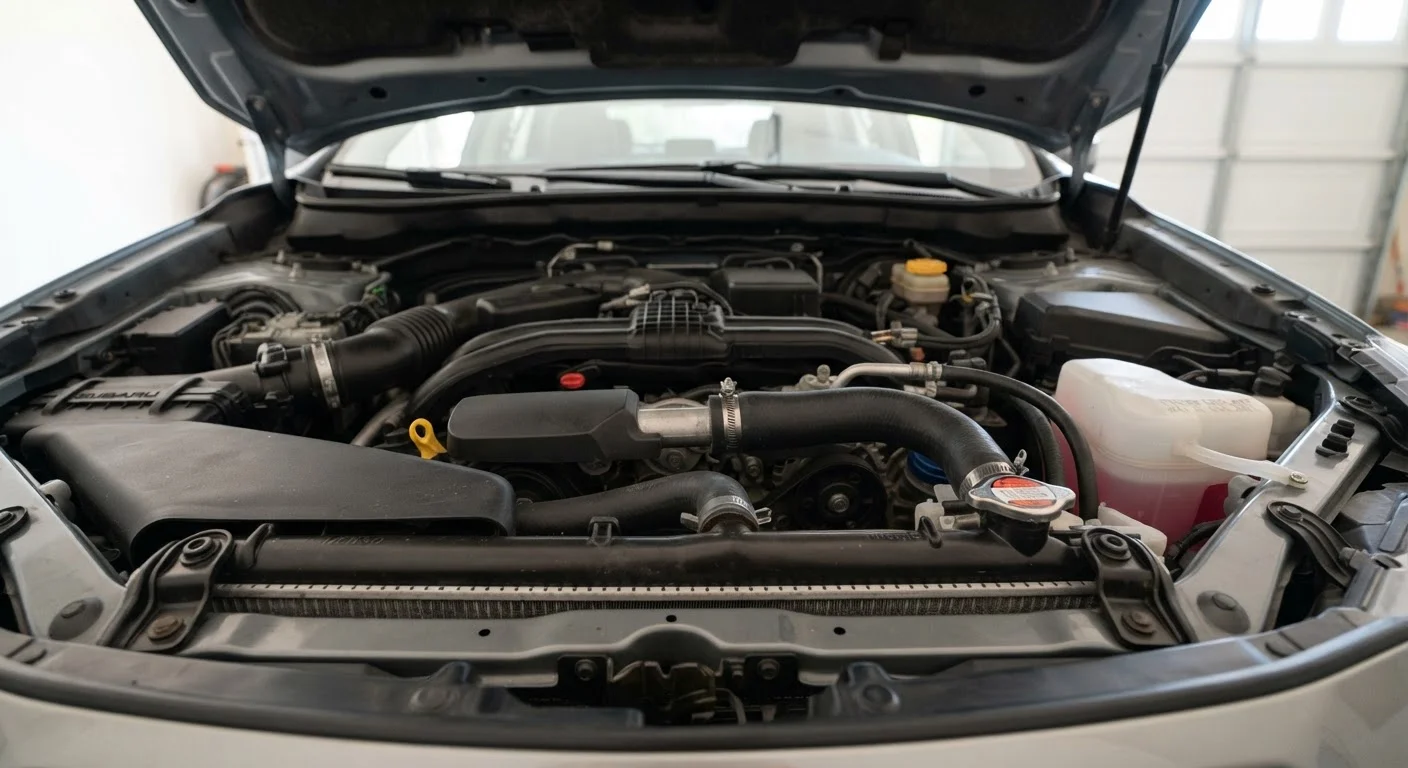
Photo credit: faqsnest.com
In this article
Overheating is one of the most damaging things that can happen to an engine. Learn how the cooling system prevents it and what can go wrong.
Key Takeaways
- Overheating is one of the fastest ways to cause serious, expensive engine damage.
- The cooling system relies on several components working together — a failure in any one can cascade quickly.
- Coolant degrades over time and must be replaced on a regular maintenance schedule.
- Warning signs like a rising temperature gauge or sweet-smelling steam should never be ignored.
- Many cooling system problems are preventable through routine checks and timely fluid maintenance.
How the Cooling System Actually Works
Your engine produces an enormous amount of heat as a byproduct of combustion. Left unchecked, that heat would destroy metal components in a matter of minutes. The cooling system's job is to keep the engine operating within a narrow, safe temperature window — typically between 195°F and 220°F for most gasoline engines.
Here's the basic circuit: a water pump circulates a mixture of coolant and water through channels cast into the engine block and cylinder head. As the fluid passes through, it absorbs heat from the metal. It then travels through rubber hoses to the radiator, a grid-like heat exchanger at the front of the vehicle. Air flowing across the radiator's fins carries that heat away, and the now-cooled fluid loops back to repeat the process.
A thermostat acts as a gatekeeper at the engine's outlet. When the engine is cold, the thermostat stays closed so the engine can reach operating temperature quickly. Once it's warm, the thermostat opens and allows the full cooling circuit to run. A radiator fan — either mechanical or electric — supplements airflow when the car is idling or moving slowly.
To learn how this fits alongside other key systems, see Under the Bonnet: Eight Systems Worth Understanding as a Driver.
What Can Go Wrong — and Why It Matters
The cooling system has several interdependent parts, and a failure in any one of them can quickly escalate. Some of the most common failure points include:
- Hoses: Rubber hoses harden, crack, or swell over time. A burst hose drains coolant almost immediately.
- Water pump: The pump that drives coolant circulation can wear out or develop a leaking seal. When it fails, the coolant stops moving.
- Thermostat: A thermostat stuck closed traps heat in the engine; one stuck open keeps the engine running too cold, hurting fuel economy and emissions.
- Radiator: Internal corrosion or debris can restrict flow. External fins can be bent or clogged with road debris, reducing heat dissipation.
- Head gasket: This is the costliest failure. The head gasket seals the combustion chambers from the coolant passages. When it fails — often as a result of overheating — coolant and combustion gases mix, causing white exhaust smoke, coolant loss, and potentially catastrophic engine damage.
Overheating is not just an inconvenience. It can warp aluminum cylinder heads, crack engine blocks, and seize moving parts — repairs that often exceed the value of an older vehicle.
Top 5
Causes of engine failure on U.S. roads
Overheating is consistently cited among the leading causes of catastrophic engine failure by automotive engineering and fleet maintenance organizations.
$1,500–$3,000+
Typical cost of a head gasket repair
A head gasket failure — often triggered by a single overheating event — is one of the most expensive engine repairs a driver can face, according to industry repair cost data.
30,000–50,000 mi
Typical coolant replacement interval
Most vehicle manufacturers recommend flushing and replacing engine coolant within this mileage range, though long-life formulas may extend the interval.
Warning Signs Every Driver Should Know
The cooling system rarely fails without warning. Knowing what to look for gives you time to act before a breakdown becomes an engine replacement.
- Rising temperature gauge: If the needle climbs toward the red zone, pull over as soon as it's safe. Do not push the vehicle hoping it'll cool down on its own.
- Sweet or syrupy smell: Coolant has a distinctive sweet odor. If you smell it inside the cabin or under the hood, you likely have a leak.
- White steam from under the hood: This usually indicates coolant boiling off after a leak — stop driving immediately.
- White smoke from the exhaust: A persistent white plume (not normal condensation on a cold morning) can signal coolant burning in the combustion chamber — a potential head gasket failure.
- Unexplained coolant loss: If you're repeatedly topping off the coolant reservoir without an obvious leak, the coolant may be going somewhere it shouldn't.
If you notice any of these signs, have the system inspected by a qualified mechanic promptly. Driving on an overheating engine — even briefly — can turn a manageable repair into a very expensive one.
Keeping the Cooling System in Good Shape
Cooling system maintenance is straightforward and relatively inexpensive compared to what failure costs. A few routine practices go a long way.
Replace coolant on schedule. Over time, coolant loses the inhibitors that protect metal components from corrosion. Degraded coolant becomes acidic and can eat away at the radiator, water pump, and heater core. Your owner's manual will specify the replacement interval and the type of coolant your vehicle requires — getting this right matters, since different formulas are not universally compatible.
Inspect hoses and belts periodically. Squeeze the large hoses when the engine is cold; they should feel firm but pliable, not hard, spongy, or cracked. A mechanic can check these during routine service visits.
Check the coolant level regularly. This is one of the simplest checks you can do at home — the overflow reservoir has min/max markings visible without opening anything. For a detailed walkthrough, see our guide on checking and topping up your car's fluids.
Staying on top of cooling system maintenance is also one of the higher-priority items when you're managing car upkeep on a tighter budget. See Car Maintenance on a Budget: What to Prioritise for guidance on where to focus first.
Never Open a Hot Radiator Cap
Opening the radiator cap or coolant reservoir cap while the engine is hot can cause pressurized steam and scalding coolant to eject suddenly. Always wait until the engine has cooled completely — at least 30 minutes after shutting it off — before checking or adding coolant. When in doubt, have a mechanic handle it.
Frequently Asked Questions

Author
Cars & Driving Editorial Team
Cars & Driving Editorial Team is the collective byline for our editorial team and contributor network. Articles published under this byline or an editorial pen name are researched, written, and reviewed according to our editorial standards for clarity, consistency, and independence before publication.
View all articles →