
How Streaming Algorithms Decide What You See First
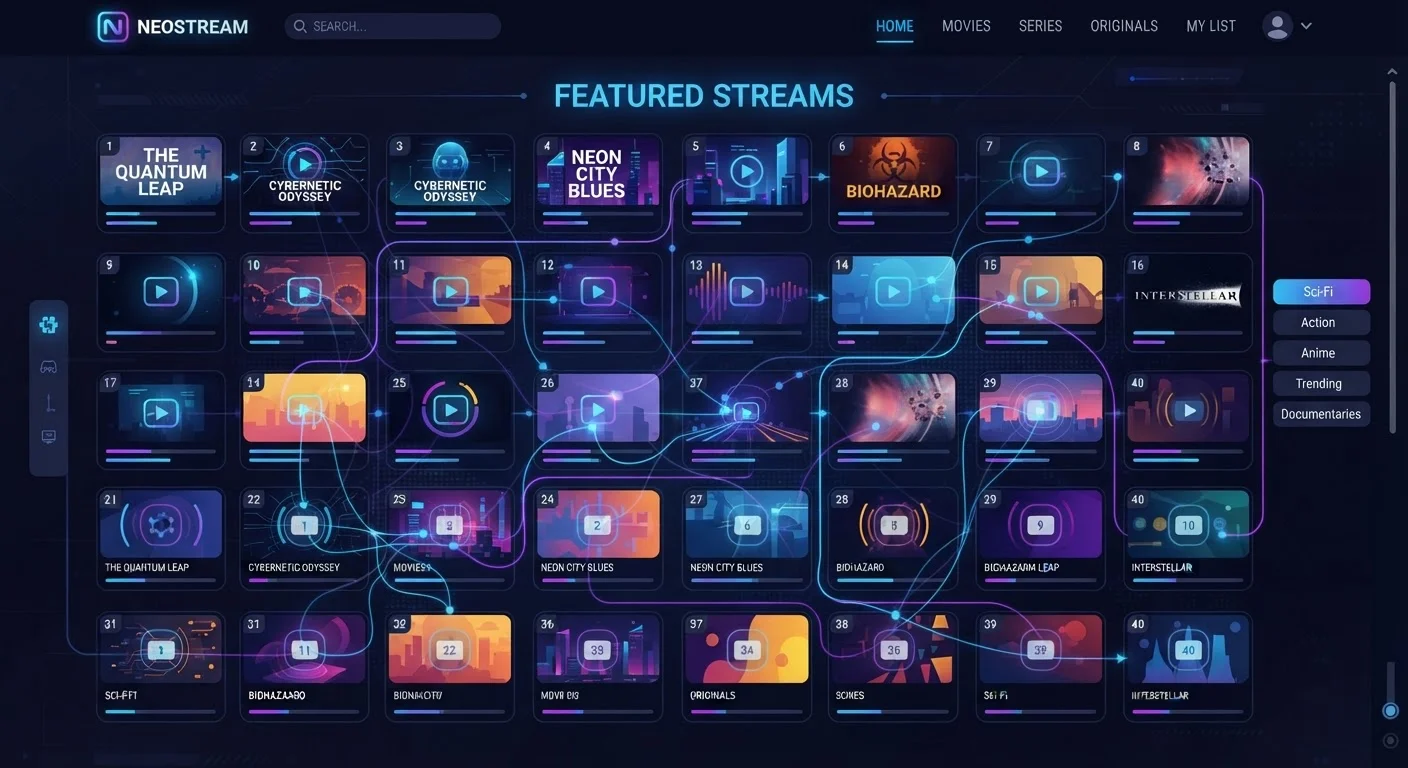
Photo credit: faqsnest.com
In this article
A plain-language look at the recommendation systems powering streaming homepages and how they shape discovery and viewing behaviour.
Key Takeaways
- Streaming homepages are not neutral displays — every row and thumbnail is algorithmically ordered.
- Algorithms use watch history, completion rates, time of day, and device type to personalize what you see.
- Collaborative filtering compares your habits to millions of similar viewers to surface new titles.
- Platform business priorities — like promoting original content — are baked into algorithmic weighting.
- Thumbnail artwork itself is personalized, with platforms A/B testing images to maximize click-through.
- Recommendation systems can inadvertently narrow discovery by reinforcing existing taste patterns.
The Homepage Is Not Neutral
When you open a streaming app, what you see feels casual — a grid of familiar shows, a few new suggestions, a row of trending titles. In reality, that screen is one of the most carefully engineered interfaces in modern media. Every position on that homepage is the output of a recommendation system processing thousands of data points about you specifically.
Streaming platforms operate in a competitive attention economy. The moment a viewer can't find something to watch, they risk closing the app — and potentially canceling their subscription. This is why recommendation algorithms have become central infrastructure, not a secondary feature. For context on just how fiercely platforms compete for that attention, see the economics driving the streaming wars.
The fundamental goal of these systems is to minimize what the industry calls "time to play" — the gap between opening the app and pressing play on something. Research from Netflix has publicly noted that users who don't find something satisfying within a few minutes have a meaningfully higher probability of disengaging entirely.
What the Algorithm Is Actually Tracking
Recommendation systems draw on two broad categories of data: explicit signals and implicit signals. Explicit signals include anything a user actively provides — ratings, thumbs up or down, adding a title to a watchlist. Implicit signals are behavioral and far more granular: how far into an episode you watched before stopping, how quickly you started the next episode, whether you rewatched a scene, what device you used, and even what time of day you watched.
Implicit behavioral data tends to carry more algorithmic weight precisely because it is harder to misrepresent. A viewer might rate a documentary highly out of aspiration while their actual viewing behavior consistently skews toward reality competition shows. The algorithm reads the behavior, not the stated preference.
~80%
Content watched via recommendations on Netflix
Netflix has publicly stated that approximately 80% of content viewed on its platform is discovered through its recommendation system rather than through direct search.
90 sec
Average decision window before disengagement
Netflix researchers have noted that users typically decide within about 60–90 seconds of opening the app whether they will watch something or leave, underscoring why homepage placement is so consequential.
Thousands
Viewer taste communities identified by algorithms
Netflix has described its recommendation infrastructure as grouping its global user base into thousands of overlapping behavioral taste clusters, far beyond simple genre or demographic categories.
Device and session context also matter. A platform may recognize that a user watching on a smartphone on a weekday afternoon is in a different mindset than the same user on a connected TV on a Saturday night — and adjust what appears at the top of the screen accordingly. This contextual layering is part of what makes modern recommendation systems considerably more sophisticated than early "customers who bought this also bought" models.
Collaborative Filtering and the Taste Graph
The foundational technique behind most streaming recommendation systems is collaborative filtering — a method that identifies viewers with similar behavioral patterns and uses their collective engagement data to make predictions. If thousands of users who share your viewing history also watched a particular foreign-language thriller, the algorithm infers you may respond well to it, even if nothing in your explicit history directly signals that preference.
This approach scales effectively across massive user bases. Netflix, for instance, has described its recommendation system as operating across a "taste graph" that clusters users into thousands of overlapping preference communities — not simple demographic buckets, but nuanced behavioral groupings that cut across age, geography, and genre labels.
Collaborative filtering is often paired with content-based filtering, which analyzes the attributes of titles themselves — genre tags, narrative tone, pacing, cast, critical reception — to find structural similarities between what you've watched and what you haven't. The combination of the two approaches in a hybrid model is now standard practice across major platforms. For readers new to the industry vocabulary around these systems, a reference guide to key streaming industry terms offers useful context.
Platform Priorities Built Into the Code
Recommendation algorithms do not operate in a purely neutral, viewer-interest-only environment. Platform business objectives are embedded in how the systems are weighted and tuned. The most transparent example is the promotion of original content: a platform that owns the intellectual property of a show has a strong financial incentive to surface it prominently, independent of whether it precisely matches a given viewer's taste profile.
During a major original series launch, a platform may increase that title's algorithmic weight — ensuring it appears high on more homepages and is featured in recommendation rows across diverse viewer segments. This isn't necessarily deceptive, but it does mean the homepage reflects a negotiation between personalization and platform strategy rather than pure viewer-interest optimization.
Thumbnail personalization is another dimension of this: platforms routinely A/B test multiple versions of artwork for the same title and serve the image statistically most likely to generate a click from a specific viewer segment. The content is the same; the presentation is engineered. This connects to a broader pattern in which an abundance of algorithmically curated choice can paradoxically make decision-making harder — a dynamic explored in depth in the psychology of streaming fatigue and decision paralysis.
Actively Diversify Your Viewing Signals
If you want your recommendations to expand rather than narrow, deliberately engage with content outside your usual patterns — finish an episode of a genre you rarely watch, or use search rather than relying solely on homepage suggestions. Algorithms learn from every engagement signal, so intentional behavior can gradually reshape what the system surfaces for you.
Discovery, Filter Bubbles, and What Gets Left Out
The efficiency of recommendation algorithms creates a structural tension with serendipitous discovery. A system optimized to show you what you are most likely to watch next will, over time, reinforce existing tastes rather than expand them. This is the mechanism behind what researchers describe as a filter bubble — a feedback loop in which personalization gradually narrows the range of content a viewer encounters.
Platforms are broadly aware of this limitation. Most introduce some degree of editorial curation — human-programmed rows, trending content surfaced to wide audiences regardless of individual history, and "because you watched" prompts that occasionally introduce adjacent rather than identical genres. These interventions are attempts to balance algorithmic precision with the exploratory browsing experience that linear television, for all its limitations, naturally provided. For a data-informed look at how viewing habits have changed in the shift away from scheduled TV, see how audiences moved from linear TV to on-demand streaming.
Understanding that the streaming homepage is a designed, commercially influenced environment — rather than a transparent window onto available content — gives viewers a more accurate mental model of how these platforms actually function. The algorithm is not trying to show you everything; it is trying to show you the thing most likely to keep you watching.
Frequently Asked Questions

Author
Entertainment & Media Editorial Team
Entertainment & Media Editorial Team is the collective byline for our editorial team and contributor network. Articles published under this byline or an editorial pen name are researched, written, and reviewed according to our editorial standards for clarity, consistency, and independence before publication.
View all articles →