
The Unreliable Narrator in Film: When the Camera Lies to You on Purpose
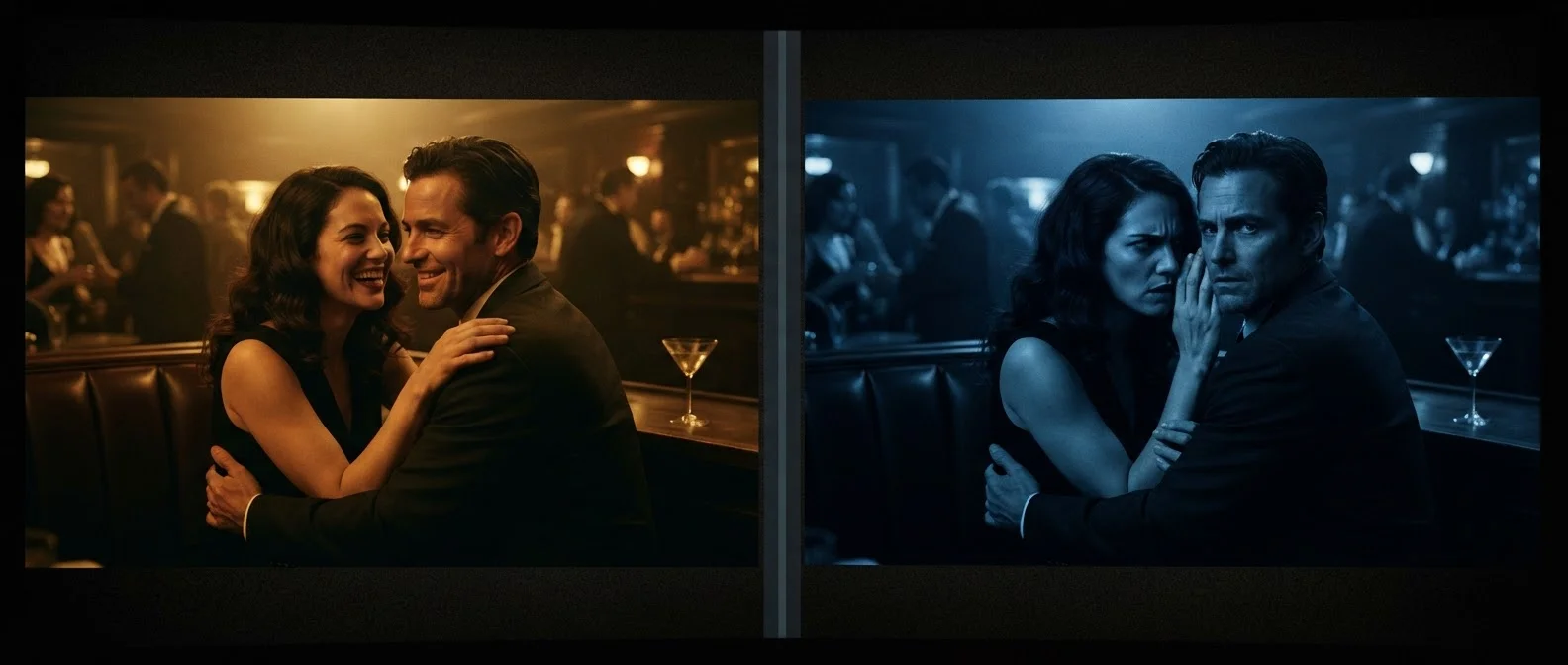
Photo credit: faqsnest.com
In this article
Explore how directors use point of view, editing, and misdirection to make audiences question what they've seen — and why it works.
Key Takeaways
- Unreliable narration in film is constructed through camera choice, editing, and sound — not just dialogue.
- Audiences are conditioned to trust what the camera shows them, which is precisely what makes misdirection effective.
- The device spans genres from psychological thriller to drama, comedy, and even documentary.
- Effective unreliable narration rewards rewatch viewing by embedding clues that only make sense after the reveal.
- The technique raises meaningful questions about memory, perception, and the nature of subjective experience.
Why Cinema Is Uniquely Vulnerable to Deception
Film occupies a peculiar psychological position among storytelling forms. When we read a novel, we are constantly aware that language is a mediation — the author's words are an obvious construction between us and the story. But cinema delivers moving images and synchronized sound in real time, and our perceptual systems are wired to treat visual information as evidence of reality. Filmmakers know this, and the unreliable narrator exploits it deliberately.
The camera, in classical Hollywood grammar, is understood as a neutral witness. It goes where it needs to go, shows us what we need to see, and we follow without question. This convention — call it the camera's authority — is the foundation the unreliable narrator stands on and then kicks away. As soon as an audience understands that the camera can be an active liar, every subsequent shot becomes a negotiation.
For a deeper grounding in how filmmakers control meaning through the frame itself, see how mise-en-scène shapes storytelling — the visual choices examined there are precisely the tools unreliable directors repurpose for misdirection.
The Technical Toolkit of Cinematic Deception
Literary unreliability is a matter of voice. Cinematic unreliability is a matter of craft, and its instruments are numerous.
Point-of-view photography is the most direct tool. When the camera adopts a character's literal eyeline — showing the world as they see it — it implicitly endorses that character's version of events. If the character is wrong, delusional, or lying, so is every frame we've witnessed from their perspective.
Selective editing operates more covertly. The editor decides not just what to include but what to omit. A scene shown in fragments, with conspicuous gaps in continuity, can imply a coherent event that never actually occurred. Crosscutting — the technique of intercutting between two simultaneous locations — can manufacture false cause-and-effect relationships.
Sound design and score are especially underappreciated vectors for manipulation. A musical motif signals emotional truth to viewers even when the image contradicts it. Sound design elements most viewers never consciously notice explains how composers and sound editors can guide emotional response independently of what appears on screen — a power that unreliable-narrator filmmakers exploit to confirm false readings.
~40%
Rewatch rate uplift for twist-ending films
Research on narrative engagement suggests films with significant revelatory endings are substantially more likely to be rewatched than conventional narratives, as viewers seek to identify embedded clues.
1913
Year of an early cinematic unreliable-narrator experiment
Film scholars cite works from early silent cinema as among the first to use editing to construct demonstrably false versions of events within a story, predating the literary theory of narrative unreliability.
Temporal distortion — flashbacks presented as reliable memory, flash-forwards that never arrive as shown — compounds the audience's disorientation. Memory, as both neuroscience and cinema recognize, is reconstructive rather than archival. Films that literalize this truth are often the most thematically rich.
How Audiences Are Conditioned to Be Deceived
The unreliable narrator succeeds partly because of genre conditioning. Audiences carry implicit contracts into the cinema. In a thriller, the protagonist's fear is real. In a crime drama, the detective's reconstruction of events is authoritative. In a romance, the lovers' memories of their relationship are accurate. These genre conventions — the subject of a fascinating parallel analysis in genre conventions that signal trust — function as a trust architecture that unreliable films deliberately exploit before dismantling.
Filmmakers layer in what theorists call "epistemic bait": information that feels explanatory but is strategically partial. A character's confident voiceover, a seemingly definitive establishing shot, a reaction close-up that appears to confirm what we've just witnessed — each cue is borrowed from the grammar of honest cinema and repurposed to mislead. By the time the film reveals its deception, the audience has been complicit in their own misdirection.
What Unreliable Narration Reveals About Storytelling Itself
When a film employs this device well, it does something beyond engineering surprise: it opens a philosophical conversation about the nature of narrative itself. Every film, after all, makes choices about what to show and what to withhold. The unreliable narrator simply makes those choices visible — and morally legible.
Films built on this device invite rewatch in a way that conventionally structured narratives often don't. Clues planted in the first act, comprehensible only after the revelation, transform the film into a different object on second viewing. This layered quality is part of what distinguishes formal unreliability from mere plot trickery. The three-act structure assumes a stable, shared reality between filmmaker and audience. Unreliable narration is, in part, a formal argument against that assumption.
At its most ambitious, the device asks audiences to interrogate not just the film, but the nature of their own perception. Memory is fallible. Perspective is partial. What we believe we witnessed — in cinema and in life — is always a reconstruction. Films that make this argument through form rather than dialogue are among the most intellectually durable works in the medium.
For viewers who want to develop the analytical habits to identify and analyze these techniques in real time, a practical framework for critical film watching offers a structured approach to active, rewarding viewing.
“Cinema is a mirror by which we often see ourselves, but it is also a reflection that can be deliberately distorted. The camera does not lie — but the filmmaker can arrange the truth so selectively that the lie becomes indistinguishable from it.”
— V.F. Perkins, Film theorist and author of 'Film as Film'
Frequently Asked Questions

Author
Entertainment & Media Editorial Team
Entertainment & Media Editorial Team is the collective byline for our editorial team and contributor network. Articles published under this byline or an editorial pen name are researched, written, and reviewed according to our editorial standards for clarity, consistency, and independence before publication.
View all articles →