
Music Videos Didn't Kill the Radio Star — They Rewrote the Rules of Fame
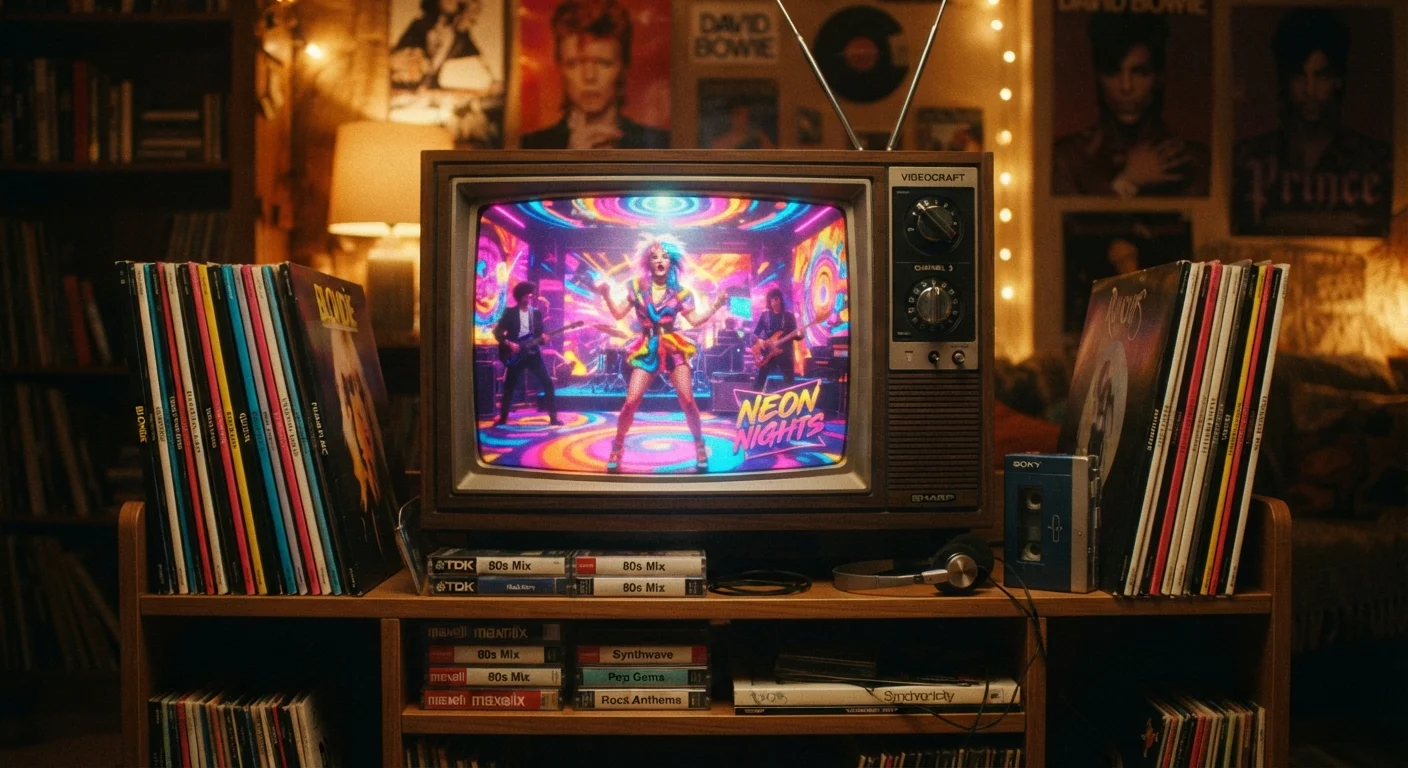
Photo credit: faqsnest.com
In this article
From MTV's launch to YouTube's dominance, explore how the music video shifted what it meant to be a successful recording artist.
Key Takeaways
- MTV's 1981 launch made visual identity as important as sonic talent for chart success.
- Michael Jackson's 'Thriller' established the music video as a cinematic art form in its own right.
- YouTube democratized music video distribution, allowing unsigned artists to reach global audiences.
- The visual demands of the music video era permanently altered how artists brand and present themselves.
- Short-form video platforms like TikTok represent the latest evolution of the music-video concept.
Before the Screen: Fame in a Radio-Only World
For most of the 20th century, becoming a successful recording artist required two things: a voice that translated well through a microphone and distribution muscle from a major label. Radio was the gatekeeping medium. Disc jockeys decided which songs entered millions of living rooms, and artists who became stars did so largely as voices — heard but rarely seen outside of concert tours or television variety appearances.
That audio-first framework shaped what the industry rewarded. A&R executives listened to demos with their eyes closed. Session musicians were interchangeable behind the glass. Physical presence and visual charisma were nice bonuses, not prerequisites. Then came the cable channel that changed everything.
MTV and the Visual Revolution
MTV launched on August 1, 1981, and its impact on the music industry was rapid and structurally profound. Within two years of launch, record labels that initially resisted making promotional videos were investing substantial budgets in them — not because executives suddenly loved cinema, but because MTV rotation could do what months of radio promotion sometimes couldn't: make an artist feel inevitable.
The channel's effect was uneven in its early years, however. MTV's initial playlist was overwhelmingly white rock-oriented, a programming choice that drew significant criticism and arguably delayed the mainstream crossover of Black artists in the early 1980s. That changed when the commercial and cultural force of Michael Jackson made the exclusion untenable. After CBS Records reportedly pressured MTV to air 'Billie Jean' and 'Beat It,' the floodgates opened — and Jackson proceeded to rewrite the format's creative ceiling entirely.
“The music video changed the way people think about what a musician is. Before MTV, you were a sound. After MTV, you were a character.”
— Simon Frith, Music sociologist and Professor Emeritus at the University of Edinburgh
'Thriller,' released as a short film in December 1983, ran nearly 14 minutes, featured a narrative arc, professional choreography, and horror-film production design. It proved that the music video could be an autonomous artistic statement, not merely a song wearing a costume. The Recording Industry Association of America (RIAA) later certified it as the best-selling music video of all time.
What the Video Era Did to the Definition of Stardom
The visual demands of MTV-era stardom permanently restructured what the recording industry considered marketable. Image consultants, stylists, choreographers, and video directors became essential parts of an artist's professional team. Labels began signing acts partly on the basis of visual concept — how would this person look in rotation between Madonna and Duran Duran?
1B+
YouTube views 'Gangnam Style' reached in 2012
PSY's video became the first YouTube video to surpass one billion views, demonstrating the platform's global reach beyond traditional broadcast gatekeepers.
~14 min
Runtime of Michael Jackson's 'Thriller' short film
Directed by John Landis and released in 1983, 'Thriller' set a new creative benchmark for the music video format by functioning as a self-contained narrative film.
Aug 1, 1981
Date MTV launched in the United States
MTV's debut broadcast opened with 'Video Killed the Radio Star' by The Buggles, a moment widely recognized as the start of the music video's mainstream commercial era.
This shift had real consequences for artists who thrived on pure sonic talent. Some found the transition to video-friendly presentation uncomfortable or creatively constraining. Others — particularly those who understood that the music video was itself a new medium with its own grammar — used it to build personas that radio alone could never have constructed. Madonna's career is perhaps the clearest example: her visual reinventions across successive eras were as strategically significant as her music releases.
The visual imperative also accelerated the globalization of American pop music. Artists whose lyrics non-English-speaking audiences couldn't fully parse could still communicate personality, mood, and aspiration through a well-produced video. This visual literacy transcended language barriers in ways that radio had never managed.
YouTube and the Democratization of the Format
When YouTube launched in 2005, it didn't just shift how people watched music videos — it dismantled the gatekeeping infrastructure that had made MTV rotation so coveted. Suddenly, any artist with a camera and an internet connection could publish a music video to a global audience. The view count replaced the rotation slot as the primary currency of video success.
This democratization produced genuine outliers. Korean pop group PSY reached over a billion YouTube views with 'Gangnam Style' in 2012 — a milestone that would have been structurally impossible in the MTV model — without any significant U.S. radio history. The video's success illustrated how completely the distribution logic of music promotion had been rewritten. For context on how this on-demand shift affected media consumption more broadly, see how audiences moved from scheduled broadcasts to on-demand viewing.
YouTube also gave longevity to music videos in a way MTV's linear format never could. A video released in 2008 could accumulate views for decades, functioning as a perpetual promotional asset rather than a perishable rotation slot.
Short-Form Video and the Next Evolution
The music video's latest transformation is unfolding on platforms like TikTok and Instagram Reels, where the dominant format is not a three-to-five-minute narrative production but a 15-to-60-second clip — often user-generated, often remixed, and increasingly driving chart performance before a full video is even produced. Songs go viral through dance challenges and audio memes, creating a new kind of visual-audio relationship that is participatory rather than passive.
This has introduced a feedback loop that earlier eras couldn't have imagined: a clip of a song goes viral on TikTok, labels greenlight a full single release, and a traditional music video follows weeks later as confirmation rather than introduction. The video no longer necessarily launches the song — sometimes the song has already launched itself, and the video consolidates the audience. The mechanics of virality and attention that underpin this dynamic are explored in depth in what 'going viral' has done to American attention spans.
What hasn't changed is the core logic the MTV era established: for a recording artist, being heard is no longer sufficient. Being seen — in some form, on some screen — remains a fundamental condition of contemporary fame. The radio star wasn't killed. They were asked to also become a visual one.
Frequently Asked Questions

Author
Entertainment & Media Editorial Team
Entertainment & Media Editorial Team is the collective byline for our editorial team and contributor network. Articles published under this byline or an editorial pen name are researched, written, and reviewed according to our editorial standards for clarity, consistency, and independence before publication.
View all articles →