
The Science of Learning: A Field Guide to How Memory Actually Works
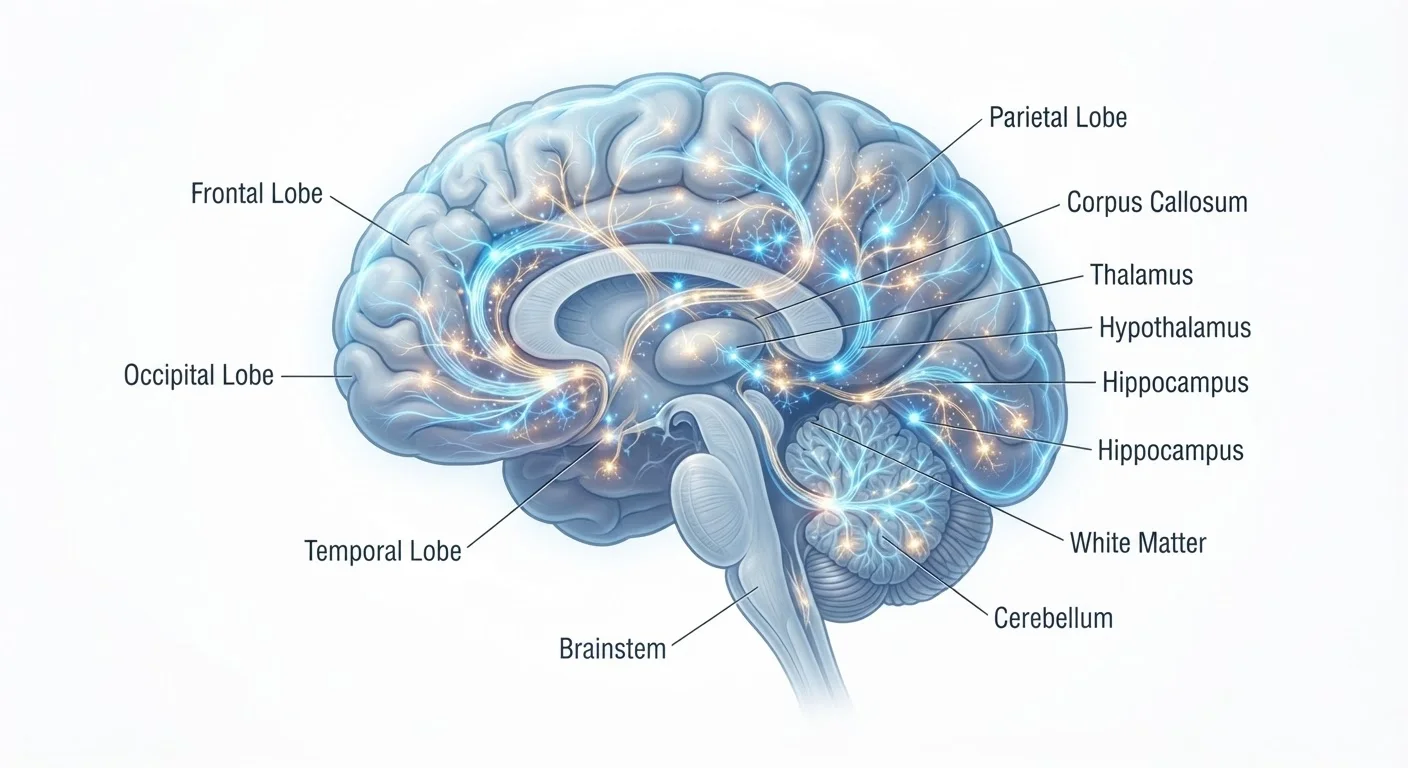
Photo credit: faqsnest.com
In this article
From encoding to retrieval, this comprehensive guide explains the cognitive mechanisms behind how humans learn, store, and recall information.
Key Takeaways
- Memory is not passive storage — it is actively reconstructed each time you retrieve it.
- Information moves from sensory input to long-term memory through encoding, storage, and retrieval.
- Working memory is limited in capacity; overloading it impairs learning.
- Forgetting is a normal, functional part of memory — spaced retrieval strengthens what you keep.
- Sleep, stress, and emotional state all directly affect how well information is encoded and retained.
- Active recall and elaborative encoding are among the most evidence-supported learning strategies.
What Memory Actually Is (And Isn't)
Most people picture memory as a filing cabinet — information goes in, gets stored neatly, and can be pulled out on demand. Decades of cognitive science research tell a very different story. Memory is better understood as a reconstructive process: every time you recall something, your brain reassembles it from stored fragments, influenced by context, emotion, and what you already know.
This has real consequences for learners. It means memory is malleable, improvable, and subject to interference — but also that understanding how it works gives you genuine leverage over how much you retain. Researchers broadly distinguish between several types of long-term memory:
- Declarative (explicit) memory — consciously recalled facts and events, subdivided into semantic memory (general knowledge) and episodic memory (personal experiences).
- Procedural (implicit) memory — skills and habits that operate below conscious awareness, like riding a bike or touch-typing.
For most academic and professional learning, semantic memory is the primary target. Understanding how it's built is the first step to building it better. For a primer on the vocabulary used in learning science, see Key Terms Every Self-Directed Learner Should Know.
The Three Stages of Memory Formation
Cognitive psychologists describe memory formation in three interconnected stages: encoding, storage, and retrieval. A breakdown at any stage means information won't be available when you need it.
Encoding
Encoding is the process of converting sensory input into a format the brain can work with. Not all encoding is equal. Shallow encoding — simply re-reading or passively highlighting — creates weak, fleeting traces. Elaborative encoding — connecting new information to existing knowledge, generating examples, or explaining it in your own words — creates richer, more durable memory traces. This is why teaching a concept to someone else is one of the most effective study methods.
Storage and Consolidation
Once encoded, information must be stabilized through consolidation — a biological process during which the hippocampus transfers new memories into long-term cortical storage. Sleep plays a critical role here: slow-wave and REM sleep phases are associated with memory replay and strengthening. Disrupting sleep after learning demonstrably impairs retention. The relationship between physical state and memory is explored further in Sleep, Exercise, and Stress: How Physical State Shapes What You Learn.
Retrieval
Retrieval is not just using memory — it's also strengthening it. Every act of successful recall makes the memory more accessible in the future, a phenomenon researchers call the testing effect (also known as retrieval practice). Quizzing yourself on material produces significantly better long-term retention than re-studying the same material, even when the re-study session feels more productive.
When starting a new topic, spend five minutes connecting it to something you already know before diving into details. This primes existing neural networks to incorporate the new material rather than storing it in isolation.
Elaborative encoding — linking new information to prior knowledge — consistently produces stronger long-term retention than rote repetition, because it creates more retrieval pathways.
After any learning session, do a brief 'brain dump' — write down everything you remember without looking at your notes. This low-effort habit activates the testing effect immediately after encoding, when the decay curve is steepest.
Research on retrieval practice shows that even imperfect recall attempts significantly outperform re-study for long-term retention, and immediate post-session recall capitalizes on the memory's still-active consolidation window.
Working Memory: Your Brain's Scratch Pad
Before anything reaches long-term storage, it passes through working memory — the brain's active workspace for temporarily holding and manipulating information. Psychologist George Miller's foundational research suggested working memory holds roughly seven items (plus or minus two), though more recent work, including research by cognitive scientist Nelson Cowan, proposes the functional limit may be closer to four chunks of information at a time.
The implications for learners are significant. When you encounter too much new information simultaneously, working memory becomes overloaded and encoding fails — not because you're incapable, but because the system hit a structural ceiling. This is the core insight behind cognitive load theory, which has shaped evidence-based instructional design. To understand how to manage this limit deliberately, see Cognitive Load Theory and Why Overwhelming Yourself Slows Learning Down.
Effective learners work with this constraint by chunking information — grouping related elements into meaningful units — and by building background knowledge, which allows more information to be handled as a single familiar chunk rather than many separate items.
Why Forgetting Is a Feature, Not a Bug
Forgetting feels like failure, but it serves an essential function. German psychologist Hermann Ebbinghaus documented what's now called the forgetting curve in the 1880s: without reinforcement, newly learned information decays rapidly, with the steepest drop occurring in the first 24 hours. Yet this curve can be flattened — and each time you successfully retrieve information before completely forgetting it, the subsequent decay becomes slower.
This insight underpins spaced repetition, a study method that schedules review sessions at increasing intervals timed to interrupt forgetting just before it becomes complete. The spacing effect is one of the most replicated findings in memory research. For a detailed breakdown of how to apply it, Spaced Repetition: The Memory Technique Backed by Cognitive Science covers the method and the evidence behind it.
Importantly, our brains also engage in motivated forgetting — actively suppressing memories that are emotionally aversive or contextually irrelevant. This is adaptive, not pathological. The brain prioritizes what it predicts will be needed again, which is one more reason that meaningful, emotionally engaging learning experiences tend to stick better than dry rote memorization.
How to Learn in Alignment With Your Brain
Understanding memory science translates directly into better study habits. The strategies with the strongest evidence base share a common thread: they make the brain work a little harder during learning, which deepens encoding and strengthens retrieval pathways.
High-Yield Strategies
- Active recall — Close your notes and test yourself. Flashcards, practice problems, and free recall exercises all exploit the testing effect.
- Spaced practice — Distribute study sessions over time rather than massing them into a single block before a deadline.
- Elaborative interrogation — Ask yourself why and how questions about the material rather than simply restating facts.
- Interleaving — Mixing different topics or problem types within a single session builds flexible knowledge that transfers better than blocked practice.
Strategies to Approach with Caution
Highlighting, re-reading, and summarizing feel productive but consistently underperform in controlled studies relative to retrieval-based methods. They have a place in initial familiarization but shouldn't anchor a study plan.
Learners also bring a range of cognitive biases to their own self-assessment — including the illusion of knowing, where familiarity with a text is mistaken for having learned it. Building in regular self-testing is one of the most effective ways to counter this blind spot.
Start Every Study Session with Recall
Before reviewing new material, spend the first five to ten minutes retrieving what you learned in your previous session — without looking at notes. This single habit compounds over time, exploiting both the testing effect and the spacing effect simultaneously. It also reveals genuine gaps rather than creating a false sense of mastery from re-reading.
Memory and learning don't happen in isolation from the rest of life. Stress elevates cortisol, which can interfere with hippocampal function and impair consolidation. Regular physical activity and adequate sleep aren't peripheral concerns — they are core inputs to cognitive performance, and treating them as such is itself a science-backed learning strategy.

Author
Learning & Skills Editorial Team
Learning & Skills Editorial Team is the collective byline for our editorial team and contributor network. Articles published under this byline or an editorial pen name are researched, written, and reviewed according to our editorial standards for clarity, consistency, and independence before publication.
View all articles →