
The Myth That Streaming Killed the Cinema — and What Actually Happened Instead
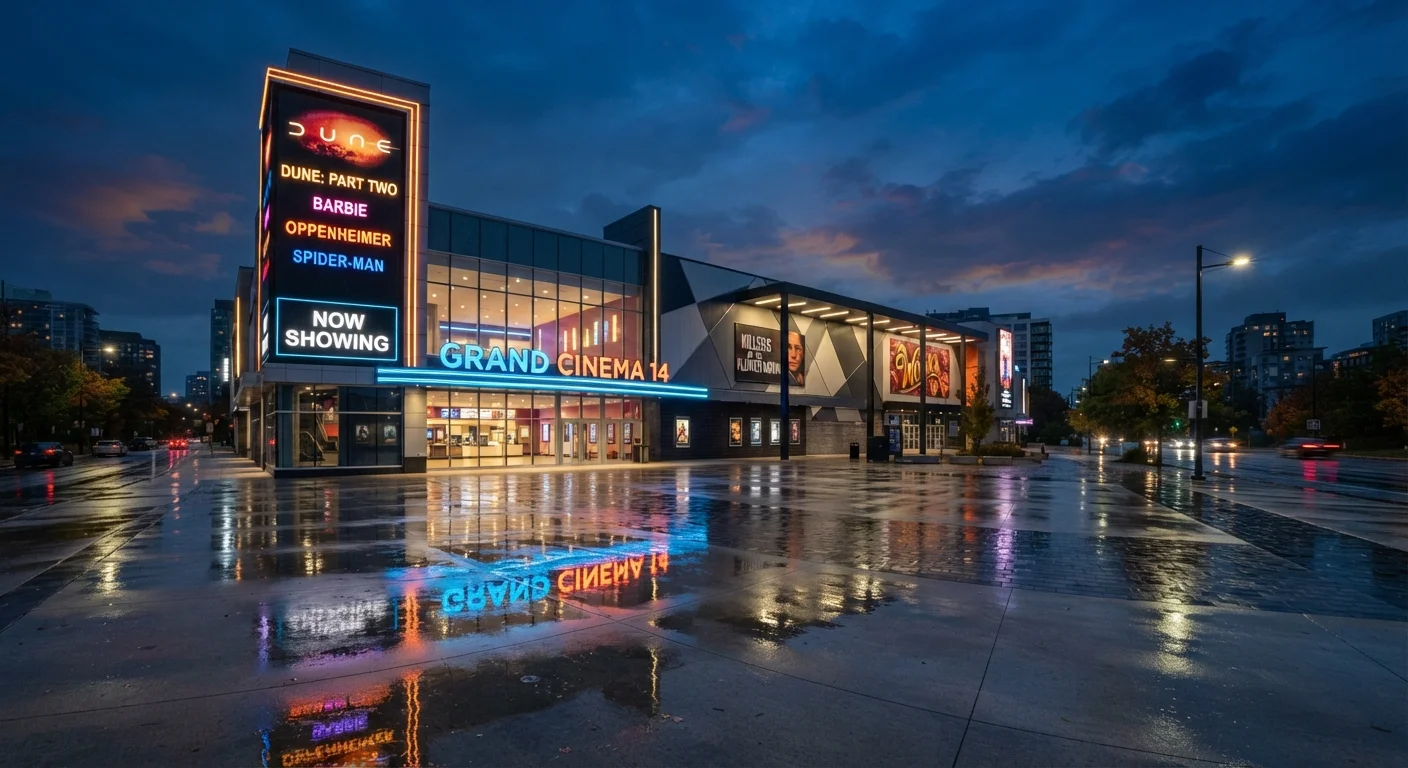
Photo credit: faqsnest.com
In this article
Separating fact from narrative: how theatrical exhibition has adapted to the streaming era rather than simply collapsed under it.
Key Takeaways
- Global box office revenue recovered to near pre-pandemic levels by 2023, contradicting claims of cinema's permanent collapse.
- Streaming and theatrical exhibition increasingly function as complementary distribution windows, not purely competing formats.
- Franchise blockbusters and event films have consolidated theatrical dominance while mid-budget films migrated to streaming.
- Audience behavior shows that streaming has not eliminated the desire for communal, large-screen viewing experiences.
- The theatrical ecosystem is contracting and specializing, not simply dying — a structural shift with winners and losers.
How the Death Narrative Took Hold
When Netflix began its aggressive expansion into original programming in the early 2010s, a compelling media narrative crystallized quickly: streaming would kill the cinema. The logic felt intuitive. Why drive to a theater, pay for tickets, and sit in a crowd when an ever-expanding library of films and series was available on your couch for a flat monthly fee?
That narrative intensified during the COVID-19 pandemic, when theaters across North America and Europe shuttered for months and studios began releasing films directly to streaming platforms or via premium video-on-demand. Analysts declared a permanent behavioral shift. Several prominent theater chains filed for bankruptcy protection. The obituaries for theatrical exhibition were being drafted.
But a closer look at what has actually happened — measured in revenue data, audience behavior, and industry strategy — reveals a considerably more complicated story. The cinema has not been killed. It has been restructured, and the forces reshaping it are as much about economics and content strategy as they are about consumer preference.
To understand the present, it helps to examine the specific myths that accumulated around streaming's rise — and what the evidence actually shows. For context on how streaming platforms themselves evolved into this position of influence, see a timeline of streaming's major turning points.
Myth vs. Fact: Separating Narrative from Evidence
The following paired corrections address the most persistent misconceptions about streaming's impact on theatrical film — drawing on observable industry patterns rather than either defensive optimism or reflexive pessimism.
Myth
Streaming platforms have caused a permanent, irreversible collapse in movie theater attendance.
Fact
Theatrical attendance declined sharply during the pandemic but has recovered substantially, driven by event films and franchise releases that maintain strong audience demand for the communal, large-screen experience.
The conflation of pandemic-era closures with streaming's long-term impact created a misleading baseline. Theaters were legally shuttered in many markets — their revenue loss reflected public health restrictions, not audience preference. As restrictions lifted, box office performance for high-profile releases demonstrated that audiences would return for the right content. The challenge is not whether people attend theaters, but which films they now choose to attend — a content selection problem, not a format rejection.
Myth
Streaming services have made theatrical releases economically irrelevant for studios.
Fact
Theatrical releases continue to serve as critical marketing engines and prestige validators for studios, with box office performance influencing downstream revenue from streaming, licensing, and merchandise.
A successful theatrical run generates cultural buzz, media coverage, and word-of-mouth that subscriber-acquisition campaigns struggle to replicate at equivalent cost. Studios have observed that films with strong theatrical performances tend to drive higher streaming viewership upon platform arrival — the two distribution channels reinforce each other rather than compete directly. This is why major studios have largely maintained theatrical windows for tentpole releases even as they invest heavily in streaming originals. The economics are complementary, not mutually exclusive.
Myth
The rise of streaming proves that audiences no longer value shared, communal viewing experiences.
Fact
Audience behavior consistently shows that people seek out theaters for specific types of content and social occasions, suggesting the communal experience retains distinct value that home viewing does not replace.
Streaming's growth reflects convenience and content volume — not a categorical preference for isolation. Survey data and box office patterns both indicate that audiences make deliberate trade-offs: streaming for convenience-oriented viewing, theatrical for experience-oriented viewing. The cinema functions increasingly as a destination rather than a default, which changes its economics but does not eliminate its cultural role. Opening weekends for major franchise releases routinely demonstrate that audiences will coordinate around a shared, time-specific event when the content warrants it.
Myth
Direct-to-streaming releases are always a sign that a film was not good enough for theaters.
Fact
Streaming-first releases reflect deliberate distribution strategy, genre economics, and platform investment logic — not necessarily a quality judgment about the film itself.
Major streaming platforms have invested in films by acclaimed directors and with significant production budgets that debuted exclusively or primarily on their services. These decisions often reflect subscriber acquisition strategy and the economics of specific genres — such as drama, comedy, and documentary — that have historically underperformed at the multiplex relative to their production costs. As discussed in analysis of why critically acclaimed films sometimes underperform commercially, theatrical box office success depends on marketing, timing, and genre as much as artistic quality.
Myth
Streaming has uniformly benefited audiences by giving them more access to diverse cinema.
Fact
While streaming has expanded access to a wider catalog of films, it has also accelerated the retreat of mid-budget, non-franchise films from theatrical release, concentrating multiplex programming around a narrower range of spectacle-driven content.
The gains and losses of the streaming transition are unevenly distributed. Audiences in markets without access to strong arthouse or independent theatrical ecosystems benefit from streaming's catalog depth. But the simultaneous disappearance of mid-budget films from multiplexes means that casual theatergoers in many markets now have fewer genre options when they do attend. The competitive dynamics among streaming platforms have also introduced their own form of fragmentation, where content availability varies significantly by subscription portfolio.
What the Box Office Numbers Actually Reveal
The clearest empirical check on the death narrative comes from global box office data. The Motion Picture Association's annual reports showed worldwide theatrical revenue recovering substantially through 2022 and 2023, approaching but not yet fully matching 2019's record highs — a trajectory complicated by the pandemic's disruption of studio release slates, not evidence of structural audience abandonment.
The more meaningful story inside those numbers is compositional. Films operating within established franchises — superhero universes, animated sequels, legacy action properties — now account for a disproportionate share of theatrical revenue. Meanwhile, the mid-budget drama, thriller, and comedy that once anchored multiplex programming in the 1990s and 2000s has largely migrated to streaming platforms, where the economics of subscriber retention make more sense for that content. This reflects a division of labor rather than a conquest.
$33.9B
Global box office revenue in 2023
According to the Motion Picture Association, 2023 global theatrical revenue represented a significant recovery toward 2019's pre-pandemic record of approximately $42.5 billion.
Top 10
Franchise films' share of annual box office
Industry analyses consistently show that franchise and sequel titles dominate the annual top-ten highest-grossing films, reflecting the consolidation of theatrical audiences around event-scale content.
45 days
Typical theatrical exclusivity window post-pandemic
The standard theatrical window compressed from roughly 90 days pre-pandemic to approximately 45 days by 2022–2023, per widely reported studio agreements with major exhibitors.
This consolidation has real consequences for filmmakers and audiences. The theatrical window increasingly rewards spectacle and brand recognition, creating pressure on studios to either invest in franchise infrastructure or accept streaming as the primary destination for non-tentpole films. Critics of this trend — and there are many — raise legitimate concerns about creative narrowing. But that narrowing is a symptom of franchise economics, not of streaming per se. As explored in the economics of franchise filmmaking, studios have structural incentives to return to familiar IP regardless of the streaming landscape.
The Complementary Future: Windows, Positioning, and the New Exhibition Logic
Perhaps the most durable insight from the post-pandemic period is that streaming and theatrical exhibition are not locked in a zero-sum conflict. The distribution window — the gap between a film's theatrical release and its availability on home platforms — has compressed dramatically, but it has not disappeared. Studios have found that a strong theatrical run generates cultural attention, critical discourse, and prestige that streaming debuts rarely replicate with the same intensity.
The question of how release format shapes a film's long-term reputation is itself a subject of serious analysis. How theatrical versus streaming release affects a film's cultural legacy is increasingly relevant to how studios position their awards-season contenders. Films that performed modestly at the box office have sometimes found second lives on streaming platforms — while films debuted directly on streaming have occasionally struggled to generate the critical traction that theatrical exposure can provide.
Specialty exhibitors — independent and arthouse cinemas — have shown particular resilience by serving audiences whose tastes are underserved by the multiplex blockbuster model. International cinema, documentary, and experimental film all maintain dedicated theatrical audiences. Global film movements have long operated outside Hollywood's commercial logic, and their theatrical communities have proven less vulnerable to streaming substitution than mainstream multiplex programming.
The structural challenge for theatrical exhibition is real: fewer films, higher stakes per release, and an audience that is more selective about what merits a trip to the cinema. But selectivity is not the same as abandonment. The cinema survives — changed, specialized, and still culturally necessary in ways that a home screen cannot fully replicate.

Author
Entertainment & Media Editorial Team
Entertainment & Media Editorial Team is the collective byline for our editorial team and contributor network. Articles published under this byline or an editorial pen name are researched, written, and reviewed according to our editorial standards for clarity, consistency, and independence before publication.
View all articles →