
Reboots, Sequels, and Franchise Fatigue: The Economics and Storytelling Risks of Returning to Familiar Worlds
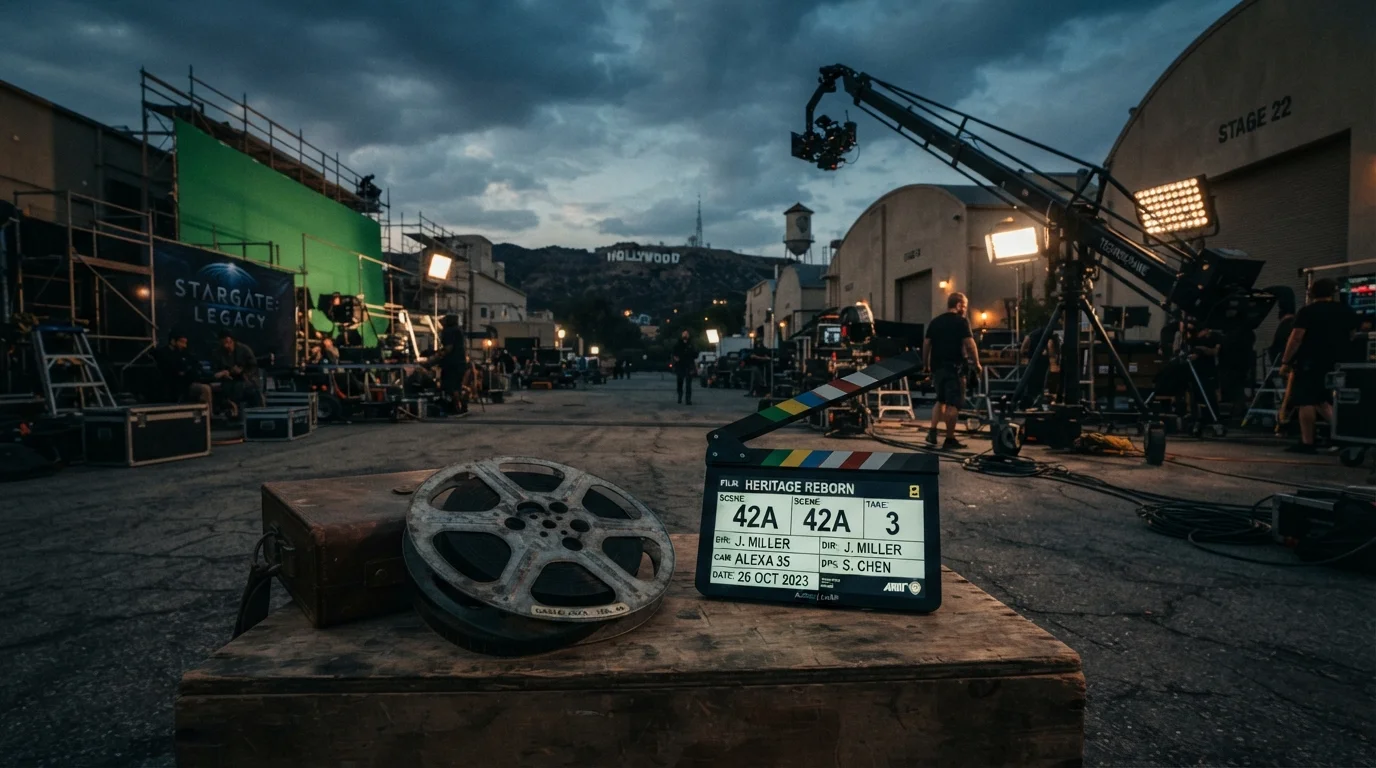
Photo credit: faqsnest.com
In this article
Why does Hollywood keep revisiting old IP? Explore the creative trade-offs and cultural consequences of franchise-driven filmmaking.
Key Takeaways
- Studios favor reboots and sequels because established IP dramatically reduces financial risk compared to original concepts.
- Franchise-driven filmmaking can constrain narrative experimentation and discourage bold creative choices.
- Audience nostalgia is a powerful but fragile commodity — overexposure often triggers diminishing returns.
- Some sequels and reboots have meaningfully expanded their source material rather than simply repeating it.
- Original films still find audiences, but they increasingly require unconventional distribution or independent funding.
Reduced financial risk for studios and investors
Established IP comes with built-in audience awareness, which lowers marketing costs and improves the predictability of opening-weekend performance. This financial safety net allows studios to greenlight projects at scales that purely original concepts rarely attract.
Extended character development across multiple installments
Multi-film and multi-season franchise arcs can sustain character growth over years in ways that single narratives cannot. When executed with intention, this depth can produce emotional investment that rivals — and sometimes exceeds — self-contained storytelling.
Opportunity to revisit and expand underexplored themes
Reboots can use decades of cultural change to address dimensions of a story that earlier versions could not. A franchise returned to in a different social climate may explore questions of identity, power, or morality that the original was not equipped to raise.
Economic engine that supports broader studio output
Franchise revenue subsidizes a studio's overall slate, occasionally funding smaller prestige or independent-style productions that would not otherwise receive institutional support. The blockbuster effectively cross-subsidizes the art house, at least in theory.
Global cultural touchstones that facilitate shared experience
Major franchise films function as collective cultural events, giving disparate audiences a shared reference point. This function has social value even when the individual film's artistic merit is modest.
Creative constraints imposed by franchise continuity requirements
Writers and directors working within established universes must often defer to continuity guidelines, character franchises, and corporate creative committees. This institutional oversight can blunt narrative risk-taking and result in homogenized storytelling across multiple installments.
Audience fatigue erodes goodwill built by originals
Overextended franchises frequently suffer declining audience engagement as installments accumulate. The goodwill generated by a beloved original is a finite resource, and studios that exhaust it risk damaging not just the franchise but broader audience trust in the brand.
Original IP is systematically deprioritized for resources
Theatrical slots, marketing budgets, and production capital flow predominantly toward franchise properties, leaving original films with fewer pathways to wide release. This structural tilt reduces the diversity of stories that reach mainstream audiences.
Nostalgia deployed cynically rather than creatively
When nostalgia functions purely as a marketing mechanism — reassembling familiar elements without narrative purpose — it can produce work that feels hollow to audiences who valued the original. Critics and audiences have increasingly developed vocabulary for identifying this pattern.
Talent incentivized away from independent and original work
Major franchise commitments often involve multi-year contractual obligations that limit where actors, directors, and writers can direct their creative energy. This has accelerating effects on the broader creative ecosystem beyond the studio system itself.
Why Studios Keep Returning to Familiar Worlds
The dominance of sequels, reboots, and franchise extensions in contemporary Hollywood is not accidental. It is the direct product of a financial logic that took firm hold after the global box office expansion of the 2000s and accelerated sharply in the streaming era. Greenlit projects with pre-existing audience awareness carry measurably lower marketing risk than wholly original concepts. When a studio releases a sequel to a recognizable property, a meaningful portion of the promotional work has already been accomplished by the original's cultural footprint.
This dynamic intensified as theatrical budgets ballooned. A mid-budget original drama that might have anchored a studio's prestige slate in the 1990s now competes for production resources against tentpole franchises where a single film can generate billions in global theatrical revenue, licensing, and merchandise. The math pushes decision-makers toward safety. As this analysis of box office dynamics explores, critical quality and commercial performance operate on separate tracks — a reality studios have internalized fully.
Streaming platforms have added another layer of complexity. Services competing for subscriber retention find that legacy IP — beloved television series revived as limited series, film universes extended into episodic format — offers familiar comfort in an environment of overwhelming choice. The psychology of streaming fatigue suggests audiences under cognitive overload default to recognizable titles, which platforms know and exploit.
The Pros: When Revisiting IP Delivers Real Value
Franchise filmmaking is not without genuine creative upside. The strongest arguments in its favor go beyond economics and touch on storytelling possibility.
Reduced financial risk for studios and investors
Established IP comes with built-in audience awareness, which lowers marketing costs and improves the predictability of opening-weekend performance. This financial safety net allows studios to greenlight projects at scales that purely original concepts rarely attract.
Extended character development across multiple installments
Multi-film and multi-season franchise arcs can sustain character growth over years in ways that single narratives cannot. When executed with intention, this depth can produce emotional investment that rivals — and sometimes exceeds — self-contained storytelling.
Opportunity to revisit and expand underexplored themes
Reboots can use decades of cultural change to address dimensions of a story that earlier versions could not. A franchise returned to in a different social climate may explore questions of identity, power, or morality that the original was not equipped to raise.
Economic engine that supports broader studio output
Franchise revenue subsidizes a studio's overall slate, occasionally funding smaller prestige or independent-style productions that would not otherwise receive institutional support. The blockbuster effectively cross-subsidizes the art house, at least in theory.
Global cultural touchstones that facilitate shared experience
Major franchise films function as collective cultural events, giving disparate audiences a shared reference point. This function has social value even when the individual film's artistic merit is modest.
Some of the most narratively ambitious studio films of recent decades have been sequels or franchise entries. Sustained character arcs across multiple films can achieve an emotional depth that single standalone features cannot match. Long-running television reboots have sometimes used the expanded canvas to interrogate the assumptions of the original — offering critique rather than simple repetition.
The Cons: Creative and Cultural Costs of Franchise Dependency
The risks of a franchise-first industrial model are well-documented by critics and, increasingly, by filmmakers themselves who have spoken publicly about creative constraints within studio systems — though specific attributions to living individuals require care here. The structural problems are observable in patterns across releases rather than in any single film.
Creative constraints imposed by franchise continuity requirements
Writers and directors working within established universes must often defer to continuity guidelines, character franchises, and corporate creative committees. This institutional oversight can blunt narrative risk-taking and result in homogenized storytelling across multiple installments.
Audience fatigue erodes goodwill built by originals
Overextended franchises frequently suffer declining audience engagement as installments accumulate. The goodwill generated by a beloved original is a finite resource, and studios that exhaust it risk damaging not just the franchise but broader audience trust in the brand.
Original IP is systematically deprioritized for resources
Theatrical slots, marketing budgets, and production capital flow predominantly toward franchise properties, leaving original films with fewer pathways to wide release. This structural tilt reduces the diversity of stories that reach mainstream audiences.
Nostalgia deployed cynically rather than creatively
When nostalgia functions purely as a marketing mechanism — reassembling familiar elements without narrative purpose — it can produce work that feels hollow to audiences who valued the original. Critics and audiences have increasingly developed vocabulary for identifying this pattern.
Talent incentivized away from independent and original work
Major franchise commitments often involve multi-year contractual obligations that limit where actors, directors, and writers can direct their creative energy. This has accelerating effects on the broader creative ecosystem beyond the studio system itself.
Perhaps the most significant cultural cost is what does not get made. Every greenlight for a legacy sequel or universe expansion represents resources and theatrical slots not available to original properties. Original films often require unconventional paths to reach audiences — limited releases, awards-season positioning, or streaming-first distribution — precisely because theatrical infrastructure now prioritizes franchise events.
The cultural mechanics of nostalgia also deserve scrutiny. Studios deploy nostalgia deliberately, but nostalgia is a depletable resource. Audiences who initially respond to the familiarity of a revived property can become disillusioned when subsequent entries fail to honor the original's spirit — a pattern visible in multiple franchise trajectories where initial enthusiasm gave way to audience disengagement.
40 of 50
Top-grossing films that were sequels or franchise entries
Industry analysis of global box office performance over the past decade consistently shows that the overwhelming majority of top-earning films worldwide belong to pre-existing franchises rather than original concepts.
~$200M+
Typical marketing spend for major franchise films
Major studio tentpole releases routinely carry marketing budgets exceeding $150–200 million globally, a scale that original mid-budget films cannot approach and that reinforces the financial logic favoring franchise properties.
The Storytelling Question: Expansion vs. Repetition
The most useful distinction when evaluating any reboot or sequel is not whether it draws on existing IP, but whether it expands the source world or merely repeats it. Genuine expansion involves introducing new narrative questions, evolving established characters in ways that challenge audience assumptions, or using familiar settings to explore themes the original did not have the cultural context — or the courage — to address.
Repetition, by contrast, reassembles recognizable elements in a configuration designed to trigger audience nostalgia without requiring them to engage with anything genuinely new. The mechanics of narrative structure apply equally to original and franchise films, but franchise entries face a particular structural challenge: audiences arrive with expectations about character behavior and plot resolution that can conflict with narrative surprise.
The strongest franchise films tend to be those that acknowledge their own constraints and find creative solutions within them. The weakest tend to treat familiarity as a substitute for storytelling rigor. That distinction is not always visible in marketing, which is one reason critical engagement with these films — rather than reflexive enthusiasm or dismissal — matters more than ever. As theatrical exhibition has adapted to the streaming era, the cultural conversation around which stories deserve the big-screen franchise treatment has grown correspondingly more consequential.

Author
Entertainment & Media Editorial Team
Entertainment & Media Editorial Team is the collective byline for our editorial team and contributor network. Articles published under this byline or an editorial pen name are researched, written, and reviewed according to our editorial standards for clarity, consistency, and independence before publication.
View all articles →