
The Anatomy of a Music Festival: From Lineup to Legacy
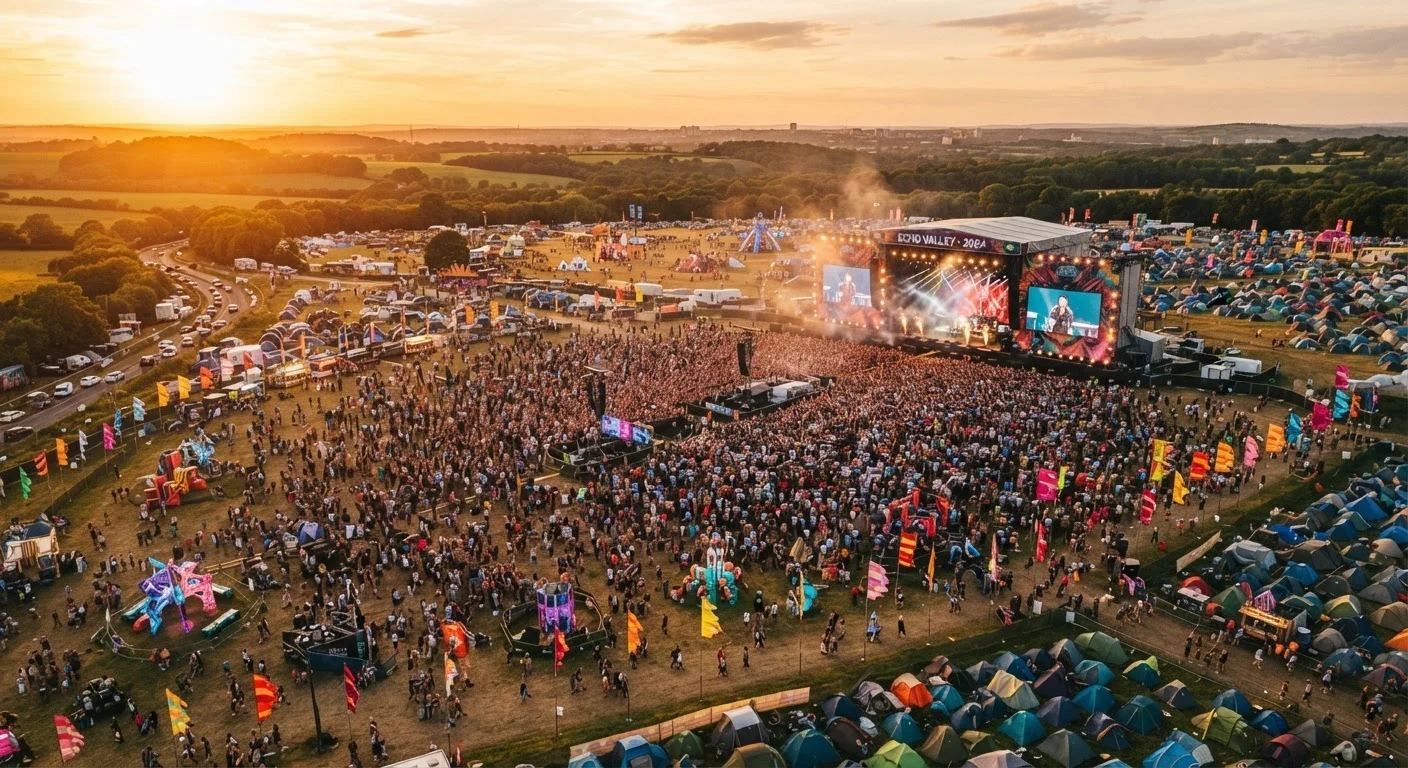
Photo credit: faqsnest.com
In this article
What turns a ticketed outdoor event into a cultural landmark? Trace how music festivals are built, branded, and remembered.
Key Takeaways
- A festival's identity is shaped as much by curation and atmosphere as by individual performers.
- Headliner booking is a high-stakes financial and cultural negotiation, not simply a popularity contest.
- Infrastructure — permits, sanitation, crowd flow — is what makes or breaks the on-the-ground experience.
- Festivals that achieve cultural legacy tend to crystallize a specific moment in social history.
- The streaming era has expanded festival reach while also fragmenting the shared audience that once made them singular.
What Separates a Festival from a Concert
A concert is a transaction — a performance delivered to an audience for a defined span of time. A music festival aspires to something different: a temporary world built around sound, community, and collective experience. That distinction matters, because it reframes every decision a festival organizer makes, from site selection to set times to the food vendors lining the perimeter.
The festival format has ancient roots — from ancient Greek theatrical competitions to medieval fairs — but its modern incarnation solidified in the mid-20th century. Events like the Newport Folk Festival (1954) and the Monterey Pop Festival (1967) established the template: multiple artists, multiple stages, a defined location, and an ethos that framed music as something participatory rather than passive.
What distinguishes enduring festivals is their capacity to generate a sense of place and time that transcends any individual act on the bill. Attendees often describe the feeling less in terms of specific performances and more in terms of atmosphere, encounter, and belonging. Understanding that psychology is foundational to understanding why festivals are built the way they are — and why some become landmarks while others disappear after a single edition.
The Art and Economics of Lineup Curation
Booking a festival lineup is part artistic vision, part market analysis, and part negotiation strategy. Headliner fees at major events can reach into the millions of dollars per performance, meaning that a festival's top three or four slots represent the bulk of its talent budget. Organizers must weigh an artist's commercial draw against their cultural credibility and their alignment with the event's identity.
The pyramid structure of most lineups — one or two marquee headliners, a broader mid-tier, and a deep bench of emerging acts — serves dual purposes. It anchors ticket sales while also signaling the festival's curatorial values. A headliner choice communicates who the event is for. Concert touring economics overlap significantly here: the same agents, guarantees, and rider negotiations that govern touring deals shape festival bookings as well.
When evaluating a festival lineup, look beyond the headliners to the mid-tier: that tier reveals the organizers' genuine curatorial taste and often predicts which acts will headline two years later.
Headliners are booked for commercial certainty; the second and third tiers reflect the programmers' actual cultural antenna and risk tolerance, making them the most informative signal of a festival's artistic direction.
A festival's longevity is often determined in its first three years — before it becomes a fixture, before brand loyalty sets in. Early editions that build a distinct atmosphere tend to earn the word-of-mouth that sustains them beyond the initial novelty.
Audience habit formation and cultural identity solidify early. Festivals that achieve a distinctive atmosphere in their founding years create a self-reinforcing narrative that attracts both repeat attendees and media coverage.
Genre diversification has become increasingly deliberate since the 2010s. Festivals that once presented themselves as monolithically rock or electronic have broadened their programming, partly to widen their demographic reach and partly because the audiences themselves have become more genre-fluid. The commercial and artistic logic are, for once, aligned.
Logistics, Land, and the Infrastructure Beneath the Music
Every element an attendee experiences — stage sound, crowd safety, sanitation, cellular connectivity — is the product of months of technical planning that happens entirely out of public view. Festival production involves coordinating dozens of specialist contractors: staging engineers, sound designers, fencing companies, medical teams, local law enforcement liaisons, and environmental consultants.
Land access is its own discipline. Greenfield festivals (those staged on open land rather than existing venues) require temporary power grids, water systems, waste management infrastructure, and extensive permitting processes that can take years. The collapse of Fyre Festival in 2017 became a defining cautionary tale precisely because it demonstrated how catastrophically thin the line is between a marketed promise and a logistical reality.
Crowd Safety Is a Shared Responsibility
The Astroworld tragedy of 2021 exposed critical gaps in how crowd density, emergency communication, and performer awareness are coordinated at large-scale events. Industry guidance from organizations such as the Event Safety Alliance emphasizes that crowd management planning must begin at the design stage — not as an afterthought. Attendees should familiarize themselves with emergency exit locations and festival safety protocols before entering any large-scale event.
Site capacity and crowd flow design are safety-critical decisions. The 2021 Astroworld tragedy, in which crowd compression during Travis Scott's headline set resulted in ten fatalities, forced a broad industry reckoning with crowd management protocols, emergency egress planning, and the responsibilities of performers, promoters, and venue operators alike.
For festivals that have navigated these challenges successfully over decades, the operational knowledge is itself a competitive asset — institutional know-how that can't be replicated quickly by new entrants to the market.
Brand Identity and the Festival as Cultural Signal
A festival's visual and social identity — its logo, its aesthetic, the language used in its communications — functions as a cultural flag that signals belonging before a single note is played. Coachella's desert minimalism, Glastonbury's muddy bohemianism, and Austin City Limits' civic pride each communicate a distinct set of values to prospective attendees. These identities are not accidental; they are actively maintained through design, programming, and the narratives that organizers choose to amplify.
Fashion and music have long been intertwined, and festivals have become one of the primary arenas where that fusion plays out publicly. The festival outfit — documented, shared, and analyzed across social platforms — has become as much a part of the cultural conversation as any performance. This dynamic has transformed festivals into content engines for media and fashion brands, adding revenue streams and promotional partnerships that now rival ticket sales in strategic importance.
Songs that define eras often receive their cultural coronation at festival moments — the surprise debut, the headlining return, the unexpected collaboration — making festival stages among the most consequential platforms in popular music.
How Festivals Enter — or Fail to Enter — Cultural Memory
Not every well-organized, financially successful festival achieves cultural resonance. Legacy requires a convergence of timing, significance, and documentation. Woodstock endures not merely because of its performers but because it arrived at a moment of social upheaval and was captured in a widely distributed film that codified its mythology. Its 1999 revival, despite strong booking, became a symbol of everything its predecessor was not — demonstrating that legacy cannot be manufactured by replicating surface conditions.
The streaming era has introduced a complicated new dynamic. Streaming's transformation of media consumption has meant that festival performances — once ephemeral by definition — are now routinely filmed, archived, and distributed globally. Beyoncé's 2018 Coachella set, released on Netflix as Homecoming, reached an audience orders of magnitude larger than the 125,000 attendees present. That expanded reach amplifies a festival's cultural impact while also subtly altering its character: the knowledge that a set will be filmed and globally distributed changes what artists prepare and how audiences experience the moment.
Shared cultural touchstones are increasingly rare in a fragmented media landscape, which is part of why the festival format retains unique power. A festival that gets everything right — lineup, atmosphere, timing, documentation — can still produce the kind of collective memory that streaming playlists and algorithmic feeds simply cannot replicate.

Author
Entertainment & Media Editorial Team
Entertainment & Media Editorial Team is the collective byline for our editorial team and contributor network. Articles published under this byline or an editorial pen name are researched, written, and reviewed according to our editorial standards for clarity, consistency, and independence before publication.
View all articles →