
Companion Planting Combinations Worth Knowing Before You Sow
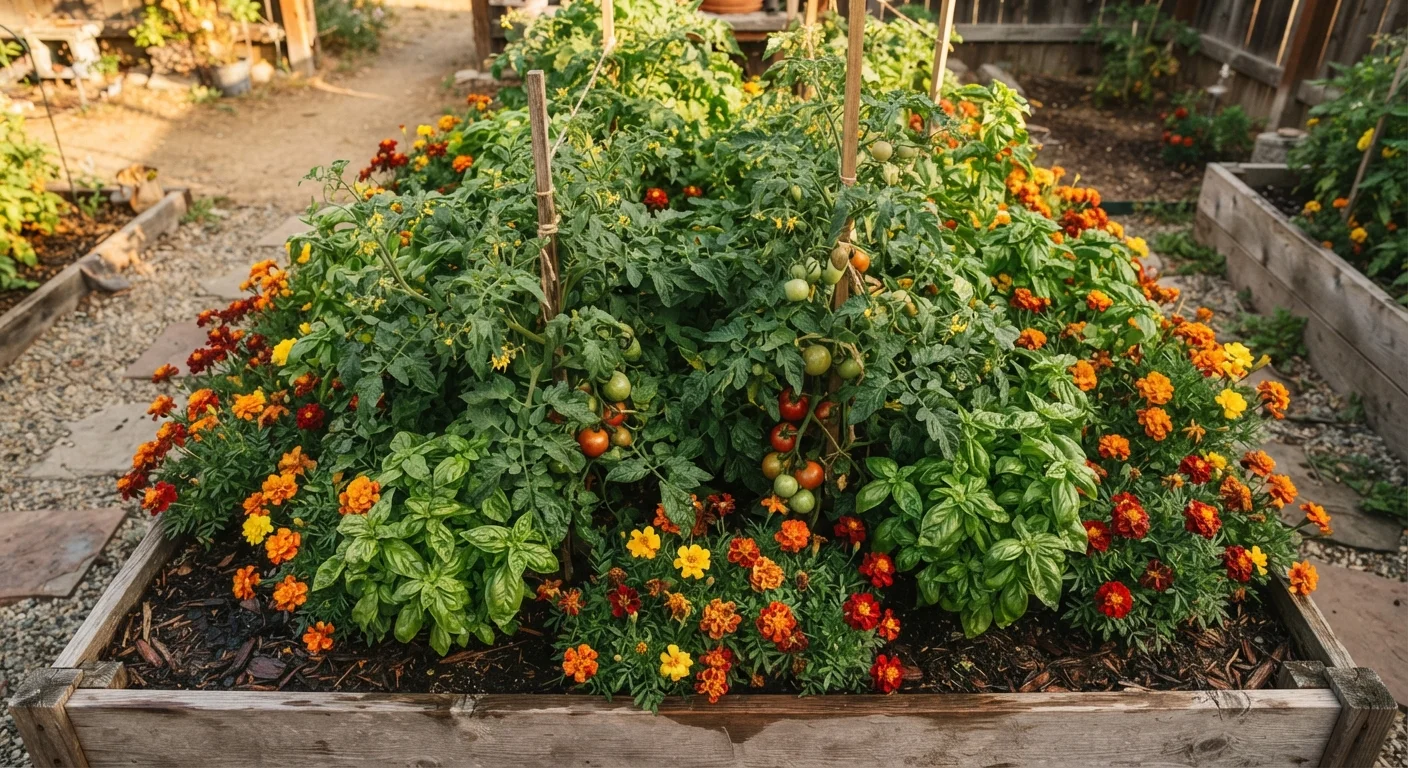
Photo credit: faqsnest.com
In this article
Some plants genuinely help each other thrive. Explore well-documented companion planting pairings and the reasoning behind them.
Why Companion Planting Works
Companion planting is the practice of deliberately growing two or more plant species in close proximity so they provide measurable benefit to one another. Those benefits fall into a few repeatable categories: pest deterrence, pollinator attraction, nutrient cycling, and physical support. Not every pairing touted in gardening lore holds up under scrutiny, but a core set of combinations is supported by both research and generations of documented horticultural practice.
Understanding the mechanism behind a pairing — not just the rule — helps you apply the logic more flexibly. If you know that strong-scented herbs confuse flying pests by masking host-plant odors, you can extend that principle beyond any single recipe. If you're planning your first vegetable garden, building companion planting into your layout from the start is far easier than retrofitting it later.
Allelopathy
A biological phenomenon where one plant releases chemicals that inhibit the germination, growth, or development of neighboring plants. Fennel is a commonly cited allelopathic species in kitchen gardens.
Trap Crop
A plant grown deliberately to attract pests away from a more valued crop. The pest-laden trap crop can then be removed or managed, reducing pressure on the main planting.
Nitrogen Fixation
A process by which certain bacteria living in plant root nodules convert atmospheric nitrogen into forms usable by plants. Legumes such as beans and peas are the most common nitrogen-fixing crops in home gardens.
Polyculture
A growing system that deliberately cultivates multiple plant species in the same space, as opposed to monoculture. The Three Sisters is a well-known polyculture system developed by Indigenous North American farmers.
Nematicidal
Having the property of suppressing or killing nematodes — microscopic soil-dwelling worms that can damage plant roots. French marigold roots are among the most studied nematicidal plants for home gardens.
Volatile Oils
Aromatic chemical compounds produced by certain plants — particularly herbs — that evaporate quickly at room temperature. These oils are thought to interfere with pest navigation and host-plant detection.
Classic Pairings and Their Mechanisms
The combinations below are among the most reliably documented. Each note explains the underlying reason, so you can judge whether it applies to your growing situation.
| Primary benefit categories | Pest deterrence, nutrient cycling, structural support, pollinator attraction |
| Most studied companion system | Three Sisters (corn, beans, squash) (Indigenous North American agricultural tradition, widely documented in horticultural literature) |
| Marigold nematicidal effect | Requires dense planting for a full growing season (Supported by peer-reviewed controlled trials) |
| Fennel compatibility | Allelopathic to most vegetables — grow in isolation |
| Nasturtium role | Trap crop for aphids; also attracts ladybugs and parasitic wasps |
Tomatoes + Basil
Basil's volatile oils — particularly linalool and eugenol — are thought to repel thrips and aphids that target tomato foliage. Both plants thrive in similar conditions (full sun, consistent moisture), making them easy co-inhabitants. Basil also attracts predatory insects that prey on common tomato pests.
The Three Sisters: Corn, Beans, Squash
This Indigenous North American polyculture is one of the most well-studied companion systems. Corn provides a trellis for climbing beans; beans fix atmospheric nitrogen through root-nodule bacteria, replenishing the soil corn depletes; broad squash leaves shade the ground, suppressing weeds and retaining moisture. The three species occupy different vertical layers, reducing competition for light.
Carrots + Onions
Carrot fly and onion fly are each repelled by the scent of the other's host plant. Interplanting breaks up the olfactory cues these pests use to locate crops, reducing infestation pressure without any inputs. Spacing matters: rows should be close enough to create a mixed scent profile, but not so dense that one crop crowds the other.
Nasturtiums as a Trap Crop
Nasturtiums are highly attractive to aphids — more so than most vegetables — making them useful as a sacrificial planting near brassicas, squash, or beans. Aphid colonies concentrate on nasturtiums, where they're easier to monitor, remove by hand, or leave for visiting ladybugs and parasitic wasps. This is a trap crop strategy rather than a repellent one.
Marigolds + Almost Any Vegetable
French marigolds (Tagetes patula) produce thiophenes from their roots, compounds shown in peer-reviewed trials to suppress certain soil nematode populations. Above ground, their bright flowers draw pollinators and beneficial predatory insects. Unlike some companion pairing claims, the nematicidal effect of marigolds has been replicated in controlled research, though it requires dense planting sustained over a full season.
Pairings to Avoid
Companion planting also has a cautionary side. Allelopathy — chemical suppression of one plant by another — is real and can sabotage a bed if ignored.
- Fennel: Allelopathic toward most vegetables, including tomatoes, peppers, and beans. Grow it in isolation or in a dedicated herb bed.
- Garlic near beans or peas: Allium compounds may inhibit the growth of legumes; keep these separated.
- Brassicas near strawberries: These families compete aggressively for similar nutrients and have been observed to suppress each other's yields when planted in the same bed.
If you're deciding between raised beds and in-ground planting, raised beds give you more precise control over which plants share root zones — a practical advantage when managing allelopathic neighbors.
Putting Combinations into Practice
Effective companion planting requires thinking in plant communities rather than individual rows. A few principles help:
- Match growth habits. Pair plants with different vertical profiles — tall, medium, low — so light and space are used efficiently rather than competed for.
- Sequence plantings. Some companions work better when one plant is established before the second is introduced. Nasturtiums, for instance, are most useful as trap crops when they're already visible and flowering before vulnerable crops are transplanted nearby.
- Observe and adjust. Companion effects are modulated by soil type, climate, spacing, and pest pressure in your specific location. Keep simple notes across seasons to identify what actually moves the needle in your garden.
Before you sow, cross-reference your seed packets for spacing requirements — understanding the full seed packet label will help you plan companion distances accurately. For gardeners interested in broader ecosystem thinking, incorporating native plants alongside vegetable beds can extend habitat for the beneficial insects that make companion planting strategies more effective.

Author
Home & Garden Editorial Team
Home & Garden Editorial Team is the collective byline for our editorial team and contributor network. Articles published under this byline or an editorial pen name are researched, written, and reviewed according to our editorial standards for clarity, consistency, and independence before publication.
View all articles →