
Starting a Vegetable Garden From Scratch
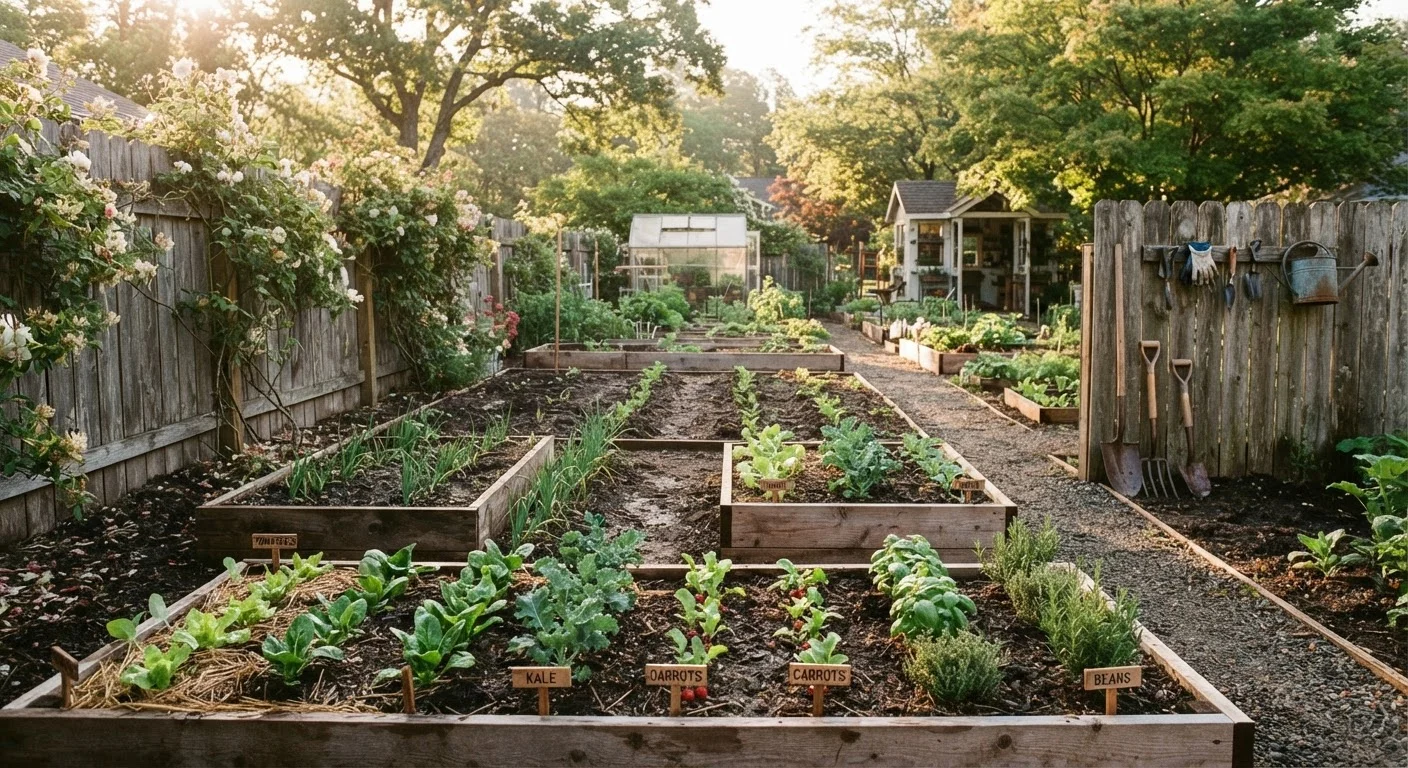
Photo credit: faqsnest.com
In this article
A grounded introduction to planning, preparing, and planting your first vegetable garden — from site selection to first harvest.
Key Takeaways
- Most vegetables need at least six hours of direct sunlight daily to produce well.
- Soil quality is the single greatest predictor of a garden's success — invest there first.
- Starting small with a few reliable crops builds skills and confidence faster than a sprawling plot.
- Consistent, shallow watering at the root zone outperforms infrequent deep soakings for most vegetables.
- Your first season is as much about learning your specific site as it is about harvesting food.
Choosing the Right Site
Before you buy a single seed packet, spend a few days simply observing your yard. The most critical factor for vegetable gardening success is sunlight — most fruiting and root crops need a minimum of six hours of direct sun each day, and eight or more is better for heavy producers like tomatoes and peppers. Leafy greens are more tolerant of partial shade, which can be useful if your space is limited.
Beyond sun, consider access to water. A garden located far from a hose connection quickly becomes a chore, and inconsistent watering is one of the most common reasons first gardens underperform. Proximity to your kitchen also matters more than beginners expect — you're more likely to harvest regularly and notice problems early when the garden is convenient.
Check for low spots that collect standing water after rain, which can cause root rot, and steer clear of areas near large trees whose roots compete aggressively for nutrients and moisture. If your yard presents real challenges — heavy shade, very poor soil, or limited ground space — you might also explore container gardening as an alternative before committing to a full in-ground plot.
Understanding and Improving Your Soil
Soil is the foundation of everything your garden produces, and it's the area where new gardeners most often underinvest. Before planting, have your soil tested — many cooperative extension offices affiliated with land-grant universities offer this service affordably. A test reveals your soil's pH, which affects nutrient availability, as well as levels of key elements like nitrogen, phosphorus, and potassium.
Most vegetables prefer a slightly acidic to neutral pH, roughly 6.0 to 7.0. If your soil falls outside that range, amendments can correct it: ground limestone raises pH in overly acidic soils, while elemental sulfur can lower it when it's too alkaline. Amendments should be worked into the top several inches of soil several weeks before planting when possible.
Soil pH
A measure of how acidic or alkaline your soil is, on a scale from 0 to 14. Most vegetables grow best in the 6.0–7.0 range, where nutrients are most available to plant roots.
Organic matter
Decomposed plant and animal material — like compost — that improves soil structure, feeds soil organisms, and slowly releases nutrients to plants.
Succession planting
Staggering plantings of the same crop over several weeks so that harvests are spread out over time rather than all arriving at once.
Transplant shock
Temporary stress a seedling experiences when moved from one growing environment to another. Good watering and gentle handling at transplanting time help minimize it.
Frost date
The average date in spring when the last killing frost is expected in your area, used to time plantings of cold-sensitive crops. Local cooperative extension services publish regional frost date guides.
Drip irrigation
A watering method that delivers water directly to the root zone of plants through slow-release emitters, reducing evaporation and keeping foliage dry to limit disease.
Regardless of your soil test results, adding organic matter almost always improves garden soil. Well-aged compost improves drainage in heavy clay soils, helps sandy soils retain moisture, feeds beneficial soil microorganisms, and releases nutrients gradually. You can purchase compost in bags, source it from a local municipality, or begin making your own — even a small operation helps. Our guide to building a compost heap in a small garden walks through setting one up in limited space.
If you're weighing whether to build raised beds or work with your existing native soil, that decision has real implications for cost, labor, and long-term maintenance. A detailed look at those trade-offs is available in our article on raised beds vs. in-ground gardens.
Planning What to Grow
Resist the temptation to plant everything you find appealing in a seed catalog. A focused first garden — five to eight crop types at most — teaches you far more than an overwhelming spread and is much easier to maintain. Choose crops aligned with what your household actually eats, since motivation to tend a garden is closely tied to using what it produces.
Reliable beginner crops include lettuce, spinach, radishes, green beans, zucchini, and cherry tomatoes. These are forgiving, relatively fast-growing, and provide clear feedback. Avoid very slow-maturing crops like celery or long-season melons in your first year unless your climate strongly favors them.
Think about succession planting from the start. Instead of seeding all your lettuce at once, plant small batches two to three weeks apart for a continuous harvest rather than a single glut. Also consider vertical space — crops like pole beans and cucumbers grow upward on simple trellises, freeing ground space for sprawling plants like squash. Thoughtful planning at this stage, much like building a personal curriculum, pays dividends throughout the season.
Planting and Early Care
Some vegetables are best started as seeds sown directly into garden soil — beans, carrots, beets, and radishes all dislike root disturbance and should go directly in the ground. Others, particularly tomatoes, peppers, and eggplant, benefit from being started indoors weeks before the last frost or purchased as transplants from a nursery.
When transplanting seedlings, handle them gently by the root ball rather than the stem. Plant at the correct depth — tomatoes are a notable exception to the rule, as burying them deeper than they grew in the pot encourages additional roots to form along the buried stem. Water transplants in well immediately after planting to settle the soil around the roots and reduce transplant shock.
Keep a Simple Garden Journal
Note planting dates, varieties, and observations on pest pressure or unusual growth each season. Even brief records help you spot patterns — what thrived, what didn't, and when problems appeared. Over two or three seasons, this becomes one of the most valuable tools a home gardener can have.
Label everything as you plant. Memory is unreliable, especially when seedlings look similar in early growth. Simple markers made from cut plastic containers or wooden craft sticks with written labels work fine. Recording plant dates and varieties in a simple garden journal — even just a notebook — gives you a reference to improve on in future seasons.
Watering, Feeding, and Ongoing Maintenance
Consistent moisture is more important than any specific watering schedule. The general benchmark of one inch of water per week is a useful starting point, but your actual needs will vary with temperature, humidity, soil type, and what's growing. Get in the habit of checking soil moisture at root depth rather than relying on surface appearance alone.
Watering at the base of plants — rather than overhead — reduces disease pressure by keeping foliage dry. A soaker hose or drip irrigation system is highly effective and reduces water waste compared to overhead sprinklers, though a watering can or standard hose works perfectly well for a small plot.
Feeding your plants during the growing season replenishes nutrients the soil gradually depletes. Granular slow-release fertilizers applied at planting reduce the need for frequent reapplication, while liquid fertilizers give a faster response when plants show signs of deficiency. Follow soil test recommendations rather than defaulting to maximum application rates — over-fertilizing can harm plants and leach into groundwater.
Weeding regularly — little and often — prevents competition for nutrients and moisture before it becomes a problem. A thin layer of mulch around plants suppresses weeds, retains moisture, and moderates soil temperature. Straw, shredded leaves, and untreated wood chips all work well. Growing your own vegetables also pairs naturally with a broader interest in eating more plants; our piece on plant-based eating as a realistic starting point offers grounded context for how homegrown produce fits into everyday meals.
Frequently Asked Questions

Author
Home & Garden Editorial Team
Home & Garden Editorial Team is the collective byline for our editorial team and contributor network. Articles published under this byline or an editorial pen name are researched, written, and reviewed according to our editorial standards for clarity, consistency, and independence before publication.
View all articles →