
Container Gardening: Freedoms, Limitations, and What to Realistically Expect
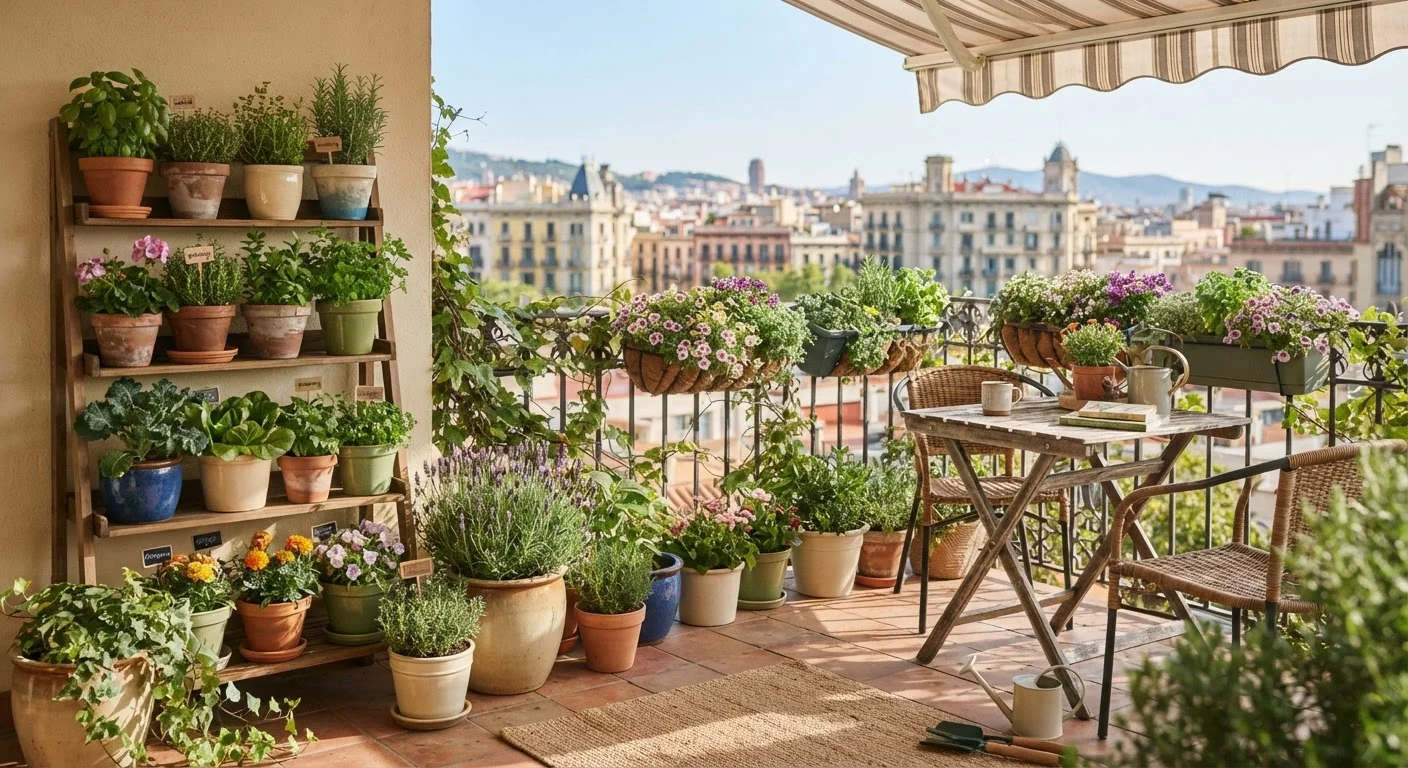
Photo credit: faqsnest.com
In this article
Pots and planters open gardening to any space, but they also come with constraints. A balanced look at what container growing involves.
Key Takeaways
- Container gardening works in nearly any space, including balconies, patios, and rental properties.
- Pots require more frequent watering and fertilizing than in-ground beds.
- Plant selection matters: compact and dwarf varieties generally perform best in containers.
- Soil volume is the main limiting factor — larger containers give roots more room and buffer against stress.
- Container growing can be low-cost to start but may involve ongoing expenses for soil and amendments.
Works in nearly any space, including balconies and patios
Containers require no ground access, making gardening viable for apartment dwellers, renters, and anyone with paved or limited outdoor areas.
Full control over soil quality and composition
You choose the growing mix, bypassing poor native soil, heavy clay, or contaminated urban ground entirely.
Plants can be moved to optimize sunlight or shelter
Repositioning containers to chase seasonal sun or move plants out of frost paths is a practical advantage no in-ground bed can match.
Reduces exposure to ground-dwelling pests and diseases
Elevating plants in fresh potting mix limits contact with soil pathogens and many root pests that typically live in garden beds.
Easy to scale up or change layout without major effort
Adding, removing, or rearranging containers is straightforward — no digging, tilling, or structural changes required.
Requires frequent, consistent watering
Container soil dries out significantly faster than ground soil, often needing daily attention during warm months. Missing waterings can stress or kill plants quickly.
Nutrients deplete rapidly and must be replenished
Regular watering flushes nutrients from potting mix, making supplemental fertilizing every two to four weeks a necessity rather than an option during the growing season.
Limited root volume constrains plant size and yield
Even large containers impose a ceiling on root spread, which typically means lower yields and smaller mature plants compared to in-ground equivalents.
Containers can overheat or freeze more quickly than ground soil
Because pot walls are exposed to air on all sides, root zone temperatures fluctuate more dramatically, which can stress plants in both summer heat and winter cold.
Ongoing cost of quality potting mix and amendments
Premium potting soil and regular fertilizer represent a recurring expense that in-ground gardeners can reduce through composting and soil building over time.
What Container Gardening Actually Involves
Container gardening means growing plants in pots, planters, window boxes, grow bags, or any vessel that holds soil above the ground. It's one of the most accessible entry points into gardening, requiring no yard, no digging, and no commitment to a fixed layout. But accessibility doesn't mean simplicity — container growing has its own logic, and understanding it upfront prevents a lot of frustration.
Unlike in-ground beds, where plant roots can search laterally for water and nutrients, containerized plants are entirely dependent on what you put in the pot and how often you replenish it. This fundamentally changes your role as a gardener: you become the sole manager of the growing environment, for better and for worse.
If you're weighing containers against other approaches, our comparison of raised beds vs. in-ground gardens lays out how each method handles drainage, soil control, and long-term cost.
The Real Advantages of Growing in Pots
Container gardening has earned its popularity for concrete reasons — not just as a consolation prize for people without garden beds.
Works in nearly any space, including balconies and patios
Containers require no ground access, making gardening viable for apartment dwellers, renters, and anyone with paved or limited outdoor areas.
Full control over soil quality and composition
You choose the growing mix, bypassing poor native soil, heavy clay, or contaminated urban ground entirely.
Plants can be moved to optimize sunlight or shelter
Repositioning containers to chase seasonal sun or move plants out of frost paths is a practical advantage no in-ground bed can match.
Reduces exposure to ground-dwelling pests and diseases
Elevating plants in fresh potting mix limits contact with soil pathogens and many root pests that typically live in garden beds.
Easy to scale up or change layout without major effort
Adding, removing, or rearranging containers is straightforward — no digging, tilling, or structural changes required.
One underappreciated advantage is soil control. In areas with heavy clay, rocky ground, or contaminated urban soil, containers let you start fresh with a quality growing mix tailored to your plants. This is especially valuable for edibles, where soil history matters. If you're new to growing food, our guide to starting a vegetable garden from scratch covers the foundational decisions regardless of whether you garden in ground or in pots.
Mobility is another genuine benefit. Containers can be moved to chase sunlight through the seasons, brought indoors before frost, or repositioned when your outdoor layout changes. For renters or anyone in a temporary living situation, this portability means you don't leave your garden behind when you move.
Where Containers Fall Short
Honest container gardening advice has to address the constraints that surprise many first-time growers.
Requires frequent, consistent watering
Container soil dries out significantly faster than ground soil, often needing daily attention during warm months. Missing waterings can stress or kill plants quickly.
Nutrients deplete rapidly and must be replenished
Regular watering flushes nutrients from potting mix, making supplemental fertilizing every two to four weeks a necessity rather than an option during the growing season.
Limited root volume constrains plant size and yield
Even large containers impose a ceiling on root spread, which typically means lower yields and smaller mature plants compared to in-ground equivalents.
Containers can overheat or freeze more quickly than ground soil
Because pot walls are exposed to air on all sides, root zone temperatures fluctuate more dramatically, which can stress plants in both summer heat and winter cold.
Ongoing cost of quality potting mix and amendments
Premium potting soil and regular fertilizer represent a recurring expense that in-ground gardeners can reduce through composting and soil building over time.
Water management is the most demanding part of container care. Because pot soil dries out faster than ground soil — especially in terracotta or in warm weather — many containers need daily watering during summer. Strategies from drought-tolerant gardening can help: using water-retentive amendments, grouping containers together, and mulching the soil surface all reduce how often you need to intervene.
Nutrient depletion is the other big limitation. Regular watering leaches minerals from the potting mix, so container plants typically need supplemental feeding every two to four weeks during the growing season. This is an ongoing task that in-ground gardeners can often offset with a single annual compost application. Speaking of which — if you're producing your own compost, our guide to composting in a small garden shows how even compact setups can support this habit.
Choosing the Right Plants and Containers
Plant selection is where container gardeners either set themselves up for success or struggle unnecessarily. The general principle: match the plant's mature root depth and spread to the container's volume. Most vegetables and herbs have specific soil-depth requirements printed right on their seed packets — our breakdown of how to read a seed packet explains exactly what to look for.
Potting Mix vs. Garden Soil: Don't Substitute
Standard garden soil is not suitable for containers — it compacts under repeated watering, restricts drainage, and suffocates roots. Purpose-formulated potting mix is lighter, drains more freely, and is designed for the conditions inside a pot. Some mixes include slow-release fertilizer, which can reduce how frequently you need to feed in the early weeks. Always check the label before assuming a mix is fertilizer-enriched.
As a general guide: herbs and lettuces manage well in 6–8 inch deep containers; tomatoes, peppers, and most large vegetables need at least 12–18 inches of depth and a minimum of 5 gallons of soil volume. Dwarf or patio-bred varieties of larger crops are specifically developed for container life and are worth seeking out.
Container material affects both performance and maintenance. Terracotta breathes well and reduces waterlogging risk, but dries out faster. Plastic retains moisture longer but can overheat roots in direct sun. Fabric grow bags offer excellent drainage and air pruning of roots. None of these is universally superior — the best choice depends on your climate, plant type, and how frequently you can water.
For design-minded gardeners, containers are also a legitimate aesthetic tool. Grouping pots of varying heights and textures creates visual structure on a patio or balcony in ways that complement interior spaces — an idea worth exploring if you're thinking about interior design principles extended to outdoor living areas.
Setting Realistic Expectations
Container gardening is not inherently lower effort than other growing methods — it just requires different effort at different times. The work is more frequent but usually shorter in duration: a few minutes of watering daily rather than occasional heavy-lifting sessions of digging or mulching.
Yields from containers are also generally lower than in-ground or raised-bed equivalents. A single large tomato pot will not produce as abundantly as a 4x8 foot bed. This doesn't make containers less worthwhile, but it's useful information when planning how much growing space you actually need to meet a particular goal.
What containers do exceptionally well is reduce barriers. No yard, no good soil, no permanent commitment — none of these are dealbreakers. With the right plants, attentive watering, and consistent feeding, container gardens can be genuinely productive and satisfying. Going in with accurate expectations is what makes the difference between a thriving setup and a collection of struggling pots.

Author
Home & Garden Editorial Team
Home & Garden Editorial Team is the collective byline for our editorial team and contributor network. Articles published under this byline or an editorial pen name are researched, written, and reviewed according to our editorial standards for clarity, consistency, and independence before publication.
View all articles →