
Drought-Tolerant Gardening: Principles for Growing with Less Water
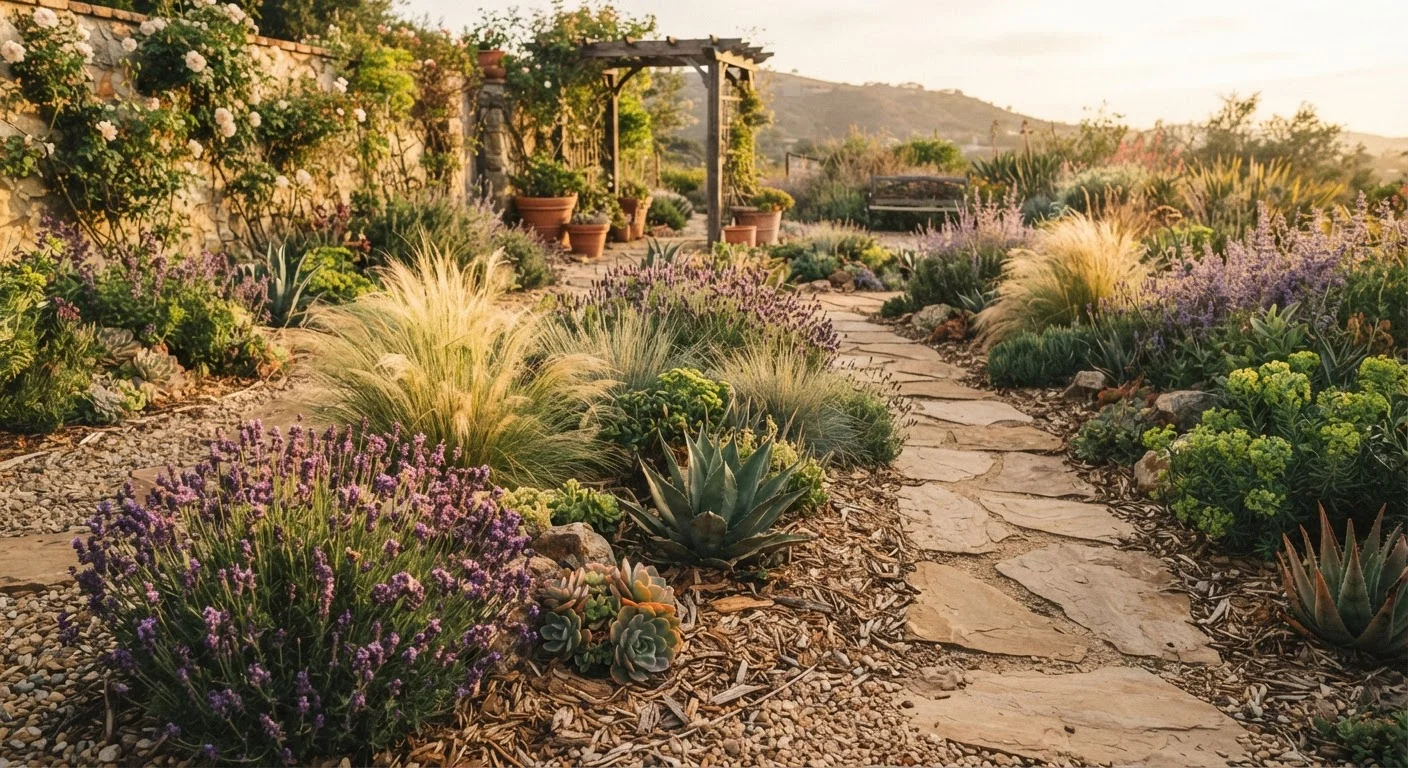
Photo credit: faqsnest.com
In this article
Water-wise gardening isn't just for dry climates. Explore the core strategies that help any garden use water more efficiently.
Key Takeaways
- Soil health is the foundation of water efficiency — organic matter helps soil hold moisture longer.
- Mulching is one of the highest-impact, lowest-effort strategies for reducing water loss.
- Choosing plants adapted to your region's natural rainfall dramatically reduces irrigation needs.
- Deep, infrequent watering trains roots to grow deeper, improving plant resilience during dry spells.
- Grouping plants by water needs — a technique called hydrozoning — prevents overwatering and waste.
- Drought-tolerant gardening saves water in any climate, not just arid or semi-arid regions.
Why Water Efficiency Matters Beyond Dry Climates
Water-wise gardening is often framed as a solution for the American Southwest, but water stress, drought conditions, and seasonal dry periods affect gardens across the entire country. Even in traditionally rainy regions, summer heat and unpredictable rainfall patterns make efficient water use a smart year-round strategy.
The core goal of drought-tolerant gardening isn't to eliminate watering — it's to build a garden system that needs less of it. That means improving how your soil captures and holds moisture, choosing plants suited to your local conditions, and applying water in ways that go further. These principles work together, and even implementing one or two can make a measurable difference.
If you're weighing garden layout decisions, the trade-offs between raised beds and in-ground planting have real implications for water retention — worth understanding before you commit to a design.
Best Practices for a Water-Wise Garden
The following practices are grounded in horticultural research and widely applied by experienced gardeners across climate zones. Implement them together for the most benefit, or start with the ones best suited to your current setup.
Build organic matter into your soil before planting.
Soil rich in organic matter — compost, aged manure, or leaf mold — holds significantly more moisture than compacted or sandy soil. It also improves drainage in clay-heavy soil, reducing waterlogging that can stress roots. Healthy soil structure is the single best investment you can make for long-term water efficiency.
Apply a generous layer of mulch around all plantings.
Mulch dramatically slows evaporation from the soil surface, can reduce watering frequency by 30–50%, and suppresses weeds that compete for moisture. Organic mulches like wood chips, straw, or shredded leaves also break down over time, gradually improving soil structure.
Water deeply and infrequently rather than lightly and often.
Shallow, frequent watering encourages roots to stay near the surface where soil dries out fastest. Deep watering — soaking the root zone thoroughly — pushes moisture deeper and trains roots to follow, making plants more resilient during dry stretches between rain events.
Practice hydrozoning — group plants by water needs.
Watering high-need plants alongside drought-adapted ones wastes water on plants that don't need it and can overwater drought-tolerant species, which often suffer root rot in consistently wet conditions. Organizing the garden by water demand makes irrigation far more precise.
Time watering for early morning whenever possible.
Watering in the early morning allows moisture to penetrate the soil before heat causes significant surface evaporation. It also ensures foliage dries quickly, reducing the risk of fungal disease — a common issue with evening watering.
Select drought-adapted plants matched to your region's conditions.
Plants suited to your local climate — whether native species, Mediterranean herbs, or regionally adapted ornamentals — require far less supplemental water once established. Their root systems, leaf structures, and dormancy cycles are calibrated to local rainfall patterns.
Getting Started: Immediate Steps You Can Take
You don't need to overhaul your entire garden at once. Several high-impact changes can be made this weekend — and many of them cost little or nothing. Pair these quick actions with the longer-term structural practices above for the best results over time.
If you'd like to go further with low-effort design, our look at low-maintenance outdoor spaces explores design frameworks — like gravel gardens and deep-rooted perennial beds — that naturally reduce maintenance and water demand.
Choosing the Right Plants Makes Everything Easier
Plant selection is arguably the biggest lever in drought-tolerant gardening. A plant that naturally thrives in conditions similar to your local climate requires far less intervention — including watering — than one that's struggling against its environment.
Native plants are particularly well suited to this approach. They've evolved alongside local rainfall patterns, soil types, and seasonal rhythms. Our article on native plants and why ecologists recommend them explains the ecological logic in detail. Beyond natives, many Mediterranean-climate perennials, ornamental grasses, and drought-adapted annuals perform beautifully in low-water gardens across diverse US regions.
It's also worth revisiting your watering habits overall — some common practices actively work against plant health. Our piece on garden watering myths addresses several well-intentioned routines that can undermine root development and moisture retention.
Finally, if you're growing in containers, know that pots dry out significantly faster than in-ground soil. The freedoms and limitations of container gardening covers what to realistically expect and how to compensate for faster moisture loss in pots and planters.

Author
Home & Garden Editorial Team
Home & Garden Editorial Team is the collective byline for our editorial team and contributor network. Articles published under this byline or an editorial pen name are researched, written, and reviewed according to our editorial standards for clarity, consistency, and independence before publication.
View all articles →