
Reading a Room: What Paint Finish Actually Does to Light and Space
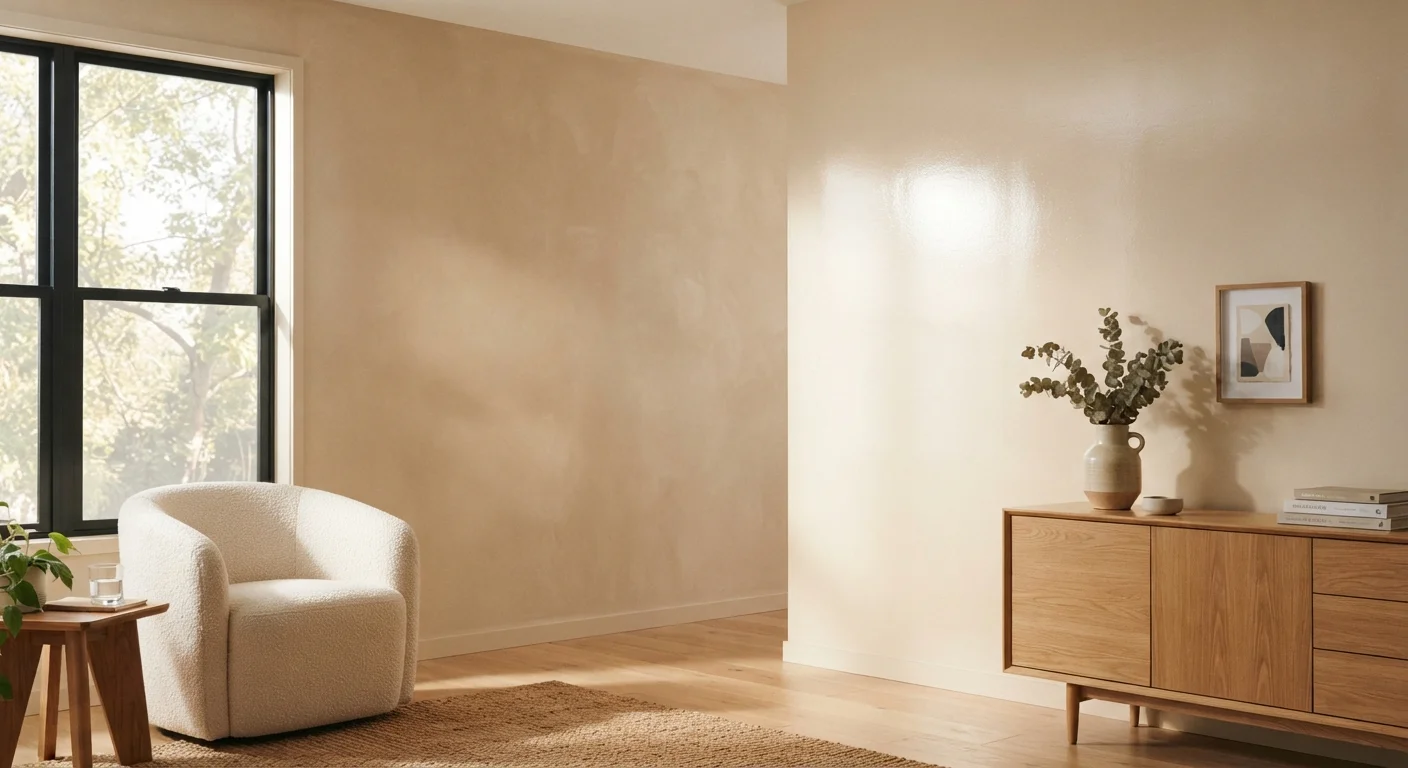
Photo credit: faqsnest.com
In this article
Matte, eggshell, satin, semi-gloss — understand how each finish interacts with light and affects how a room feels.
Key Takeaways
- Paint finish controls how much light a wall reflects, which shapes the perceived size and mood of a room.
- Matte and flat finishes absorb light, softening imperfections but making spaces feel more intimate.
- Eggshell and satin finishes balance washability with a gentle reflectivity suited to most living spaces.
- Semi-gloss and gloss finishes work best on trim, cabinetry, and high-moisture areas rather than large wall surfaces.
- The same paint color can look dramatically different depending on which finish is applied.
- Natural light volume and direction in a room should directly inform your finish choice.
Why Finish Matters as Much as Color
Most people spend a long time choosing paint color — and about thirty seconds choosing finish. That's worth reconsidering. Two walls painted the same exact color but in different finishes will look noticeably different once the light hits them. One may feel warm and quiet; the other bright and almost industrial. Finish is the mechanism that translates a paint color into a room's actual atmosphere.
The science is straightforward. A flat or matte finish scatters incoming light in many directions — a process called diffuse reflection — which softens the color and reduces the visibility of surface irregularities. A gloss finish does the opposite: it creates specular reflection, bouncing light back at a concentrated angle. That's why high-gloss walls show every ding and drywall seam, while matte walls can hide a multitude of imperfections.
This interaction between finish and light is part of the broader conversation around how your space is lit. See our guide to lighting's role in room feel for how ambient, task, and accent light sources interact with the surfaces around them.
The Finish Spectrum: From Flat to High-Gloss
Paint finishes exist on a continuous spectrum. Here's how each one performs in real interior conditions:
Flat and Matte
No sheen, maximum light absorption. Flat finishes are ideal for ceilings and low-traffic adult spaces like formal dining rooms or bedrooms. They excel at hiding surface flaws, but they mark easily and are difficult to clean without leaving streaks or removing pigment. Not recommended for hallways, kids' rooms, or kitchens.
Eggshell
A barely perceptible low sheen. This is one of the most versatile finishes for interior walls. It holds up better than matte to occasional wiping, and its light reflectivity is subtle enough that it won't emphasize bumps or texture. Works well in living rooms, bedrooms, and dining areas.
Satin
A soft, silky sheen with noticeably more reflectivity than eggshell. Satin is durable, easy to wipe down, and handles humidity reasonably well — making it a strong choice for hallways, playrooms, and laundry rooms. In a north-facing room with limited natural light, satin can help distribute whatever light is available.
Semi-Gloss
Clearly reflective, often used on trim, doors, and window casings rather than broad wall surfaces. Semi-gloss is moisture-resistant and highly washable, which makes it the finish of choice for bathrooms and kitchens. On large walls, its reflectivity can create distracting glare unless the room has soft, diffuse lighting.
High-Gloss
The most reflective and most demanding finish. High-gloss paint creates an almost lacquer-like surface that requires flawless wall preparation to look intentional rather than flawed. It's occasionally used as a design-forward choice in small accent spaces or on cabinetry and furniture.
Test Finish Samples in Context First
Before committing to a finish across an entire room, apply a large sample swatch — at least 12 by 12 inches — and observe it at different times of day and under your artificial lighting. A satin finish that looks perfect in morning light may feel too shiny under warm evening lamps. Sampling costs little and saves significant regret.
How Natural Light Changes the Equation
A south-facing room flooded with light all day behaves very differently from a north-facing room that receives only indirect, cool-toned light. Finish choices need to account for this.
In a sun-drenched room, matte and eggshell finishes tend to anchor color beautifully — the light brings out warmth without creating glare. In that same room, a semi-gloss finish might introduce hot spots where direct sun hits the wall, creating an uneven look through the day.
In a darker, north-facing room, satin or eggshell can help diffuse and redistribute available light, preventing walls from looking dull or flat. This is also where color temperature becomes relevant — and it's worth reading our guide to warm vs. cool tones to understand how color direction interacts with both light and finish.
Artificial Light Matters Too
The type of bulbs in a room — warm incandescent-style LEDs versus cool daylight LEDs — affects how finishes read. Warm bulbs tend to amplify the cozy, absorptive quality of matte and eggshell, while cool-toned bulbs make reflective finishes appear crisper. Consider the full lighting picture, not just natural light, when choosing finish.
Finish choices also interact with texture. A heavily textured wall in semi-gloss will have every ridge and valley emphasized by the reflected light. If you have textured surfaces, a lower-sheen finish is usually more forgiving — or you can lean into the texture intentionally. Our article on texture in interior design explores this principle further.
Matching Finish to Room Function
Beyond aesthetics, finish choice is a practical decision. High-traffic and high-moisture areas need durability; quiet, private spaces can prioritize softness. A quick room-by-room guide:
- Bedrooms: Matte or eggshell for a calm, restful feel. Traffic is low and cleaning is infrequent.
- Living rooms: Eggshell or satin, depending on how much sunlight the room receives and how much cleaning it requires.
- Kitchens and bathrooms: Satin or semi-gloss. Moisture resistance and washability are the priorities here.
- Hallways and kids' rooms: Satin is the practical standard — it stands up to scuffs and fingerprints.
- Trim, doors, and molding: Semi-gloss creates a crisp, defined contrast with wall color and is easy to wipe down.
- Ceilings: Flat or ceiling-specific formulas minimize reflection from above and help the ceiling recede visually.
This is part of the broader picture of reading a room holistically — from flooring to ceiling — and making choices that work together. If you're rethinking a full space, our end-to-end interior design guide provides a structured framework from empty room to finished space.
60°
Standard gloss measurement angle for paint finishes
The paint and coatings industry commonly uses a 60-degree gloss meter to standardize sheen comparisons across products and manufacturers.
~10 GU
Gloss units at which matte finishes typically top out
Finishes registering below 10 gloss units (GU) at 60 degrees are generally classified as flat or matte by industry convention.
2–3x
Washability advantage of satin over flat finishes
Industry testing consistently shows that higher-sheen finishes withstand more scrub cycles before showing surface degradation compared to flat or matte paints.
Frequently Asked Questions

Author
Home & Garden Editorial Team
Home & Garden Editorial Team is the collective byline for our editorial team and contributor network. Articles published under this byline or an editorial pen name are researched, written, and reviewed according to our editorial standards for clarity, consistency, and independence before publication.
View all articles →