
The Role Lighting Plays in Making a Room Feel Right
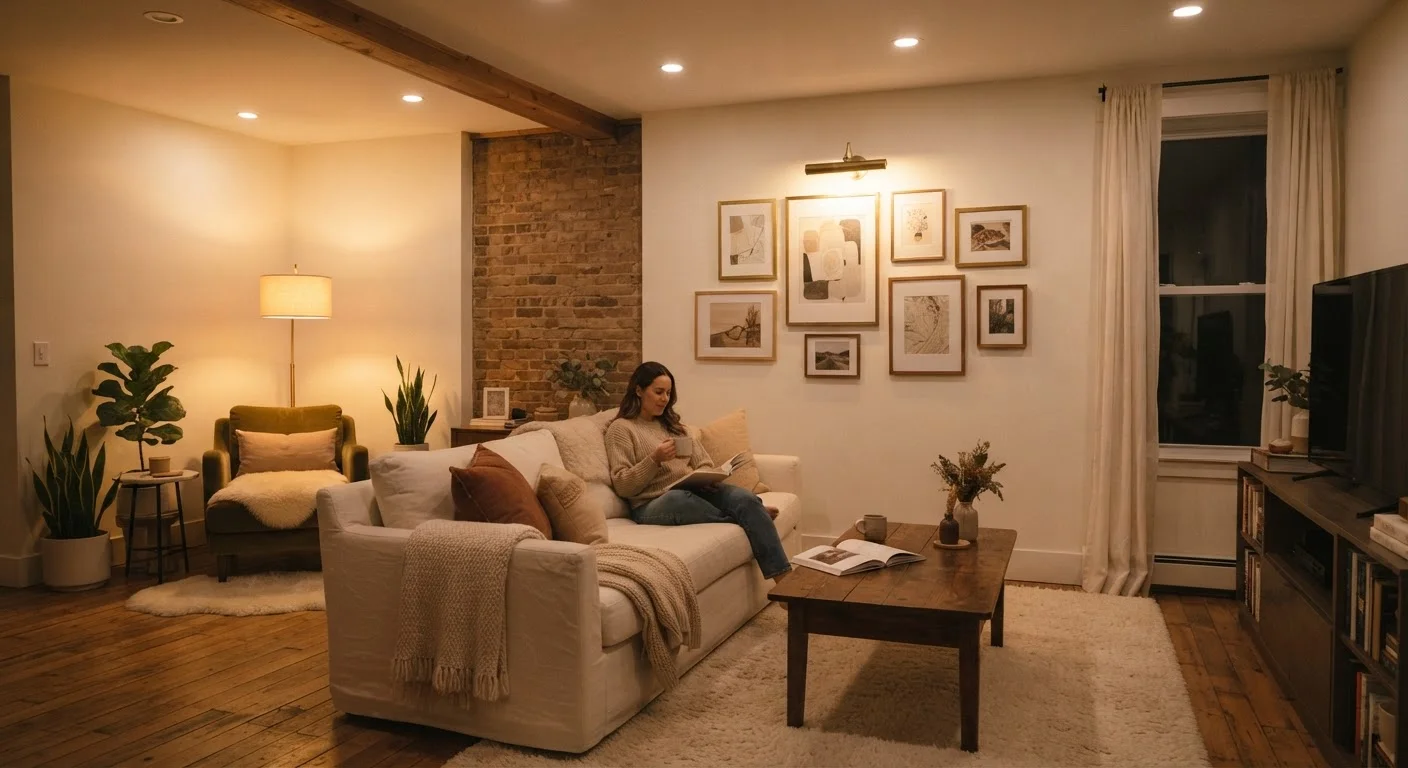
Photo credit: faqsnest.com
In this article
Ambient, task, and accent lighting explained — and why getting all three right is just as important as colour or furniture.
Key Takeaways
- Lighting has three functional layers: ambient, task, and accent — each serves a different purpose.
- Relying on a single overhead light is the most common lighting mistake in residential interiors.
- Color temperature (measured in Kelvin) shapes how warm or cool a lit room feels.
- Dimmers give you control over mood without adding more fixtures.
- Lighting interacts directly with wall color, paint finish, and surface texture.
Why Lighting Is a Design Element, Not an Afterthought
Most people plan a room around furniture and color — and then figure out lighting at the end. That approach almost always produces a space that looks fine in photos but feels flat or uncomfortable to live in. Lighting isn't just practical; it shapes how every other design decision reads in real life.
The way light falls across a textured wall, bounces off a glossy surface, or pools around an armchair affects the entire emotional register of a room. As our guide on design principles every room should follow explains, emphasis and hierarchy are core to making a space feel intentional — and lighting is one of the most powerful tools for creating both.
Understanding how lighting works, and how to layer it deliberately, gives you more control over a room's atmosphere than almost any other single decision.
The Three Layers of Light — and What Each One Does
Ambient Lighting
Ambient light is the foundational layer — the general illumination that allows you to move through and use a space safely. It's often delivered by a central ceiling fixture, recessed downlights, or a combination of both. The common mistake is treating ambient light as the only layer, which creates a flat, shadowless quality that tends to feel institutional rather than residential.
Task Lighting
Task lighting is directed, localized light placed where you actually do things: a reading lamp beside a chair, under-cabinet lights above a kitchen counter, a desk lamp in a home office. Good task lighting reduces eye strain and keeps you from hunching toward a lamp across the room. It's functional first — but it also adds visual depth to a room by introducing multiple light sources at different heights.
Accent Lighting
Accent lighting exists to create visual interest. It draws attention to specific elements — a piece of art, an architectural detail, a bookshelf, a plant. Track lighting, picture lights, and small directional spotlights all fall into this category. Accent lighting is what gives a room a layered, considered quality, because it signals that someone thought about what deserves attention.
“Light is the first element of design; without it there is no color, form, or texture.”
— Richard Kelly, Pioneering American lighting designer, widely credited with developing the concept of layered architectural lighting in the mid-20th century
Color Temperature: The Variable Most Homeowners Ignore
Even a well-layered room can feel "off" if the light sources clash in color temperature. Color temperature — measured in Kelvin — describes whether a bulb produces warm, yellowish light or cool, bluish-white light. Mixing a warm floor lamp with a cool-white overhead fixture in the same room creates a visual inconsistency that's hard to name but easy to feel.
For most living areas, a consistent warm range (2700–3000K) creates cohesion. Kitchens and workspaces often work better around 3000–4000K. What matters most is consistency within a room and intentionality about any variations you introduce.
Color temperature also interacts with your wall color. This connects directly to paint selection — warm versus cool color directions behave very differently under different light conditions. Always view paint samples under the actual lighting you plan to use before committing.
2700K–3000K
Recommended warm light range for living spaces
This color temperature range is widely used by lighting designers for residential living rooms and bedrooms to create a comfortable, cozy atmosphere.
3
Distinct lighting layers in a well-designed room
Interior design convention identifies ambient, task, and accent lighting as the three functional categories that together produce a balanced and versatile space.
~10%
Typical energy use reduction with dimmers at 50%
Dimming incandescent and LED lights generally reduces energy consumption roughly in proportion to the reduction in output, with some variation by bulb type.
Dimmers, Placement, and Practical Control
The single most impactful upgrade many homeowners can make isn't a new fixture — it's a dimmer switch on an existing one. Dimmers let you use the same light source to support multiple modes: bright and functional during the day, low and atmospheric in the evening. Many smart bulbs and plug-in lamp dimmers extend this capability without any electrical work.
Placement matters just as much as brightness. Light sources placed only at ceiling height cast shadows downward and flatten faces and surfaces. Introducing light at mid-height (table and floor lamps) and low height (uplighters, LED strips near the floor) creates a more natural, three-dimensional quality. It also softens the room's edges — especially important in spaces with hard surfaces.
Paint finish is a related but underappreciated factor here. A satin or semi-gloss finish will reflect light noticeably, while matte absorbs it. Our article on what paint finish does to light and space covers this interaction in detail.
Putting It All Together
A well-lit room doesn't announce itself — it just feels right. That's because the layers work together quietly: ambient light handles the background, task lighting serves function, and accent lighting guides the eye to what matters. When those three types are balanced and color temperature is consistent, the room gains a dimension that furniture and color alone can't provide.
Texture also plays a role in how light reads — rough surfaces scatter light and add warmth, while smooth surfaces concentrate it. If you want to understand that interaction more deeply, texture in interior design explains how surface quality shapes a room's character.
Lighting is part of a larger system. For a comprehensive look at how it fits alongside layout, color, and furniture decisions, see our end-to-end interior design guide. The goal in any room is the same: light that serves people, not just the space.
Frequently Asked Questions

Author
Home & Garden Editorial Team
Home & Garden Editorial Team is the collective byline for our editorial team and contributor network. Articles published under this byline or an editorial pen name are researched, written, and reviewed according to our editorial standards for clarity, consistency, and independence before publication.
View all articles →